Professional cable manufacturer

Professional cable manufacturer
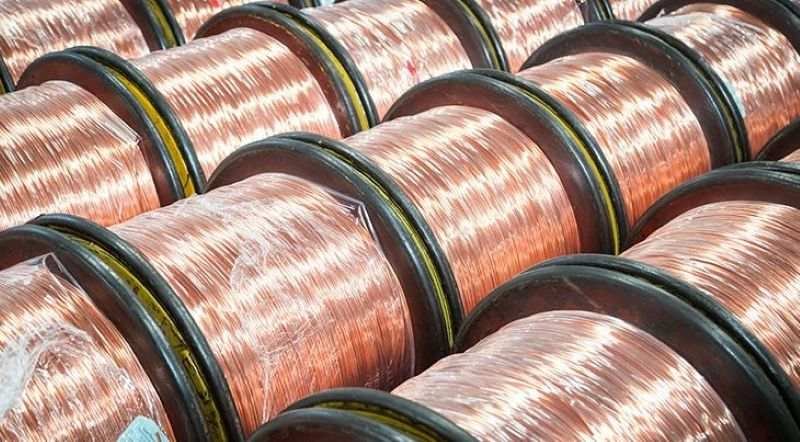
Copper hit $13,544 per tonne on the LME in May 2026 (rounded to $13,500/tonne throughout this guide for readability). COMEX futures traded at $6.34 per pound — a record that rewrites every budget, every quotation, every margin projection in the cable industry.
For mining giants, this is a celebration. For cable manufacturers, it is something else entirely. Copper accounts for 70–85% of a cable's material cost. At $13,500/tonne, the raw metal in a single 4-core 16 mm² power cable costs more than the finished product did three years ago.
This is not a short-term spike. J.P. Morgan projects Q2 2026 copper at $13,500/tonne average, with the annual range projected at $11,500–$14,000 — a new permanent plateau. S&P Global warns the global supply deficit could reach 10 million tonnes by 2040, driven by AI infrastructure and the energy transition.
This guide examines how cable manufacturers, distributors, and procurement professionals can navigate this new reality — not by hoping copper prices fall, but by restructuring how they buy, what they make, and who they sell to.
Data centre construction consumed an estimated 475,000 tonnes of copper in 2025 — equivalent to roughly 60% of Zambia's annual copper output — and J.P. Morgan projects a similar figure for 2026. Every hyperscale facility requires massive copper busbars, power distribution cabling, grounding grids, and networking infrastructure. Unlike residential construction, data centre demand is non-negotiable and non-deferrable.
Grid modernisation across the EU (hundreds of billions in ageing infrastructure upgrades), solar and wind capacity additions, and the shift to 800V EV architectures have created a permanent demand floor. Unlike cyclical industrial demand, energy transition spending is policy-backed and multi-decade.
Global mining CAPEX was under-invested through the 2010s. New copper mines take 10–15 years from discovery to production. The result: a structural gap of hundreds of thousands of tonnes per year through 2030. Concentrate treatment charges (TC/RCs) have collapsed, signalling that smelters are competing for scarce feedstock.
At $8,000/tonne, a cable factory needed $800,000 in working capital to stock one month's copper. At $13,500, that same stock costs $1.35 million — a 69% increase. For small and mid-size manufacturers, this capital strain is existential. The industry is consolidating: those without access to credit lines or hedging facilities are being acquired or closed.
Fixed-price contracts — once standard — have become dangerous. A 12-month fixed quote signed when copper was at $9,500 can destroy a manufacturer's margin when the metal arrives at $13,500. The industry is shifting to copper-price-linked pricing (LME/SHFE base + fixed processing fee) with quarterly or monthly adjustments. Hedging via futures and options is no longer optional — it is a survival requirement.
Companies bidding fixed-price contracts without hedging face:
Action: Review your quotation policy before the next RFP. If your contract template does not include an LME-linked pricing clause, revise it immediately.
When pure copper becomes prohibitively expensive, buyers stop being "brand loyal" to copper and start being "performance loyal" — accepting alternatives they would have rejected at $8,000/tonne.
Copper-Clad Aluminium (CCA) is experiencing explosive growth in applications where high-frequency conductivity or weight matters more than DC ampacity: solar grounding, EMI shielding braids, coaxial centres, and data cables. CCA delivers 30–50% cost savings compared to pure copper at current prices.
Aluminium Alloy Conductors (AA-8000 series) are accelerating their penetration of medium-voltage distribution networks, building feeders, and renewable energy collector circuits — especially in North America and the Middle East.
Standard building wire (THHN, ordinary PVC power cable) has become a loss leader. The margin on a reel of commodity cable at current copper prices is paper-thin — or negative. Meanwhile, specialty cables — BS 6387 CWZ fire-resistant, liquid-cooled EV charging, robotic/torsion cables, marine and offshore cables — command 2–5× higher margins because customers buy for certification, reliability, and safety, not copper weight.
| Property | Pure Copper (Baseline) | Aluminium Alloy (AA-8000) | Copper-Clad Aluminium (CCA) |
|---|---|---|---|
| Conductivity (% IACS) | 100% | 61% | 60–68% (skin effect dependent) |
| Weight (same ampacity) | Baseline | ~50% lighter | ~65% lighter |
| Cost vs. pure copper | 1.0× | 0.5–0.7× | 0.3–0.5× |
| Corrosion resistance | Good (tinned: excellent) | Good (oxide layer self-protects) | Good (outer copper layer) |
| Flex life (dynamic) | Excellent (Class 5/6) | Moderate (Class 2) | Moderate (limited to static/semi-static) |
| Termination | Standard lugs, any panel | Special Al lugs, anti-oxidation compound | Standard Cu lugs (outer copper layer) |
| Best application | Emergency circuits, fire, high-temp, marine | MV distribution, feeders, solar farm collectors | Grounding, shielding, data, lightweight flex |
| Business Dimension | Low Copper (<$9,000) | High Copper (>$12,000) |
|---|---|---|
| Pricing model | Fixed quote OK | LME-linked formula + hedging required |
| Inventory strategy | 3 months stock | Just-in-time + supplier consignment |
| Product mix | Commodity + specialty | Specialty-heavy: fire cable, EV, robotic, marine |
| Material sourcing | 99.9% pure copper | Three-tier defence: Cu + Al alloy + CCA |
| Market focus | Price-sensitive buyers | Specification-driven buyers (certification matters) |
| Cash management | Standard credit | Copper hedging + buyer deposits on orders |
Before placing your next order, verify these items:
At $13,500/tonne, copper is no longer just a raw material — it is the single largest risk factor in every cable transaction. Companies that treat it as a manageable exposure (through hedging, alternative materials, and specialised products) will maintain margins and grow. Companies that ignore it will be consumed by it.
The future belongs to manufacturers and suppliers that have moved beyond the commodity game: offering certified specialty cables, multi-material options, and the engineering support that turns a cable purchase into a technical solution.
Three actions to take this quarter:
Navigating High Copper Prices? We Can Help.
SORIVO supplies pure copper, aluminium alloy, and CCA cable solutions with third-party certification, LME-linked pricing, and full batch traceability.
Email: sale@sorivocable.com | Phone: +86 19282905529
7×24×365 support — request a free material consultation for your next project
View Our Solutions Request a Quote