Professional cable manufacturer
Professional cable manufacturer
Standards referenced: EN 50618:2014 + A1:2023 · IEC 62930:2017 · TÜV 2PfG 1169 · HD 605 S1 · GB/T 15065-2009 · IEC 60228 · IEC 60332-1-2 · IEC 60754 · IEC 61034-2 · EN 60811-504 · EN 60068-2-78 · EN 50525-2-21
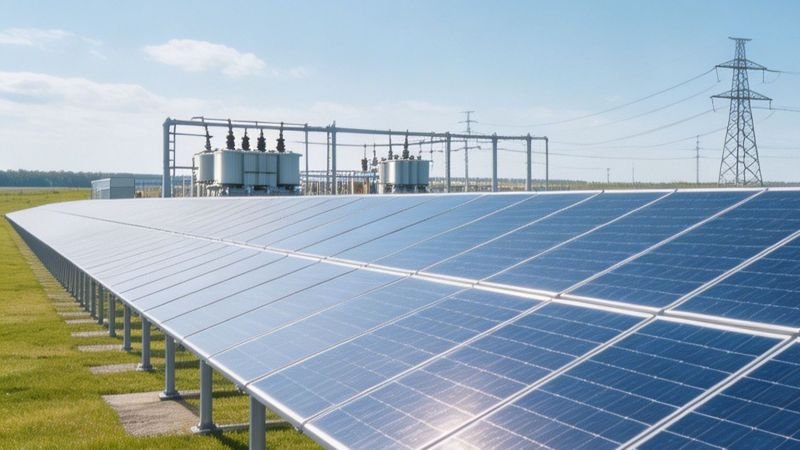
A customer sent me a photo the other day. A 50 MW solar plant in Qinghai, China — only three years into operation — and the cable jackets had cracked across the entire installation. Insulation resistance had dropped below 1 MΩ. The whole line had to be shut down and replaced.
The root cause? They'd used standard PVC cables with no EN 50618 certification. In that high-plateau environment — daily temperature swings of 60°C, UV index above 10 year-round — the jacket material went brittle in under 18 months.
Honestly, we hear stories like this every year. It's almost never that the cable "just failed." It failed because someone picked the wrong cable for the job. Solar PV cables might look similar to regular power cables, but the material requirements are completely different. Especially in extreme climates — 80°C ground surface in the desert, minus 40°C winter nights at high altitudes, year-round salt fog on the coast — ordinary cables just don't stand a chance.
So here's what I want to walk you through in this article: what actually makes solar cables special? What materials and standards let them survive 25 years in environments that would destroy regular cables in five?
The difference between a solar PV cable and a standard power cable comes down to one thing: the entire material system has been upgraded. Not just one component — the conductor, the insulation, and the jacket have all been replaced with something tougher.
Standard cables use bare copper. It's cheap and it conducts well. But bare copper has a nasty weakness outdoors — moisture and salt turn it green. Copper oxide builds up, contact resistance climbs, connectors overheat, and eventually things catch fire. In my experience, if you use bare copper cable in a coastal solar project, connector failures within five years are highly likely in harsh coastal environments.
That's why solar cables mandate tinned copper conductors (IEC 60228 Class 5/6 stranded). The tin layer seals the copper from air and moisture. The difference is night and day:
| Property | Bare Copper (Standard Cable) | Tinned Copper (Solar Cable) |
|---|---|---|
| Oxidation resistance | Poor — discolors after 500h at 60°C / 85% RH | No visible change after 3000h under same conditions |
| Max continuous operating temp | 70°C (PVC insulation) | 90°C (XLPO insulation) |
| Flexibility | Moderate | Excellent — IEC 60228 Class 5 stranding, easy to route |
| Salt spray resistance | Poor — green corrosion leads to connector overheating | Passes IEC 60068-2-11 salt spray test (equivalent to GB/T 2423.17) |
| Outdoor service life | 10–15 years | ≥25 years |
This is where solar cables make their biggest leap. Regular power cables use PVC or XLPE for insulation and jacketing. Solar cables switch to irradiation-cross-linked, halogen-free polyolefin (XLPO). Here's how they stack up:
| Property | PVC (Standard Cable) | XLPE (Regular Power Cable) | XLPO (Solar Cable) |
|---|---|---|---|
| Max continuous operating temp | 70°C | 90°C | 90°C (conductor 120°C short-term) |
| Low-temperature performance | Brittle at -25°C | Brittle at -20°C | No cracks at -40°C (EN 60811-504) |
| Flame retardance | Self-extinguishing but releases HCl gas | Flame retardant | IEC 60332-1-2 + halogen-free (IEC 60754) |
| Smoke density | Dense toxic black smoke | Moderate | Light transmittance ≥60% (IEC 61034-2) |
| UV resistance | 1–2 years without stabilizers | Limited | Carbon black 2.6%±0.25%, HD 605 S1 passed |
| Damp heat resistance | Fails | Limited pass | 90°C / 85% RH / 1000h, strength retention ≥70% |
| 25-year design life | ❌ | Qualified in some applications | ✅ Yes |
The key process: E-beam crosslinking
In simple terms, high-energy electrons are used to "knit" the polyolefin molecular chains from a linear structure into a 3D network. The result is a material that won't crack at -40°C and won't soften at 120°C. Chemical resistance and creep resistance also improve significantly. It's one of the technical foundations that lets a solar cable last 25 years.
| Feature | Economy / Market Standard | SORIVO Premium |
|---|---|---|
| Conductor | Bare copper (oxidizes) | Tinned copper (IEC 60228 Class 5/6) |
| Insulation | PVC (5–8 year life) | LSZH XLPO (25-year design life, -40°C to +90°C continuous, 120°C short-term overload) |
| UV protection | Minimal stabilizers | Carbon black 2.6%±0.25% + stabilizers, HD 605 S1 passed |
| Certification | Self-declared CE | TÜV / EN 50618 / IEC 62930 third-party verified |
| Traceability | None | Meter-mark printing, batch traceable |
| Warranty | 1–5 years | 25 years |
The market is flooded with products calling themselves "solar cables." We've seen way too many projects where the buyer went cheap on an uncertified cable and paid for it three years later. The quickest way to tell if a cable is the real deal? Check which standard it's certified to.
For a deeper look, here's our renewable energy cable solutions page with more detail on certifications.
| Standard | Voltage Rating | Halogen-Free | Primary Market | Overall Rigor |
|---|---|---|---|---|
| EN 50618 (H1Z2Z2-K) | DC 1500V | Mandatory | Europe | ★★★★★ |
| TÜV 2PfG 1169 (PV1-F) | DC 1000V | Recommended | Europe | ★★★★☆ |
| IEC 62930 | DC 1500V | Optional | International | ★★★★☆ |
| UL 4703 | DC 1000V / 2000V | Optional | North America | ★★★★☆ |
| NB/T 42073 | DC 1000V / 1500V | Mandatory | China | ★★★☆☆ |
Key difference: EN 50618 vs IEC 62930
Both support DC 1500V, but EN 50618 mandates halogen-free and tinned copper. IEC 62930 only recommends them. If you're supplying a European project, EN 50618 is the compliance floor. Also note IEC 62930 allows both halogen-free and halogen-containing variants — the cable designation tells you which one you're getting. H1Z2Z2-K indicates halogen-free; if the designation uses a different code, confirm the halogen status with the manufacturer before ordering.
Of all the solar cable standards, EN 50618 has the toughest test battery. These six tests directly determine whether a cable survives in extreme conditions:
The same solar cable faces totally different challenges depending on where it's installed. Here are the four most common scenarios we help customers navigate:
Core challenge: Ground surface often exceeds 80°C, daily temp swings over 50°C, intense UV + sand abrasion
Recommended: H1Z2Z2-K (EN 50618), carbon black ≥2.6%, jacket hardness balanced for sand impact
Key specs: UV aging ≥1000h · Conductor 120°C thermal life ≥20,000h
Core challenge: Below -40°C brittleness, UV intensity 2–3x plains, reduced air pressure affects insulation
Note: Standard PVC goes brittle at -25°C — not suitable for high altitude
Recommended: XLPO jacket + tinned copper, -40°C cold bend certified. Above 4000m, verify partial discharge performance
Core challenge: Salt fog corrosion + high humidity + typhoon mechanical stress
Recommended: AD8 waterproof · Tinned copper (Cl&supmin; resistant) · Bunched flame retardant Cat C/D
Key specs: Salt spray test ≥96h · AD8 immersion 100 days
Core challenge: Long-term submersion or semi-submersion · Biofouling · Reflected UV from water surface
Recommended: AD8 waterproof grade · XLPO hydrolysis-resistant compound · UV ≥1000h
Key specs: Wet insulation resistance ≥100 MΩ·km
We've had this conversation with customers more times than I can count. A certified solar cable costs 2–3x more per meter than a non-certified one. But look at the 25-year total cost of ownership, and the picture flips.
Here's what 1 km of cable route costs over 25 years:
| Cost Item | Economy Cable (Non-standard PVC) | Certified Solar Cable (H1Z2Z2-K) |
|---|---|---|
| Initial purchase (10mm², per meter) | Approx. $0.55–0.85/m | Approx. $1.40–2.10/m |
| Outdoor service life | 5–8 years | 25+ years |
| Replacements needed in 25 years | 3–5 times | 0 times |
| Replacement labor (50 MW plant) | $11,000–21,000 each time | — |
| Lost generation during replacement | Approx. $7,000–14,000 each time | — |
| 25-year total (incl. installation & maintenance) | Approx. $70,000–165,000/km | Approx. $35,000–52,000/km |
TCO logic explained: The certified cable's 25-year total includes initial purchase, installation, and routine maintenance. The non-certified cable looks cheap upfront, but every 5–8 years you replace it — new cable + labor + plant downtime. Over 25 years, that adds up to 2–3x the cost of the certified option.
Prices based on 2026 Q1 China market, 10mm² tinned copper, FOB Shanghai. Actual costs vary with copper index and order volume.
For a deeper ROI breakdown, check out our cable TCO guide with detailed depreciation and return models.
The bottom line: You pay more upfront, but you save over 25 years of trouble-free operation. And that's before you factor in what a mid-life shutdown does to your project IRR.
Let's be real — cables all look pretty similar on a spec sheet. But once you've got one in your hands, there are six things you can check right there on the warehouse floor:
A solar plant's payback period is typically 5–8 years. The cables have to last the full 25. The math isn't that complicated.
Desert → EN 50618. Floating solar → AD8. High altitude → verify cold and low-pressure performance. Pick the standard for your site, not the price you like.
Look for third-party certification (TÜV / UL / BASEC). Beware of "self-declared CE." Each level of certification can mean a decade of actual life difference.
A one-time investment in certified cable costs more on day one. But compared to replacing everything every 8 years plus lost production, it's the cheaper path by far.
If you're working on a project and not sure which cable to spec, or if you'd like to compare samples side by side, get in touch. We offer free technical support and sample service.
I wouldn't recommend it. PVC maxes out at 70°C operating temperature, but solar cables in direct sunlight routinely see jacket temperatures above 80°C. PVC degrades fast at those temps. Plus, PVC isn't halogen-free — if there's a fire, it releases HCl gas. Even for "a few months," use a certified solar cable. That temporary fix has a way of becoming permanent.
Both are dedicated solar cables. H1Z2Z2-K (EN 50618) is the evolution of PV1-F (TÜV 2PfG 1169). Main differences: H1Z2Z2-K goes up to DC 1500V and mandates halogen-free. PV1-F is capped at DC 1000V and only recommends (not requires) halogen-free. On DC 1000V systems they can be interchanged, but for new projects I'd spec H1Z2Z2-K. See our H1Z2Z2-K product page for full specs.
Because the regions with the best solar resources — Northwest China, the Tibetan Plateau, the Rockies, the Alps — regularly see winter temperatures of -30°C to -40°C. Standard cables go brittle at -25°C. Bending them during installation or wind-induced vibration creates micro-cracks that you can't see. Come spring, moisture seeps in, freezes, expands, and the cracks grow. Before you know it, the insulation is compromised. The -40°C test isn't a lab number — it's a survival threshold.
Floating solar adds three requirements on top of standard PV cable specs: AD8 waterproof rating (50°C water immersion for 100 days with no degradation), stronger UV resistance (water surface reflection amplifies UV exposure), and a hydrolysis-resistant compound to prevent long-term degradation from constant moisture. Also, because floating platforms have continuous low-frequency vibration, the cable's structural stability matters more than usual. I'd recommend AD8-certified H1Z2Z2-K cable.
When multiple cables run together in the same tray or duct — typical in large ground-mount plants at the combiner box exit and inverter room. Single-cable flame retardance (IEC 60332-1-2) isn't enough there. If one cable catches fire, the heat can ignite the ones next to it, and you get a cascading burn. Bunched flame retardance Category C or D is designed to prevent exactly that.
Carbon black is the UV stabilizer. It absorbs UV radiation and turns it into harmless heat. GB/T 15065-2009 specifies 2.6% ± 0.25%. That range isn't arbitrary — too little carbon black and the jacket degrades under UV, cracks, and lets water in. Too much, and the jacket gets brittle and cracks from bending. Getting the content and dispersion right is one of the things that separates a quality cable from a cheap one.
Need certified solar cables for your project? Contact Sorivo for free technical support:
sale@sorivocable.com | +86 19282905529