Professional cable manufacturer

Professional cable manufacturer
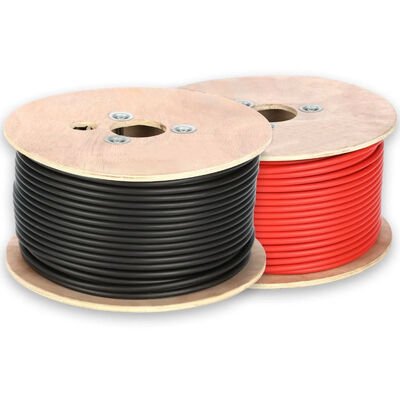
A 4mm² H1Z2Z2-K solar cable can cost anywhere from $0.20 to $1.35 per meter depending on where you buy it. The difference isn't just markup — it reflects what you actually get for the price. Here is exactly what factory-direct pricing looks like in Q2 2026, how distributor margins work, and how to make sure you are comparing equivalent products, not just numbers.
Pricing basis for this guide:
• LME copper: $13,500/t (Q2 2026 average, as of May 2026)
• Copper conductor share of cable cost: 55–65%
• All prices: FOB Shanghai, container load, net 30 days, unless noted
• Price validity: This range reflects Q2 2026 market conditions. Cable prices adjust monthly with LME copper. A ±$500/t copper move shifts 4mm² cable cost by ~$0.02/m.
• Risk note: Copper at $13,500/t is near historical highs. If prices correct to $11,000–12,000/t, the ranges below would shift 10–15% lower. US tariff policy on copper imports remains an upside risk (Goldman Sachs, Apr 2026).
If you have typed "solar cable price per meter" into a search bar recently, you already know the numbers are all over the place. One supplier quotes $0.25/m for "TUV certified" 4mm² cable. Another wants $0.95/m for what looks like the same thing. Who is ripping you off?
The short answer: probably neither. But the $0.25 cable and the $0.95 cable are not the same product — even if the spec sheet says identical things. This guide breaks down the real cost structure of solar cables, explains the factory-to-distributor price ladder, and gives you a framework to compare quotes on an apples-to-apples basis.
Before comparing prices, you need to understand what you are actually paying for. A solar cable's cost breaks down into four components:
| Cost Component | Share of Total | What Changes the Number |
|---|---|---|
| Raw copper | 55–65% | LME copper price ($13,500/t as of Q2 2026), tinning adds ~8% to conductor cost |
| Insulation & sheath compound | 12–18% | XLPO (E-beam cross-linked) costs 2–3x more than PVC; carbon black + UV stabilizers add cost |
| Manufacturing & testing | 10–15% | TUV/UL type testing, batch QC, E-beam irradiation overhead, factory audits |
| Logistics & margin | 8–18% | Factory → distributor → buyer; incoterms, shipping, intermediate markup |
Copper is the biggest lever. At $13,500/t, copper alone accounts for roughly $0.11/m of a 4mm² cable's cost — up from $0.08/m when LME was at $9,800/t. For context, a $500/t move in LME copper shifts the raw material cost of 4mm² cable by roughly $0.02/m. That is why quarterly pricing fluctuation is normal, and why a price that has not changed in 12 months is often a sign of corner-cutting, not good business.
| Conductor Type | Raw Copper Cost | Tinning Cost | Total Conductor Cost (4mm²) | Price Premium vs. Base |
|---|---|---|---|---|
| Bare copper, Class 2 (solid) | Baseline | None | $0.11/m | — |
| Bare copper, Class 5 (stranded) | +5% (more strands = more draw passes) | None | $0.12/m | +6% |
| Tinned copper, Class 5 | +5% | +8% | $0.13/m | +15% |
The takeaway: if you see "H1Z2Z2-K" priced the same as "PV1-F" from the same supplier, ask which conductor they are using. EN 50618 (H1Z2Z2-K) mandates tinned copper — that alone adds ~15% to the conductor cost versus bare copper, a gap that widens in absolute terms when copper prices are high.
Solar cables on the global market fall into four distinct tiers. The price differences reflect real differences in material specification, certification depth, and traceability — not arbitrary markup.
| Tier | Typical Price Range (4mm², per meter) | Conductor | Certification | Life Expectancy |
|---|---|---|---|---|
| 1. Economy / Uncertified | $0.20–$0.34 | Bare copper, undocumented alloy | Self-declared CE only | Unknown (typically 3–8 years) |
| 2. Standard Certified (PV1-F) | $0.35–$0.55 | Tinned copper (may skimp on purity) | TUV 2PfG 1169 (may be limited cross-sections) | 15–20 years (if genuinely tested) |
| 3. Full Spec (H1Z2Z2-K) | $0.55–$0.90 | Tinned copper 99.97%, Class 5 | TUV EN 50618, all cross-sections, CPR DoP | 25 years (EN 50618 design life) |
| 4. Premium / Full Traceability | $0.80–$1.35 | Tinned copper 99.97%, Class 5, batch-traceable | TUV EN 50618 + UL 4703 + batch certificates | 25 years + traceable to raw material lot |
⚡ Reality check: A Tier 1 cable at $0.25/m costs nearly 70% less than a Tier 4 cable at $0.85/m. But if the Tier 1 cable fails at year 6, the replacement cost — including labor, downtime, and disposal — typically runs $300,000–$600,000 per MW. The $0.60/m saving on cable becomes irrelevant very fast.
When you buy from a distributor, you pay more per meter — typically 25–60% above the factory ex-works price. The question is whether that markup buys value you actually need.
| Factor | Factory Direct (China Ex-Works) | Distributor (Local Stock) |
|---|---|---|
| Price per meter (4mm² H1Z2Z2-K) | $0.45–$0.75 | $0.72–$1.35 |
| Minimum order | Typically 5–10 km per cross-section | 100 m–1 km |
| Lead time | 4–8 weeks (production + shipping) | 1–5 days (from local warehouse) |
| Cancellation risk | Higher (production already scheduled) | Lower (stock already exists) |
| Customs & documentation | Buyer handles import clearance | Distributor handles; included in price |
| Warranty recourse | Cross-border, may require factory audit | Local, easier to enforce |
| Certificate verification | Buyer must verify independently | Can inspect stock before purchase |
All prices based on LME copper at $13,500/t (Q2 2026). FOB Shanghai container load. Actual pricing varies with copper fluctuations, order volume, and certification requirements. Prices are typically re-quoted monthly per LME movement.
| Specification | Budget Option | Premium Option | Cost Impact | Why It Matters |
|---|---|---|---|---|
| Conductor | Bare copper | Tinned copper 99.97% | +15% | Prevents galvanic corrosion at MC4 connectors; EN 50618 mandates tinning |
| Insulation | PVC (not UV rated) | E-beam XLPO | +40–60% | XLPO lasts 25 years in UV; PVC fails in 5–8 years outdoors |
| Carbon black | <2.0% (uncontrolled) | 2.6% ± 0.25% per GB/T 15065-2009 | +3–5% | Correct carbon black content is the difference between 5-year and 25-year UV stability |
| Certification | Self-declared CE | TUV EN 50618 + full DoP | +10–20% | Certification cost includes type testing, factory audits, and annual renewal |
| Traceability | No batch records | Meter-marked, batch-traceable | +2–5% | Batch traceability is your only recourse if a field failure occurs |
⚡ Quick math: At current copper prices, the difference between a Tier 1 cable ($0.25/m) and a full-spec Tier 3 cable ($0.72/m) on a 10 MW project using 100 km of 4mm² cable is $47,000. That is roughly 0.3% of total system cost — and it determines whether the cabling lasts 8 years or 25 years.
| Feature | Budget / Economy Cable | SORIVO Full-Spec Cable |
|---|---|---|
| Conductor | Bare copper, undocumented purity | Tinned copper 99.97%, IEC 60228 Class 5 |
| Insulation system | PVC (5–8 year outdoor life) | E-beam XLPO (25-year design life per EN 50618) |
| UV protection | Minimal stabilizer package | Carbon black 2.6% ± 0.25% + proprietary stabilizers; HD 605 S1 tested |
| Certification basis | Self-declared CE | TUV EN 50618, verifiable on Certipedia; full CPR DoP |
| Batch traceability | None | Meter-mark printed every meter; batch traceable to raw material lot |
| Warranty | 1–5 years (limited scope) | 25-year design life backed by published type test data |
| Documentation | Generic invoice + packing list | Type test certs + batch test certs + DoP + LME copper price formula |
| Cable Type | Standard | Typical Range FOB (per meter) | Typical Application |
|---|---|---|---|
| 4mm² H1Z2Z2-K | EN 50618 | $0.45–$0.75 | Standard PV string wiring, 10–20A per string |
| 6mm² H1Z2Z2-K | EN 50618 | $0.62–$1.00 | Higher-current strings, longer runs with voltage drop margin |
| 10mm² H1Z2Z2-K | EN 50618 | $0.95–$1.55 | Main DC cables, combiner box to inverter |
| 4mm² PV1-F | TUV 2PfG 1169 | $0.35–$0.55 | Legacy systems, 1000V DC projects |
| 2.5mm² PV1-F | TUV 2PfG 1169 | $0.25–$0.42 | Residential, short string connections |
| ESS storage cable | TUV 2PfG 2693 | $1.00–$2.00 | Battery energy storage, 1500V DC systems |
Prices are FOB Shanghai, container-load quantities (10–20 km), Q2 2026, LME copper ~$13,500/t. Distributor pricing in local markets is typically 30–60% higher. These ranges are updated quarterly; request a current quote for firm pricing.
The per-meter price matters far less than the cost over the cable's operating life. Below is a 25-year TCO comparison for a 50 MW ground-mount project requiring 500 km of 4mm² H1Z2Z2-K cable, benchmarked against Q2 2026 pricing.
| Cost Item | Budget Cable + Distributor | Factory Direct Certified | Factory Direct Premium |
|---|---|---|---|
| Cable purchase | $125,000 ($0.25/m) | $310,000 ($0.62/m) | $540,000 ($1.08/m) |
| Import / logistics | $18,000 | $22,000 | $22,000 |
| Third-party testing | $8,000 (recommended) | $3,000 (spot-check only) | $1,500 (batch certs provided) |
| Year 8: cable replacement (labor + materials) | $1,450,000 | — | — |
| Year 16: cable replacement (labor + materials) | $1,950,000 | — | — |
| Cumulative downtime (25 yr) | $150,000 | $8,000 | $4,000 |
| 25-year total | $3,701,000 | $343,000 | $567,500 |
Key finding: Factory-direct certified cable saves over 90% on a 25-year TCO basis versus budget cable bought through a distributor. The budget cable's material savings ($0.25/m vs. $0.62/m) are dwarfed by the cost of two full replacements and associated downtime — a scenario far more common in the field than most procurement teams anticipate. Even the premium traceability option ($1.08/m) delivers an 85% TCO saving over budget cable.
When you get multiple quotes for "solar cable price per meter," here is the four-point checklist to make sure you are comparing equivalent products:
At SORIVO, our pricing is transparent — what you see is what you get. Every H1Z2Z2-K cross-section is TUV EN 50618 certified, verifiable on Certipedia, and shipped with its own batch test report and Declaration of Performance. No hidden grades, no passing off uncertified stock as certified. Our pricing follows LME copper monthly — you always pay the fair market rate.
Tell us your voltage, cross-sections, quantity, and destination — we will send you a line-by-line price breakdown with the corresponding TUV certificates, indexed to the latest LME copper price.
📧 sale@sorivocable.com
📞 +86 192 8290 5529
🌐 www.sorivocable.com
Free samples with test certificates available. MOQ from 500 m. Pricing re-quoted monthly with LME.
Related resources:
For TUV EN 50618 certified 4mm² H1Z2Z2-K cable, expect $0.45–$0.75/m FOB Shanghai in container quantities with LME copper at ~$13,500/t. Distributor pricing in local markets typically runs $0.72–$1.35/m for the same cable. For comparison, 2.5mm² PV1-F starts around $0.25/m, while 10mm² H1Z2Z2-K reaches $0.95–$1.55/m. All ranges shift with LME copper — a $500/t move changes 4mm² cable cost by roughly $0.02/m.
Not all TUV certifications are equal. Some suppliers certify only one cross-section (e.g., 4mm²) and pass off uncertified stock for others. Some use bare copper instead of tinned copper (saving ~15% on conductor cost — currently ~$0.02/m at $13,500/t copper). Some skip the full UV aging test or use a cheaper insulation compound. The TUV label on the datasheet only means what the certificate actually covers — always verify the certificate number and scope live on the certifying body's database.
Yes — typically 30–50% versus distributor pricing for equivalent cable — but the saving is less about the copper price and more about the markup layer you eliminate. Factory direct is most cost-effective when you have the order volume (5 km+), lead time (4–8 weeks), and ability to verify certificates independently. For orders under 1 km, distributor pricing may be more cost-effective once logistics and customs clearance costs are factored in. SORIVO offers flexible MOQs from 500 m for buyers who want to validate quality before scaling up.
Copper accounts for 55–65% of total cable cost. At $13,500/t, the copper content of a 4mm² H1Z2Z2-K cable costs roughly $0.11/m — up from $0.08/m when LME was at $9,800/t in early 2025. This translates to a roughly 10–15% increase in finished cable prices over that period. Reputable manufacturers adjust pricing transparently using a copper price formula (published on request). If a supplier's price has not changed in 6+ months despite copper at $13,500+, they are either cutting material quality or have an unsustainable margin structure.
At LME copper ~$13,500/t, a genuine TUV EN 50618 certified 4mm² H1Z2Z2-K cable with tinned copper Class 5 conductor and E-beam XLPO insulation has a raw material cost floor of approximately $0.38/m — about $0.06/m higher than when copper was at $9,800/t. At FOB prices below $0.42/m, the manufacturer is almost certainly compromising on at least one of: conductor purity (using bare copper or low-grade alloy), insulation compound (PVC instead of XLPO), or certification scope (certificate exists for one cross-section but is applied to others).