Professional cable manufacturer

Professional cable manufacturer
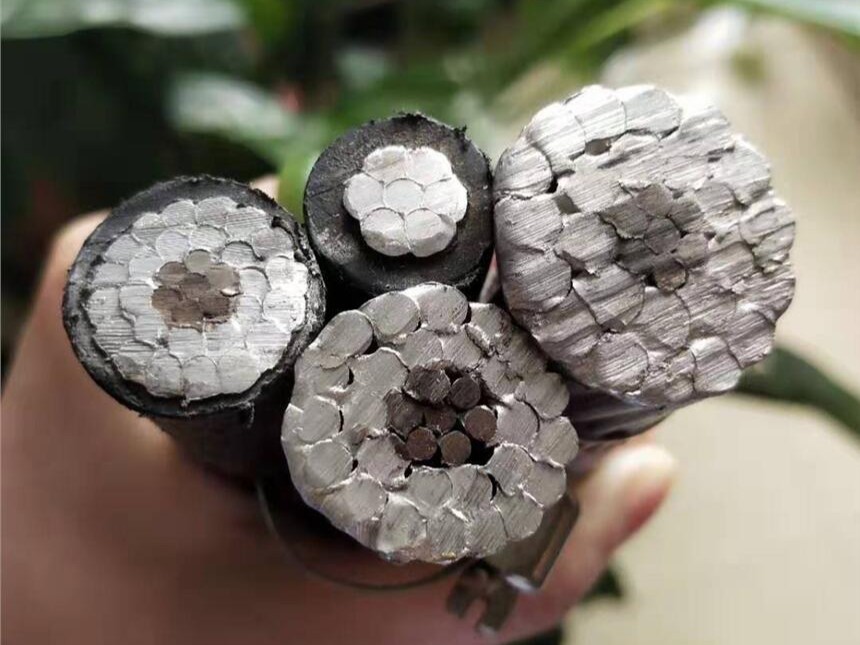
Let's be real—if you're involved in transmission line design or procurement, you've specified ACSR more times than you can count. It's been the default choice for overhead conductors since the early 1900s, and for good reason. The combination of aluminum's conductivity and steel's mechanical strength is one of those engineering solutions that just works.
But here's the thing: not all ACSR is created equal. The aluminum-to-steel ratio, the stranding configuration, the quality of the galvanizing—these variables have a real impact on how your line performs over its 40+ year service life. Pick the wrong configuration and you're looking at excessive sag on hot days, corrosion failures in coastal environments, or worse—a line that simply can't handle the load you need it to.
I've spent over a decade working with overhead conductors across utility-scale transmission projects, and I can tell you this: the conductor selection often gets less attention than it deserves. Conductor and hardware typically account for 10–20% of total transmission line project cost—comparable to the foundation budget—yet they determine the mechanical and electrical performance of the entire line. That's a pretty big responsibility for one component.
In this guide, I'll walk you through everything you need to know about ACSR—from the material science behind it, to the standards that govern it, to real-world selection criteria that'll help you make better decisions on your next project.
ACSR is a composite conductor: outer strands of hard-drawn aluminum wrapped around a core of galvanized steel. Each material handles a specific job—the aluminum carries the current, the steel carries the load. Sounds straightforward, right? Well, the devil's in the details.
The outer strands are typically 1350-H19 aluminum alloy (minimum 99.50% aluminum content, with controlled iron and silicon levels). It delivers a minimum 61.2% IACS conductivity, which is pretty much the benchmark for overhead conductors. The H19 temper gives it a good balance of tensile strength and ductility, so it can handle the stranding process and the mechanical loads of installation without cracking.
Now, here's where it gets a bit tricky. The maximum continuous operating temperature for ACSR is typically limited to 75–100°C, depending on the governing standard (IEEE 738, IEC 61597, or utility-specific specifications). At moderate loads this is not an issue, but sustained operation at the upper end of the range causes cumulative, irreversible creep of the aluminum strands. This means a permanent increase in sag that doesn't reset when the conductor cools down. I've seen lines where repeated overload events left them sagging low enough to require full section replacement. Not cheap.
The steel core provides the muscle. Depending on the size and configuration, it can be a single wire or multiple strands, hot-dip galvanized per ASTM B498. Steel conducts at roughly 8% IACS, so it's not there for the electrical path—it's there to let you string longer spans between towers, handle ice and wind loads, and keep sag within limits.
ACSR's composite design is electrically efficient because of the skin effect. At power frequencies (50/60 Hz), current tends to flow in the outer aluminum layers, so the steel core's poor conductivity has limited impact on overall DC resistance—the aluminum carries roughly 93–98% of the current in most configurations. That said, the steel core does contribute to AC resistance through eddy current and hysteresis losses, which is why conductor selection always involves balancing mechanical and electrical performance.
| Property | Economy Grade / "Will Code" | Sorivo Premium Grade |
|---|---|---|
| Aluminum temper | 1350-H14 or unspecified; inconsistent hardness | 1350-H19 full hard per ASTM B230; verified tensile and elongation |
| Steel core coating | Minimal galvanizing, thin uneven zinc layer | Hot-dip galvanized per ASTM B498; uniform coating, Class A or C as specified |
| Stranding tolerance | Loose lay; gap between strands possible | Tight, uniform lay with alternating directions; no birdcaging or loose wires |
| Al:Steel ratio options | One-size-fits-all (typically 6:1) | 4.3:1 to 11:1, matched to project load and span conditions |
| Traceability | None—no markings, no batch records | Meter-by-meter sequential marking; full batch trace to melt number |
| Packaging for export | Basic steel drum or wooden reel, no moisture protection | VCI anti-corrosion wrap, sealed core ends, moisture indicators for sea freight |
| Warranty | 1–5 years | 25 years on materials and workmanship |
If you've ever looked at an ACSR specification and wondered why a conductor is called "Hawk" or "Drake" or "Cardinal," you're not alone. Honestly, that naming system threw me off at first too. But once you learn it, it turns out to be one of the most intuitive conventions in the industry.
| Standard | Region | Size Designation | Code Names | Unit System |
|---|---|---|---|---|
| ASTM B232 | North America | AWG (6–4/0) and kcmil (266.8–1590+) | Bird names—Turkey, Raven, Hawk, Drake, Cardinal, Falcon | Imperial |
| IEC 61089 | International / Europe / Asia | Metric code numbers (16–900 mm²) | Numeric only | Metric |
| BS 215 | United Kingdom (legacy) | Metric | Animal code names (e.g., Zebra, Moose) or Al/Steel cross-section (e.g., 400/51) | Metric |
| GB/T 1179-2017 | China | Metric | Semi-numeric, based on IEC 61089 | Metric |
The stranding configuration is written as, say, 26/7. The first number is aluminum strands, the second is steel core strands. Simple enough. But the ratio tells you a lot about what the conductor is designed for.
A quick note before we dive in: the Al:Steel area ratio isn't simply the strand count divided. It depends on the actual wire diameters used, which differ between the aluminum and steel layers. The values below are typical for standard ACSR constructions.
| Stranding (Al/St) | Typical Bird Code / Metric | Typical Al:Steel Area Ratio | Best For |
|---|---|---|---|
| 6/1 | Turkey (#6 AWG) through Penguin (4/0 AWG) | 6.0:1 | Distribution, short spans, light loading |
| 18/1 | Waxwing (266.8 kcmil), Merlin (336.4 kcmil) | ~18:1 | Medium spans, general-purpose sub-transmission |
| 26/7 | Partridge, Hawk, Dove, Drake (most common family) | ~6.1:1 | General-purpose transmission—the workhorse of the industry |
| 30/7 | Oriole, Lark, Hen (larger sizes) | ~4.3:1 | Heavy loading areas, long spans |
| 54/7 | Cardinal (954 kcmil), Condor, Canary | ~7.7:1 | Large EHV transmission, bundle configurations |
| 54/19 | Falcon (1590 kcmil), Pheasant, Martin | ~7.9:1 | Extra-large conductors, long spans with heavy loading |
| 72/7 | Metric 800–900 mm² | ~10:1 | Very high ampacity, short-span urban infeed |
A lot of buyers focus on whether a conductor "meets ASTM" or "meets IEC." But here's the thing: compliance isn't binary. A real standards-based quality program verifies specific properties, not just a self-declaration.
When a supplier says "meets international standards," ask: which ones, who tested it, and can I see the type test report? A third-party test report from TÜV, KEMA, or UL tells you a lot more than a certificate of conformity printed in-house.
The single most important design parameter in ACSR selection is the aluminum-to-steel ratio. It determines the balance between mechanical strength and current-carrying capacity. Get this right and everything else falls into place.
| Project Condition | Recommended Al:Steel Ratio | Recommended Stranding | Typical Bird Code Example |
|---|---|---|---|
| Standard 220–400 kV transmission, moderate spans (300–500 m) | 6.0–7.7:1 | 26/7 or 54/7 | Hawk, Drake, Cardinal |
| River crossing, mountain gorge (spans >800 m) | 4.3–6.0:1 | 30/7 or 26/7 (higher steel) | Lark, Hen |
| Heavy ice zone (ice load >20 mm per IEC 60826) | 4.3–6.0:1 | 30/7 or 54/19 | Hen, Falcon |
| Coastal / industrial corrosive environment | 6.0–7.7:1 (Al-clad steel core) | 26/7 | Hawk, Drake |
| Short-span urban infeed (<200 m, high ampacity) | >7.7:1 (up to 10:1) | 72/7 | Metric 800–900 mm² |
| Reconductoring / capacity upgrade on existing towers | N/A — consider ACSS/TW or ACCC | Varies | N/A |
This is where ACSR shines brightest. For a typical EHV line, you're looking at bundle conductor configurations—two, four, or even six conductors per phase. The 26/7 family (Hawk, Dove, Drake) handles this beautifully. The 7-wire steel core provides enough strength for spans of 300–500 meters, while the 26 aluminum strands give excellent conductivity.
In a 400 kV line with quad bundles of 795 kcmil Drake, the current rating per phase typically ranges from 2400 to 3200 A depending on ambient temperature, wind speed, and solar heating. That's roughly enough to supply 500,000 to 700,000 households, depending on regional consumption patterns.
When you need to clear a river valley or a mountain gorge with spans of 1000 meters or more, standard 26/7 configurations start to run out of steam. The steel core's rated tensile strength becomes the limiting factor. This is where you step up to a lower Al:steel ratio—30/7 or certain 26/7 variants with heavier steel wire.
The tradeoff is real: you're adding weight (more steel) and reducing aluminum cross-section, so ampacity drops. But for a crossing span, mechanical safety always wins. I've seen projects try to cut corners here, and it never ends well.
In regions with frequent ice storms—northern China, eastern Canada, Scandinavia—the design load is dominated by ice accretion. The IEC 60826 and similar standards specify ice thicknesses from 5 mm to 40 mm or more. Every millimeter of ice adds significant weight to the conductor.
For these conditions, you want a conductor with a high steel content: 4.3:1 to 6.0:1 ratios. The extra steel provides the mechanical margin you need. Equally important: specify galvanized core with Class C coating for extra corrosion protection, because ice accumulations often come with freeze-thaw cycles that accelerate moisture ingress.
Here's a situation where standard ACSR has a real weakness. The steel core is galvanized, but in high-salinity coastal air or industrial sulfur compounds, the zinc layer can deplete faster than expected. Once the zinc is gone, the steel corrodes, and the conductor loses tensile capacity.
If you're working on a line within 5 km of the coast, I'd strongly recommend looking at aluminum-clad steel (AC) core instead of galvanized. It costs more, but the corrosion resistance is dramatically better. Or consider AAAC (all-aluminum alloy conductor) if the spans are short enough—AAAC has no steel core to corrode in the first place.
For a deeper dive into material considerations, check out our related guide on copper vs aluminum cable advantages.
Here's a number that deserves way more attention than it gets: the maximum continuous operating temperature. For ACSR, this is typically limited to 75–100°C depending on the governing standard (IEEE 738, IEC 61597, or project-specific specifications). This isn't a hard melting point—it's a design limit based on how the conductor behaves over decades of service.
Picture this: a summer heatwave hits, demand spikes, and your line is loaded hard for 48 hours. The conductor temperature climbs above 100°C. The aluminum strands undergo accelerated creep—slow but permanent elongation. When the heatwave passes and the conductor cools, it doesn't tighten back up to its original catenary. It stays a bit looser, a bit lower, forever.
That's the temperature ceiling in action. The loss of tensile strength is time-and-temperature dependent: a brief excursion does minimal damage, but repeated or sustained overtemperature events accumulate, gradually degrading the conductor's mechanical performance.
The conventional wisdom is that ACSR has the lowest first cost, and it's true—for new lines. But the total cost of ownership picture shifts depending on how hard you run the line.
| Scenario | Average Annual Load | ACSR (795 Drake) | ACSS/TW (959 kcmil) | ACCC Composite (1026 kcmil) |
|---|---|---|---|---|
| Lightly loaded | <10% of rating | Lowest TCO | +10–15% | +80–100% |
| Moderately loaded | 15–25% of rating | Baseline | Lowest TCO (lower I²R losses offset higher first cost) | +40–60% |
| Heavily loaded | >35% of rating | Highest losses; risk of accelerated creep | Clear TCO winner | Comparable to ACSS (high first cost balances lower losses) |
The data here comes from lifecycle cost models using established industry methodologies (IEEE 738 thermal rating, I²R loss calculations over a 50-year service life). The takeaway is simple: ACSR is unbeatable for new lines with moderate loading. For reconductoring or high-load scenarios, ACSS/TW with trapezoidal wire and fully annealed aluminum consistently delivers the best lifecycle economics.
I don't want to give the impression that ACSR is obsolete—far from it. The temperature ceiling is a real constraint, but for the vast majority of new transmission lines, it's not the limiting factor. Tower height, right-of-way, and environmental permitting usually set the design boundaries long before conductor temperature does.
The key is knowing when ACSR is the right tool. If you're building a new 220 kV or 400 kV line with normal loading profiles, ACSR is the most economical choice and has a 100+ year track record of reliable operation. If you're trying to squeeze 2x the capacity out of an existing corridor with the same tower structures, then ACSR is probably not your answer.
I've seen the inside of enough conductor factories (and enough job sites) to know that two reels of the same ACSR specification can be completely different animals. Here's what I look for:
Good ACSR has tight, uniform stranding. The individual aluminum wires should lay against each other with no gaps. If you can see daylight between strands, or if the wires feel loose when you grab the conductor, that's a sign of poor manufacturing control. The lay length should be consistent along the entire length—measure it every 100 meters on the reel.
The galvanized steel core should have a uniform matte-gray finish, not patchy or shiny in spots. A simple test: if you can scrape off visible zinc flakes with a fingernail, the coating adhesion is poor. Proper galvanizing doesn't flake—it's metallurgically bonded to the steel.
This is a big one. Every meter of quality ACSR should have sequential markings printed or embossed on the outer layer. If a section fails the tensile test, can you trace it back to the melt and the stranding run? If the answer is no, you have a quality control blind spot. This matters most for critical crossings and long spans, where a localized defect can cause a full line outage.
This sounds minor, but it tells you a lot about the manufacturer's overall quality mentality. Look at the inner and outer ends of the conductor on the reel. Are they properly sealed against moisture ingress? Is there a waterproof wrap on the cut ends? For export shipments (especially sea freight), the reel should have VCI (Vapor Corrosion Inhibitor) packaging and the core ends should be capped. Moisture trapped inside the steel core during transit will cause corrosion before the conductor even reaches the stringing site.
Any reputable manufacturer provides a sag-tension calculation sheet for the specific conductor and project conditions. If the supplier can't produce one—or worse, hands you a generic table from a 20-year-old handbook—that's a red flag. The sag-tension behavior of ACSR depends on the exact Al:steel ratio, the temper of the aluminum, and the type of steel core. A generic number won't cut it for a real design.
So where does this leave us? Well, if you take one thing from this guide, let it be this: ACSR is not a commodity to be bought on price alone. The Al:steel ratio, the stranding configuration, the quality of the galvanizing, and the manufacturer's quality system all have a real impact on the line's performance over its service life.
Here's a quick decision guide:
At Sorivo, we supply ACSR across all standard configurations—ASTM B232, IEC 61089, and GB/T 1179-2017—with full third-party type test reports and batch traceability. Every reel comes with documentation you can hand straight to your consulting engineer.
For a complete overview of our overhead conductor capabilities, visit our full product range. And if you're planning a transmission or renewable energy project, our engineering team can help match the right conductor to your specific line conditions.
Need help selecting the right ACSR for your project? Send us your line parameters (voltage, span lengths, loading zones) and we'll prepare a detailed conductor recommendation with sag-tension calculations. No charge, no obligation—just the technical support a good project deserves.
Get Your Project-Specific ACSR Recommendation →