Professional cable manufacturer

Professional cable manufacturer
Supplier AuditQuality ControlFactory InspectionCable Manufacturing
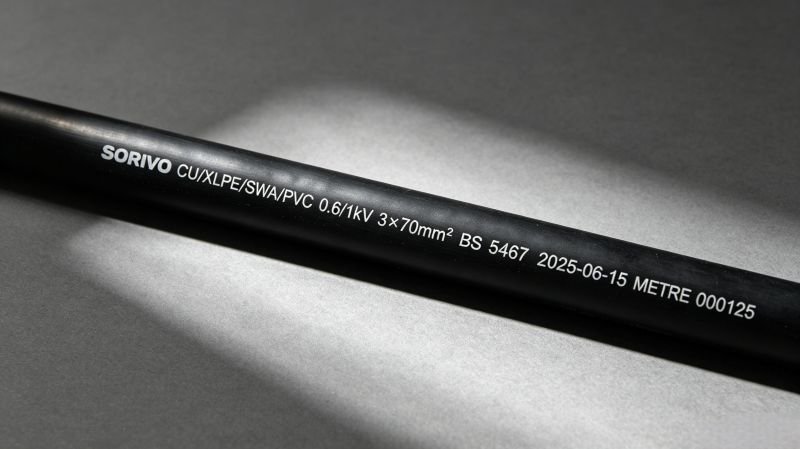
Here's a scenario I've seen play out more times than I'd like to admit: A buyer sources cables from a new manufacturer. The price looks good. The samples pass. Then six months in, they start getting field failures—insulation cracking, conductor corrosion, markings that rub off before the cable is even installed. By the time they send someone to the factory, it's too late. The order is shipped, the equipment is in the ground, and the replacement cost is three times what they "saved."
The thing is, nearly all of these failures could have been caught during a proper on-site cable factory audit. Not the rubber-stamp kind where you walk through a clean showroom and sign a form. I mean the kind where you show up at the production floor, pull random reels, check the spark tester calibration yourself, and ask to see the rejection log.
In this guide, I'll walk you through exactly what to inspect during a cable manufacturer audit—from the copper rod in the warehouse to the drum marking on the finished product. I've organized it into actionable checkpoints you can use as a real checklist, not just a reading list.
The conductor is the heart of any cable. If the copper isn't right, nothing else matters. I've seen factories use ETP copper rods with oxygen content at the high end of the allowable range, blended with recycled material that introduces trace impurities—and you'd never know it from the outside. High oxygen content (above 400 ppm) is still permitted per ASTM B49 but can reduce ductility and affect brazing/welding performance, so it's worth flagging during an audit.
For most power and solar cables, the conductor should be electrolytic tough pitch (ETP) copper with a minimum purity of 99.9% Cu. Per ASTM B49, the oxygen content range for ETP copper is 100–650 ppm (typical process control targets: 200–400 ppm). Here's what to check during your cable quality control audit:
| Parameter | Acceptable Range | Standard | How to Verify |
|---|---|---|---|
| Copper purity | ≥ 99.9% | ASTM B49 / IEC 60228 | Ask for mill test certificate (MTC) from the rod supplier |
| Oxygen content (ETP) | 100–650 ppm per ASTM B49 (typical control: 200–400 ppm) | ASTM E1019 | Inert gas fusion test report (LECO analyzer) |
| Conductivity | ≥ 100% IACS (≈58 MS/m at 20°C) | IEC 60228 | DC resistance measurement on finished conductor |
| Key impurities | Bi < 10 ppm, Sb < 10 ppm, Se < 10 ppm, Te < 10 ppm | ASTM B49 | ICP-OES or GDMS lab report |
Check that the stranded conductor meets the specified class—Class 1 (solid), Class 2 (stranded) for fixed installations, or Class 5/6 (fine wire) for flexible cables. Sorivo uses Class 5 tinned copper conductors per IEC 60228 across its solar cable range. Here are the in-process checks you should see on the floor:
In my experience, the most common finding during audits is that factories measure the outer diameter of the stranded conductor but don't check individual wire diameters or surface quality. A conductor that looks fine from the outside can have hidden broken wires that will cause hot spots under load.
The insulation is where most field failures originate—either from thickness below specification, poor concentricity, or material contamination. Let's break down what to verify.
Per IEC 60811-201 (measurement method), insulation thickness is measured as a 6-point average. The acceptance criteria—including the minimum allowable value at any single point—are defined by the applicable product standard (e.g., IEC 60502-1, EN 50618). During your cable manufacturing audit:
| Parameter | Inspection Point | Acceptance Criteria |
|---|---|---|
| Insulation thickness average | Every reel / batch | ≥ specified nominal (e.g., 0.7 mm for H1Z2Z2-K) |
| Insulation thickness minimum point | Every reel / batch | ≥ 90% of specified minimum (per standard) |
| Concentricity | Sample / type test | ≥ 70% (industry); ≥ 80% (premium) |
| Hot set test (XLPE) | Every reel (curing check) | Elongation ≤ 175%, permanent set ≤ 15% (IEC 60811-507) |
Check the compound storage area. PVC, XLPE, and LSZH materials have different storage requirements. I've walked into factories where expensive LSZH compound was stored next to open windows under direct sunlight—heat degrades the flame-retardant additives.
Key checks:
If there's one test that separates serious cable manufacturers from the rest, it's the spark test. Per IEC 62230, every meter of insulated core must pass an online spark test after extrusion. This detects pinholes, cuts, thin spots, and other insulation defects that would otherwise escape.
| Check Point | Why It Matters | What to Look For |
|---|---|---|
| 100% online testing | Every core, every meter | Spark tester is running inline with the extrusion line, not offline |
| Correct voltage setting | Under-testing misses defects; over-testing damages good insulation | Compare the set voltage against the table in IEC 62230 Annex A based on insulation thickness |
| Calibration records | Equipment drift leads to missed defects | Calibration sticker with valid date (typically every 6 months); artificial fault test (Annex B) |
| Failure handling | Defective cores must be identified and removed | Ask to see the spark failure log. Every failure should have: date, reel number, fault location, corrective action |
| Insulation Radial Thickness (mm) | AC Test Voltage (kV RMS) | DC Test Voltage (kV) |
|---|---|---|
| 0 – 0.25 | 3 | 5 |
| 0.25 – 0.50 | 5 | 7 |
| 0.50 – 0.75 | 7 | 10 |
| 0.75 – 1.00 | 8 | 12 |
| 1.00 – 1.25 | 10 | 15 |
| 1.25 – 1.50 | 12 | 18 |
| 1.50 – 2.00 | 14–16 | 21–24 |
| 2.00 – 3.00 | 18–20 | 27–30 |
Cable dimensions aren't just about fitting into connectors. They're directly tied to electrical performance and long-term reliability. Here's what your cable quality inspection should cover:
| Test | What It Verifies | Acceptance |
|---|---|---|
| Tensile strength (insulation & sheath) | Material strength before aging | Per material spec (e.g., ≥ 8 N/mm² for LSZH sheath) |
| Elongation at break | Flexibility and ductility | ≥ 125% (typical for LSZH); ≥ 200% (PVC) |
| Aged tensile & elongation | Thermal aging resistance (7–10 days at 100–135°C) | Retention ≥ 70% of original value |
| Hot set test | XLPE crosslinking degree | Elongation ≤ 175%, permanent set ≤ 15% |
| Low-temperature test | Cold flexibility (e.g., –40°C for solar cables) | No cracking after cold bend or impact |
Here's the thing: you don't need to witness every mechanical test during a one-day audit. But you do need to verify that the test equipment exists, is calibrated, and has been used. I've audited factories that claimed "full in-house testing capability" on their website, only to find the tensile tester covered in dust and the last test record dated 14 months ago. Let's be real—that's not a testing lab, it's a prop.
For a full reference on what each test means in practice, check out the complete guide to cable testing standards on our blog.
The production floor tells you more than any certificate ever will. Here's what I look for during the walk-through:
| Area | What to Check |
|---|---|
| Raw material storage | Copper rod stored clean and dry; compound in climate-controlled area with FIFO labeling |
| Extrusion line | Temperature zone settings matching material spec; online diameter gauge working; spark tester active and calibrated |
| Stranding / bunching | Pay-off tension even; no wire crossings or tangles; surface quality of individual strands |
| Cabling (laying up) | Core sequence correct; lay direction and length per spec; binding tape tight and complete |
| Printing / marking | Ink or laser marking clear, legible, and abrasion-resistant (rub test: at least 10 strokes without fading) |
| Finished cable storage | Drum flanges intact; cable ends sealed with heat shrink; drums stored upright, not lying flat |
You'd be surprised how often good cables arrive damaged because of poor packaging. Here's the minimum drum labeling you should verify during your pre-shipment cable inspection:
| Item | Acceptance Criteria |
|---|---|
| Cable end sealing | Both ends sealed with heat shrink caps; inner end secured to drum flange |
| Outer lagging | Weather-resistant wrapping, intact with no tears |
| Drum condition | No broken flanges, protruding nails, or damage that could snag cable |
| Length verification | Actual length matches drum label (tolerance per contract, typically 0% / +5%) |
| Sampling plan | Per ISO 2859-1 (AQL 1.0 for major defects, 2.5 for minor) |
| Moisture protection | Desiccant packs and waterproof wrapping for sea freight |
Let's put some numbers on it. Imagine you're sourcing 100 km of solar cable for a 5 MW ground-mount project:
| Scenario | Cost Per Meter | Total Cable Cost | Additional Cost |
|---|---|---|---|
| Audited premium supplier | $1.20 | $120,000 | $2,000 audit cost (one-time) |
| Unaudited economic supplier | $0.85 | $85,000 | "saving" $35,000 |
Looks good for the economic supplier, right? Until you account for what happens when those cables fail:
| Failure Scenario | Cost Element | Estimated Cost |
|---|---|---|
| Insulation cracking after 3 years (undercured XLPE) | Replacement cable cost | $120,000 (new cable at premium price) |
| Labor to remove and re-install | $45,000 | |
| Downtime / lost generation (30 days partial) | $60,000 | |
| Total cost of failure: | $225,000 | |
So that $35,000 "saving" turned into a $225,000 loss—and that's before you factor in reputational damage with your client. The thing is, a proper on-site audit would have caught the undercured XLPE issue on day one. The hot set test data would have told you everything you needed to know.
I'd argue that for any cable order over $50,000, the cost of an on-site audit (typically $2,000–$5,000 including travel) is the best insurance you can buy. Sounds obvious, right? You'd be surprised how many buyers skip this step.
Before you set foot in the factory, make sure you have these documents ready. This checklist saves you from wasting a visit:
• ISO 9001 certificate (verify online)
• Type test certificates for your product
• Organisation chart / QC team structure
• Equipment list with calibration status
• Last 3 batch test reports
• Your product specification sheet
• Applicable standard printouts (IEC/BS/UL)
• Sampling plan (AQL levels)
• Non-disclosure agreement (if needed)
• Camera / notepad / measuring tools
| Parameter | Market Standard / Economy | Sorivo Premium |
|---|---|---|
| Conductor | Bare copper, purity unverified, possible recycled content | ETP copper ≥ 99.9% purity, oxygen content verified, IEC 60228 Class 5/6 |
| Oxygen content | Not measured or reported | 200–400 ppm, verified by inert gas fusion (LECO) |
| Insulation / sheath | PVC (5–8 year design life in outdoor exposure) | XLPE insulation + LSZH XLPO sheath (25-year design life, –40°C to +90°C continuous / 120°C short circuit) |
| Spark test | May be skipped or voltage set by "feel" rather than spec | 100% online, voltage per IEC 62230 table, calibration every 6 months |
| Concentricity | Not monitored (≥ 50% if measured) | ≥ 80% online monitoring |
| Hot set test (XLPE) | Type test only (once at certification) | Routine — every reel |
| UV resistance | Minimal stabilizer content | Carbon black 2.6% ± 0.25% per GB/T 15065 + stabilizer, HD 605 S1 passed |
| Traceability | Batch level at best | Meter marking + batch traceable to raw material lot |
| Certification | Self-declared CE | TÜV / UL / BASEC third-party verified |
| Warranty | 1–5 years | 25 years |
If you have limited time during a factory visit, here are the five most revealing things to check:
For critical or high-volume suppliers, I'd recommend an initial full audit before the first order, then surveillance audits every 12 months. For well-established suppliers with a consistent track record, every 18–24 months is reasonable. If there's a major quality incident or a change in ownership/production line, audit immediately regardless of schedule.
Honestly? It's the attitude toward non-conformances. A good factory openly discusses its rejects, shows you the failure analysis, and explains what changed to prevent recurrence. A bad factory either claims zero defects or blames everything on "operator error" without a documented corrective action. In my experience, the quality of the rejection log is the single best predictor of overall quality.
You can do a remote document review (ISO certificate, test reports, quality procedures) as a first pass. But for critical parameters—conductor purity records, spark test calibration, hot set test data, and actual production floor conditions—there's no substitute for being there. I've seen factories pass document reviews with flying colors while the production line was running with an uncalibrated spark tester. A remote audit just doesn't catch that.
The industry minimum is generally 70% concentricity (meaning the thinnest point is at least 70% of the thickest point). Premium manufacturers target 80% or higher. For high-voltage cables or critical applications, some specs require 85%+. If a factory doesn't measure eccentricity at all, that's a red flag—every extrusion line should have either an online eccentricity gauge or a documented sampling plan.
Focus on three things: (1) UV resistance verification—ask for the HD 605 S1 test report confirming carbon black content at 2.6% ± 0.25% and mechanical property retention ≥ 85% after 1000 hours; (2) conductor tinning quality for H1Z2Z2-K per EN 50618—check coating continuity and adhesion; (3) hot set test for XLPE insulation—every reel must be tested. Solar cables run at 90°C continuously and experience 25+ years of thermal cycling outdoors. Undercured XLPE or insufficient UV stabilization will fail well before the 25-year design life.
Absolutely. Pick one reel from the current production run and ask to witness the routine tests: DC resistance measurement, spark test at the correct voltage, and insulation thickness measurement. This takes about 30 minutes and tells you more about the factory's actual quality level than a full day of document review. If the QC team hesitates or says "that reel is already packed," pick another one.
We've audited hundreds of cable factories worldwide. Whether you need a full on-site audit, a documentation review, or just want to understand what to look for—let's talk.
📧 sale@sorivocable.com | 📞 +86 192 8290 5529
SORIVO — Premium cables. Verified quality. 25-year warranty.