Professional cable manufacturer

Professional cable manufacturer
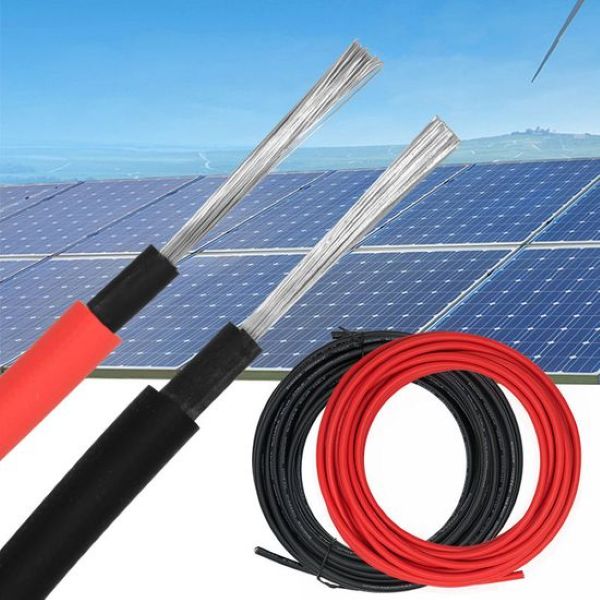
I've inspected more trenching jobs than I can count — and the most common mistake? Treating solar DC burial like standard AC underground service. Here's the thing: solar circuits operate at voltages up to 1500 V DC, often in ungrounded (non-grounded) arrays, with unique requirements for cable selection, burial depth, and conduit fill that don't apply to regular AC runs.
The governing codes break down like this:
Using standard THHN in underground conduit for solar DC — THHN is rated for dry locations only and is not sunlight-resistant. Per NEC 310.10(G) (wet location requirements), THWN-2 or XHHW-2 must be used for wet underground conduit runs. Better yet: USE-2 for direct burial or PV Wire (UL 4703) for the most flexibility.
Choosing the right cable type is your first decision. Not all "solar cable" is rated for burial, and not all burial-rated cable is suitable for solar. Here's the breakdown:
| Cable Type | Voltage | Direct Burial | Conduit | UV Rated | Best For |
|---|---|---|---|---|---|
| PV Wire (UL 4703) | 600V–2000V | ✅ Yes | ✅ Yes | ✅ 720 hr | Both grounded & ungrounded arrays |
| USE-2 | 600V AC / ≤600V DC† | ✅ Yes | ✅ Yes | ✅ 720 hr‡ | Grounded arrays only |
| RHW-2 | 600V | ✅ Yes* | ✅ Yes | Limited | Conduit & direct burial in wet locations |
| THWN-2 | 600V | ❌ No | ✅ Yes | ❌ No | Conduit, indoor/underground duct |
| XHHW-2 | 600V (1000V for 8 AWG+) | ❌ No | ✅ Yes | ❌ No | Conduit, high-heat environments |
* RHW-2 is rated for direct burial per its UL 44 listing when dual-rated as USE-2. For solar PV source/output circuits, USE-2 or PV Wire is the preferred and more commonly listed option.
† USE-2 is 600V AC rated per UL 854; for DC solar use, it is limited to ≤600V DC grounded arrays only.
‡ Single-conductor USE-2 cables marked sunlight-resistant pass 720 hr UV test per UL 854 §1.6. The 300 hr requirement applies only to inner conductors beneath the overall jacket of multi-conductor cables.
For direct burial (no conduit), you need USE-2 or listed PV Wire. For conduit underground, THWN-2 or XHHW-2 works — but remember, if the conduit transitions to an exposed rooftop or exterior wall, the cable must be sunlight-resistant. A dual-rated PV Wire (USE-2/RHW-2) gives you the most flexibility in a single cable.
For solar systems operating above 600V DC (common in commercial — 1000V or 1500V), USE-2 is not permitted — it's only rated for 600V. You need PV Wire rated for 1000V or 2000V per UL 4703. Per NEC 690.31(G) (2023), conductors for 1000–1500V DC systems must have minimum 2000V insulation.
Burial depth is measured from the finished grade to the top of the cable or conduit. These are minimums — local amendments may require deeper.
| Wiring Method | General Depth | Under 2" Concrete Slab | Under Residential Driveway | Under Street / Parking |
|---|---|---|---|---|
| Direct Burial Cable | 24 in (600 mm) | 18 in (450 mm) | 24 in (600 mm) | 24 in (600 mm) |
| Rigid Metal Conduit (RMC) | 6 in (150 mm) | 4 in (100 mm) | 6 in (150 mm) | 6 in (150 mm) |
| PVC / HDPE Conduit (Sch 40) | 18 in (450 mm) | 12 in (300 mm) | 18 in | 24 in |
| PVC / HDPE Conduit (Sch 80) | 18 in (450 mm) | 12 in (300 mm) | 18 in | 24 in |
| 120V GFCI Protected Branch Circuit | 12 in (300 mm) | 6 in (150 mm) | 12 in | 24 in |
Situation: Running a 240V AC feeder from the inverter to the main panel, 50 ft trench across a lawn.
Recommended: PVC Sch 40 conduit at 18" deep, with 6 AWG THWN-2 copper conductors. Red warning tape at 12" below grade. Conduit sized per NEC Chapter 9 Table 1 (max 40% fill).
Solar installations have unique conduit considerations. Let's walk through the key ones.
Schedule 40 is sufficient for most residential underground runs. Schedule 80 is required where the conduit is subject to physical damage — exposed above grade, or under driveways and roads. For solar, this means:
PV DC circuits often require larger conduit than AC circuits at the same current — because the conductor insulation is thicker (PV Wire or XHHW-2), and you may be running multiple strings in parallel.
| System Size | Conductors (per string) | # of Strings | Recommended Conduit Size (PVC Sch 40) |
|---|---|---|---|
| 5–8 kW | 10 AWG PV Wire | 2 strings | 1 in |
| 8–12 kW | 8 AWG PV Wire | 2–3 strings | 1.25 in |
| 12–20 kW | 6 AWG PV Wire | 3–4 strings | 1.5 in |
| 20–50 kW | 4 AWG PV Wire | 4–6 strings | 2 in |
| 50–100 kW (commercial) | 2 AWG – 4/0 | 6–12 strings | 3–4 in (or parallel conduits) |
For underground conduit runs exceeding 100 ft, install pull boxes or junction boxes at intermediate points. NEC 352.26 limits PVC conduit to 360 degrees of total bends between pull points. For solar farm applications, pre-install pull cords in all ducts — future-proofing saves enormous cost if a string needs replacement.
Article 690.31 contains the most important wiring rules specific to solar PV systems. Here are the critical sections:
Where PV DC circuits exceed 30V and are routed inside a building, they must be in metal raceways, MC cable, or metal enclosures (2023 NEC 690.31(D)). This is a fire safety consideration — solar DC is not self-extinguishing like AC.
PV source and output circuits shall not occupy the same raceway or enclosure with non-PV circuits or inverter output circuits unless separated by a partition (NEC 690.31(B)(1)). Where conductors from different PV systems share a raceway, they must be grouped by cable ties at least every 6 ft. All conductors in a shared raceway must also be rated for the maximum voltage present per NEC 300.3(C)(1).
For 1000–1500V DC systems:
Over the years, I've seen the same problems crop up in solar trenching jobs. Here's what separates a 25-year installation from one that fails in 5:
Direct burial with USE-2/PV Wire: Lower labor cost, faster installation. Best for long runs in open areas (solar farms, large commercial ground-mounts). Conduit protection is absent — requires careful backfill and good soil conditions.
Conduit with THWN-2/PV Wire: Higher material cost but better protection, easier future cable replacement, and simpler code compliance. Best for residential, urban sites, and anywhere future changes are likely.
We stock H1Z2Z2-K solar cable (EN 50618) and UL-certified PV Wire & USE-2 cable for direct-buried and conduit applications. All sizes from 10 AWG to 500 kcmil with full third-party certifications.
Request a Burial Cable Quote