Professional cable manufacturer

Professional cable manufacturer
Standards referenced: EN 50620:2017 / IEC 62196-1 / IEC 62196-3 / IEC 62893 / UL 62 / UL 2251 / TÜV 2PfG 1908 / SAE J1772 / SAE J3400 / GB/T 20234.3
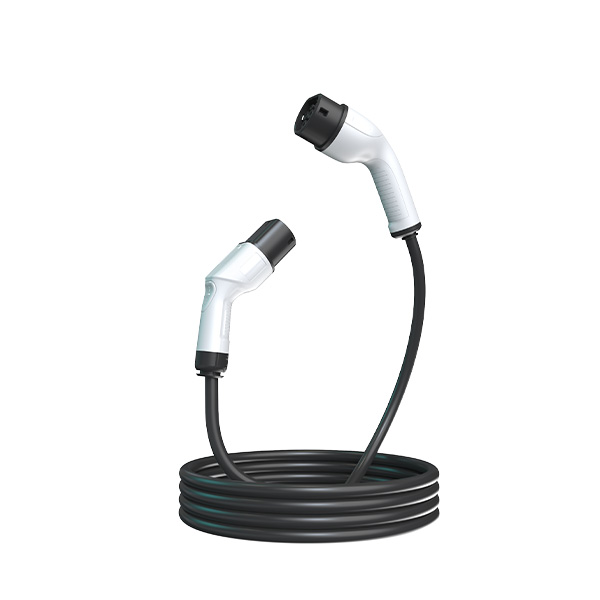
You see, I've been around EV charging infrastructure for a while, and I keep running into the same assumption — that a cable is a cable. It's not. The cable that works perfectly for your home wallbox on a 7.4 kW AC connection will overheat within minutes on a 350 kW DC ultra-fast charger. And I mean that literally — I've seen it happen.
I've worked with charging station manufacturers who learned this the hard way. One OEM spec'd a standard AC cable for a 60 kW DC charger because "it's the same plug, right?" — the cable surface temperature hit 85°C during the first full-power test. The TPU sheath started softening within a few charge cycles. The fix? A completely different cable construction with twice the conductor cross-section and a reinforced jacket.
So what's the real difference between an AC cable and a DC cable? It's not just the connector — it's everything from the conductor size to the sheath material to whether you need active cooling. I'll break down the construction differences, the relevant standards, real-world material performance, and the point where liquid cooling becomes unavoidable. If you manufacture charging stations, design EVSE components, or specify cables for charging infrastructure, this should help.
Before we talk cables, it helps to understand the system architecture. The real difference between AC and DC charging comes down to where the AC-to-DC conversion happens:
| Parameter | AC Charging (Mode 2 / Mode 3) | DC Fast Charging (Mode 4) |
|---|---|---|
| Power conversion location | Inside the vehicle (on-board charger) | Inside the charging cabinet |
| Power range | 3.7 kW (1-phase) to 22 kW (3-phase) | 50 kW to 600+ kW |
| Current per power core | 16A–32A (per phase) | 125A–500A+ |
| Cable voltage rating | 250V / 480V AC | 1,000V DC (up to 1,500V) |
| Connector standard | Type 2 (IEC 62196-2), J1772 (SAE) | CCS1/CCS2 (IEC 62196-3), NACS, GB/T, CHAdeMO |
| What the cable carries | AC power to the vehicle's OBC | DC power directly to the battery |
| Cable flexibility requirement | High — user handles daily | Moderate — cable management system often used |
| Thermal stress on cable | Low to moderate | High — sustained high current generates significant heat |
So here's what this means in practice: AC charging puts the thermal stress inside the car. DC charging pushes that stress into the cable and connector. This one architectural decision drives everything — from conductor sizing to sheath material selection to the need for active cooling.
EV charging cables sit at the intersection of several standards frameworks. The applicable standard depends on the charging mode, region, and whether the cable is attached to the charging station or the vehicle:
| Standard | Region | Scope | Key Requirements |
|---|---|---|---|
| EN 50620:2017 | Europe | Charging cables for EVs — AC 300/500V and 450/750V; DC up to 1,000V | TPU/PUR sheath (EVM-1 Z5); Class 5/6 conductor; ≥5D (300/500V) or ≥6D (450/750V) bend radius; -40°C to +90°C; oil & UV resistant; 2,000 abrasion cycles |
| IEC 62893 | International | Charging cables for EVs — up to 1.5kV DC | Similar to EN 50620 with extended DC voltage ratings; includes liquid-cooled cable requirements |
| IEC 62196-1 / -3 | International | EV connectors and inlets (CCS) | Connector mating cycles (10,000+); IP55/IP67; temperature rise limits; HVIL requirements |
| UL 62 / UL 2251 | North America | Flexible cords and EV cables | UL-listed jacket materials; VW-1 flame test; 60°C/90°C/105°C temperature ratings; SAE J1772 connector compatibility |
| TÜV 2PfG 1908 | Europe (certification) | EV charging cables — additional requirements | ≥ 8×OD bend radius; enhanced mechanical testing; extended flex life test |
| SAE J3400 (NACS) | North America | NACS connector and cable assembly | Single-connector standard for AC + DC; up to 1,000V DC / 900A (connector-side), up to 1,000A dual-cooled; liquid-cooled provisions |
The conductor configuration is where AC and DC cables differ most obviously. An AC charging cable typically has 3 power cores (for 3-phase) + 2 signal cores (CP/PP) + 1 earth. A DC fast charging cable uses 2 large DC power cores + earth + signal wires + optional cooling channels.
| Layer / Component | AC Cable (22 kW, Type 2) | DC Cable (Air-Cooled, 150 kW) | DC Cable (Liquid-Cooled, 600 kW) |
|---|---|---|---|
| Conductor material | Tinned copper, Class 5/6 | Tinned copper, Class 5/6 | Tinned copper, Class 5/6 |
| Power core cross-section | 5 × 6 mm² (3-phase + N + PE) or 3 × 6 mm² + 2 × 0.5 mm² signal | 2 × 50–95 mm² (DC+ / DC−) + 1 × 25 mm² (PE) | 2 × 25–35 mm² + integrated coolant channels |
| Signal cores | 2 × 0.5 mm² (CP, PP) | 2–4 × 0.5–1.5 mm² (CP, PE, Temp sensors) | 2–6 × 0.5 mm² (CP, HVIL, temp sensors × 2) |
| Insulation material | EVI-1 / EVI-2 (XLPE or TPE) | XLPO, high-temperature rated | XLPO, coolant immersion-rated |
| Sheath material | TPU / PUR (EVM-1 Z5) | TPU / PUR, reinforced | TPU, liquid-tight inner + outer sheath |
| Overall diameter | 12–16 mm | 20–28 mm | 24–31 mm |
| Weight per metre | ~0.3–0.5 kg/m | ~0.8–1.2 kg/m | ~1.3–1.5 kg/m |
| Min bend radius (dynamic) | 5–6 × OD (per EN 50620) | 6–8 × OD | 6–8 × OD |
The size difference is dramatic — a 600A liquid-cooled DC cable can be three times the diameter and five times the weight of a standard AC cable. Sounds dramatic, right? It kind of is. This isn't just about copper; it's about thermal management. A DC cable's conductor cross-section is determined not by ampacity alone, but by the acceptable temperature rise under sustained full-load charging.
For air-cooled DC cables, conductor sizing follows a simple relationship: more current = more copper. Typical configurations:
| Charger Power | Current (at 800V DC) | Min. Conductor per Core | Cable OD (Typical) |
|---|---|---|---|
| 60 kW | 75A | 25 mm² | 18–20 mm |
| 120 kW | 150A | 50 mm² | 22–24 mm |
| 180 kW | 225A | 70 mm² | 24–26 mm |
| 240 kW | 300A | 95 mm² | 26–28 mm |
| 350 kW | 440A | 150 mm²+ (air-cooled limit) | 30+ mm |
| 500–600 kW | 625–750A | Not practical air-cooled → liquid-cooled required | 24–31 mm (with coolant channels) |
Past approximately 375–400A sustained current, air-cooled cables become impractically thick and heavy. That's really where liquid cooling becomes a necessity, not just an option.
The cable sheath is the first line of defence in an EV charging environment. It must survive abrasion from concrete and asphalt, oil and fuel spills, UV exposure, extreme cold, and repeated coiling and uncoiling. Here is how the materials compare:
| Property | TPU / PUR | PVC | LSZH (XLPO) |
|---|---|---|---|
| EN 50620 compliance | ✅ EVM-1 Z5 (mandated) | ❌ Not compliant | ⚠️ Some grades |
| Abrasion resistance | Excellent — 2,000+ cycles | Moderate — 500–800 cycles | Good — 1,000+ cycles |
| Oil / fuel resistance | Excellent | Poor to moderate | Moderate |
| UV resistance | Excellent (EN 50289-4-17) | Poor (cracks within 1–2 years outdoor UK) | Good (with carbon black) |
| Flex life (cold) | Excellent — –40°C bend test passed | Poor — brittle below –10°C | Good — –25°C to –40°C |
| Flex life (repeated coiling) | 10,000+ cycles | 1,000–3,000 cycles | 3,000–8,000 cycles |
| Flame retardancy | VW-1 / IEC 60332-1 | VW-1 (with additives) | IEC 60332-1 + halogen-free |
| Temperature range (fixed) | –40°C to +90°C | –15°C to +70°C | –25°C to +90°C |
| Cost index | 1.0× (baseline) | 0.4× | 0.7× |
TPU/PUR is pretty much the clear winner for EV charging cables — and EN 50620 mandates it for a reason. I've seen charging stations in northern Europe where PVC-sheathed cables became stiff and uncoilable at –15°C, cracking within the first winter. The TPU cable on the adjacent charger worked perfectly. The extra material cost? It's tiny compared to warranty replacements.
Above 350–400A sustained, the physics stop working in your favour — I've run into this limit myself. Doubling the conductor cross-section from 95 mm² to 185 mm² gives you roughly 40% more ampacity but doubles the cable weight and stiffness, making the cable pretty much unusable for daily handling. Liquid cooling breaks this trade-off.
A closed-loop cooling system circulates coolant (water-glycol or dielectric fluid) through channels integrated into the cable jacket alongside the DC power conductors. Heat is carried away to a heat exchanger and pump unit located in the charging cabinet. Key parameters:
| Parameter | Air-Cooled DC Cable | Liquid-Cooled DC Cable |
|---|---|---|
| Max sustained current | ~375A (practical limit) | 500–600A+ |
| Conductor cross-section @ 500A | ~150+ mm² (impractical weight) | ~25–35 mm² (with cooling) |
| Cable outer diameter @ 500A | 35+ mm | 24–31 mm |
| Weight per metre @ 500A | 2.0+ kg/m | 1.3–1.5 kg/m |
| Conductor temp @ full load, 50°C amb. | 100–115°C | 90–100°C (coolant managed) |
| Peak power capacity | ~350 kW | 500–600+ kW |
| Added system components | None | Pump, heat exchanger, coolant reservoir, sensors |
| Maintenance requirement | Cable visual inspection | Coolant level + seal inspection + pump log |
| Typical application | 50–350 kW charging stations | 350–600 kW highway hubs, fleet depots |
For SORIVO's range of EV charging cables, see the liquid-cooled ultra-fast EV charging cable (600A DC 1000V) and Type 2 32A AC charging cable ranges.
An EV charging cable may be coiled and uncoiled 10–20 times per day at a public charging station. Over a 5-year product life, that's 18,000–36,000 flex cycles. The two main mechanical failure modes are conductor strand fracture (from repeated bending at the cable-connector interface) and sheath abrasion (from dragging across the ground).
| Test | Requirement | Applicable Standard |
|---|---|---|
| Repeated flexing (at connector) | 10,000+ cycles without conductor fracture | EN 50620 / IEC 62893 |
| Bending at low temperature | No cracking after 4h at –40°C ± 2°C | EN 50620 |
| Abrasion (scraping test) | 2,000 cycles without exposing conductors | EN 50620 |
| Impact (at –25°C) | No cracking under specified impact energy | EN 50620 |
| Connector mating cycles | 10,000+ cycles (no load) | IEC 62196-1 |
That said, here's something that surprises a lot of people I talk to: in a public charging station with 2–6 dispensers, the cable accounts for less than 5% of the total installation cost. Yet a cable failure can take a dispenser offline for days, causing far more in lost revenue than the cable itself cost. Kind of backwards, isn't it?
| Cost Factor | Economy PVC Cable | EN 50620 TPU Cable | Liquid-Cooled Cable |
|---|---|---|---|
| Cable purchase (per 6m assembly) | $40–80 | $80–150 | $400–800 |
| Expected service life (public station) | 2–5 years (non-compliant with EN 50620; sheath cracking in cold climates, rapid abrasion wear) | 5–8 years | 5–8 years (coolant seal service every 2 years) |
| Replacement cost (cable + labour + downtime) | $150–300 per event | $200–400 per event (less frequent) | $500–1,000 per event (seal + coolant service) |
| Revenue loss per replacement (dispenser downtime 2 days) | $400–1,200 (lost charging sessions) | $0 (within cable service life) | $0 (within cable service life) |
| 10-year TCO (per dispenser) | $1,200–3,600+ (3–5 replacements) | $300–500 (1 replacement) | $600–1,500 (1 replacement + 3 coolant services) |
The EV charging cable market is flooded with products claiming "EN 50620 compliant" — but genuine certification requires passing specific tests. Here's how to tell the real ones from the fakes:
| Application | Power Level | Recommended Cable | Standard | Sheath Material |
|---|---|---|---|---|
| Home wallbox (AC) | 3.7–7.4 kW, 1-phase | 3 × 2.5 mm² + 2 × 0.5 mm² | EN 50620 | TPU / PUR |
| Commercial AC station | 11–22 kW, 3-phase | 5 × 2.5–6 mm² + 2 × 0.5 mm² | EN 50620 | TPU / PUR |
| DC fast charger (air-cooled) | 50–150 kW | 2 × 35–70 mm² + PE + signal | EN 50620 / UL 2251 | TPU / PUR, reinforced |
| DC ultra-fast charger (air-cooled) | 150–350 kW | 2 × 95–150 mm² + PE + signal | EN 50620 / UL 2251 | TPU / PUR, high-temp rated |
| DC ultra-fast charger (liquid-cooled) | 350–600 kW | 2 × 25–35 mm² + coolant channels + signal | IEC 62893 / SAE J3400 | TPU, liquid-tight dual layer |
| Portable / Mode 2 cable | 2.3–3.7 kW | 3 × 2.5 mm² + in-cable control box (ICCB) | EN 50620 / IEC 62752 | TPU / PUR |
Absolutely not. AC and DC cables are wired differently and use different connectors. An AC Type 2 cable has 3-phase conductors and a small cross-section — feeding DC through it would melt the conductors within seconds at DC fast-charging currents. Even if the connector physically fits (Type 2 on CCS1/2 doesn't), the cable isn't rated for DC voltage or the current levels involved. Don't attempt this.
A well-designed TPU-sheathed EN 50620 cable should last 5–8 years in public charging station service, with 10,000+ flex cycles and 2,000+ abrasion cycles. The most common factor limiting life is mechanical damage at the cable-connector junction, not the cable itself. Using a longer strain relief boot and an angled connector head can extend cable life by 2–3 years. After 5 years, inspect the cable quarterly for sheath cracks near the connector.
EN 50620 is the European harmonised standard for EV charging cables — it defines the minimum requirements. TÜV 2PfG 1908 is a supplemental certification from TÜV Rheinland that adds more stringent requirements, particularly: (1) a tighter bend radius requirement (≥ 8×OD vs EN 50620's 5×OD for fixed installation), (2) extended mechanical durability testing, and (3) additional environmental tests. Many European charging station manufacturers now specify both EN 50620 and TÜV 2PfG 1908 in their procurement specs.
Not necessarily. At 180 kW with an 800V DC architecture (225A), an air-cooled cable with 70 mm² conductors is entirely feasible — I'd argue it's actually the better call for most installations. The cable outer diameter will be around 24–26 mm, manageable with a cable management arm. Liquid cooling becomes the practical choice above 350–400A sustained (roughly 300+ kW at 800V), where air-cooled cables need conductors so large that the cable becomes too heavy and stiff for daily user handling. For 180 kW stations, focus on specifying a quality TPU-sheathed air-cooled cable rather than jumping to liquid cooling.
EN 50620 mandates TPU/PUR (EVM-1 Z5) for a combination of reasons that PVC just can't meet. First, abrasion resistance — EV cables are dragged across concrete and asphalt, and PVC fails the 2,000-cycle abrasion test. Second, low-temperature flexibility — PVC becomes brittle below –10°C, making it dangerous to use in winter climates. Third, oil and fuel resistance — charging stations are exposed to vehicle fluids, and PVC degrades on contact with hydrocarbons. Fourth, flex life — TPU can survive 10,000+ flex cycles without conductor fracture, while PVC typically fails at 1,000–3,000 cycles. The cost premium for TPU is roughly 2.5× versus PVC, but the service life is 3–5× longer — making TPU cheaper on a cost-per-year basis.
Mind you, the EV charging cable market is growing at 10–18% CAGR, driven by EV adoption and charging infrastructure expansion. But the real engineering challenge isn't about volume — it's about selecting the right cable construction for each charging duty.
If I had to sum this up, here are the three points that really matter:
Whether you're designing a 7.4 kW home wallbox or a 600 kW highway charging hub, specifying the right cable from day one is a measurable cost saving over the asset's life. SORIVO's engineering team can provide free cable selection support, connector compatibility checks, and flex life estimates for your charging station design.
A charging cable isn't an accessory. It's the most physically stressed component in your charging system. Treat it accordingly.
| Feature | Economy / PVC-Grade | SORIVO EN 50620 TPU-Grade |
|---|---|---|
| Conductor | Bare copper, Class 2 or unspecified stranded | Tinned copper, IEC 60228 Class 5/6 extra-fine stranded |
| Sheath material | PVC (brittle below –10°C, poor oil resistance) | TPU / PUR (EVM-1 Z5 per EN 50620, –40°C rated) |
| Abrasion resistance | < 1,000 cycles (may expose conductors) | 2,000+ cycles (EN 50620 certified) |
| Flex life (repeated coiling) | 1,000–3,000 cycles | 10,000+ cycles |
| Temperature range | –15°C to +70°C | –40°C to +90°C per EN 50620 (125°C per TÜV 2PfG 1908 / IEC 62893 for DC high-power variants) |
| UV resistance | Not rated (cracks within 1–2 years outdoor) | EN 50289-4-17 certified |
| Certification | Self-declaration CE | EN 50620 + TÜV 2PfG 1908 (dual certified) |
| Warranty | 1–2 years | 5 years |
Need EV charging cable selection support, connector compatibility checks, or flex life estimates for your charging station design? Contact SORIVO's engineering team for free technical support:
sale@sorivocable.com | +86 19282905529