Professional cable manufacturer

Professional cable manufacturer
Home » Products » Power Cable » Type W Portable Power Cable
Extra-hard usage portable power cable with EPDM insulation and a CPE jacket, rated 600 V or 2000 V and built for continuous submersion — for mine trailing cable, submersible pumps and temporary site feeders.
The numbers that separate a portable power cable from a portable cord — they are not the same product.
Type W is a portable power cable made to UL 1650, not a flexible cord made to UL 62. The distinction is not academic: UL 1650 covers cable built to carry power to equipment — a crusher, a welder, a dredge, a stage distro — at 600 V or 2000 V, where UL 62 cord tops out at 600 V and at a fraction of the current. If the run is a feeder, this is the family.
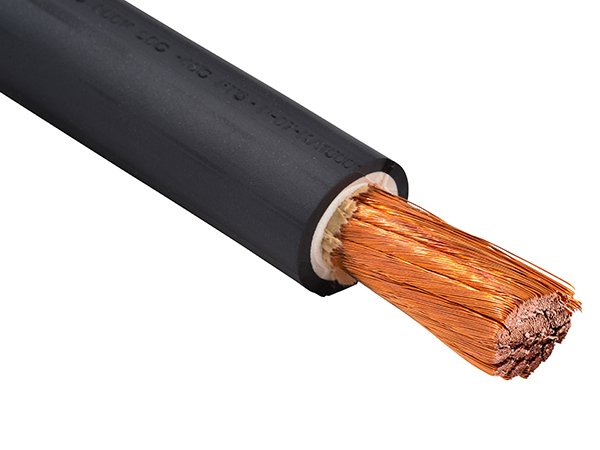
The construction is rope-stranded annealed copper (Class K, ASTM B172), EPDM rubber insulation at 1.52 mm (60 mil) and a heavy CPE thermoset jacket — 3.81 mm (150 mil) on the 4-conductor 8 AWG, which is roughly three times the jacket on a building wire. That jacket is the product: it is what survives being dragged over gravel, run over by a truck, coiled wet and left in the sun. A reinforcing braid of cotton or synthetic yarn sits over the core to hold the assembly round under tension.
Two ratings do most of the selling in the field. Continuous submersion: Type W is used for submersible pumps and dewatering because the EPDM / CPE system is rated for permanent immersion, which almost no portable cord is. 2000 V: mine trailing cable, draglines and long temporary feeders run at voltages where a 600 V cord cannot legally go. Both come from the same construction — the voltage class is declared on the print.
Ampacity is where buyers get caught out. A 2000 V multiconductor Type W is read from NEC Table 400.5(B), not from the flexible-cord table. The difference is large: 2 AWG single-conductor Type W is 192 A in Table 400.5(B), against roughly 80 A for the same copper in Table 400.5(A)(1). Quoting the cord number on a feeder is a sizing error in the wrong direction — and an expensive one.
What it is not: Type W is not a building wire and cannot be used as permanent wiring of a structure (NEC 400.12). It is not a direct-burial cable either — submersible is not the same permission as buried. For permanent power, use a Chapter 3 wiring method; for buried feeders, use a USE or RHW-2 jacketed assembly.
More about the manufacturer: About SORIVO →
Type W is listed to UL 1650 (Portable Power Cable) and CSA C22.2 No. 96. UL 62 is the flexible cord standard behind SOOW and SJOOW. Same rubber look, different standard, different voltage range, different ampacity table — and a specifier who writes UL 62 on a Type W requisition has written the wrong standard.
The 2 kV rating is the reason Type W exists in mining and heavy construction. A 600 V cord cannot be used on a 2000 V circuit at all, so the choice is not price — it is permission.
Constructed for continuous immersion, which is why it is the default for submersible pumps, dewatering and dredging. A portable cord rated for wet locations is not rated for being under water; this one is.
Ethylene propylene diene monomer rubber — 1.52 mm (60 mil) on the 8 AWG. It stays flexible at low temperature and resists water, ozone, and the heat soak of a coiled feeder carrying load.
Chlorinated polyethylene, 3.81 mm on the 4-conductor 8 AWG. This is the wall that takes the abrasion: dragged over concrete, run over at a job site, coiled on a truck bed. Thinner jackets are where Type W copies fail first.
Class K rope stranding to ASTM B172 — 133 strands of 30 AWG in an 8 AWG conductor. It is what lets a 25 mm cable bend around a sheave and be coiled by hand at the end of a shift, thousands of times.
FT-5 flame test and MSHA acceptance where marked. On a mine site those two lines are the difference between a cable that can be taken underground and one that stays on the surface.
Where the print legend carries it, the same cable is a 600 V RHH / RHW-2 conductor. That does not make it building wiring — NEC 400.12 still applies — but it matters when a temporary feeder has to pass through equipment that specifies RHW-2.
Permanent power is not one of them. Everything that moves, floods or gets dragged is.
Shuttle cars, drills and continuous miners, at 2000 V, dragged across the floor of a drift and coiled every shift.
Dewatering and sump pumps on continuous immersion, where the jacket and the insulation both sit under water for years.
Distribution to site offices, welders and lighting towers where the run is moved weekly and cannot be a Chapter 3 wiring method.
Mobile and semi-mobile plant, where the cable flexes with the chassis and takes abrasion from aggregate.
Shore power, welding sets and crane feeds in salt air, oil and constant handling.
Oil and gas, waterwell and geothermal rigs — the cable is coiled, dragged through mud and energised at 600 or 2000 V.
Stage power, broadcast trucks and festival distro, where 2000 V single-conductor Type W is the standard feeder.
Short flexible connections at a motor terminal box or a generator, where vibration rules out a rigid conductor.
The complete parameter set — the same data our engineers quote from.
| Size | Cond. count | Strands count | EPDM insulation mm (mil) | CPE jacket mm (mil) | Overall dia. mm (in) | Weight lb/1000 ft | Ampacity A |
|---|---|---|---|---|---|---|---|
| 8 AWG | 1 | 133 | 1.52 (60) | — | 11.2 (0.440) | 160 | 83 |
| 6 AWG | 1 | 259 | 1.52 (60) | — | 13.0 (0.510) | 225 | 109 |
| 4 AWG | 1 | 259 | 1.52 (60) | — | 14.5 (0.570) | 310 | 145 |
| 2 AWG | 1 | 259 | 1.52 (60) | — | 16.8 (0.660) | 440 | 192 |
| 1 AWG | 1 | 259 | 2.03 (80) | — | 18.8 (0.740) | 570 | 223 |
| 1/0 AWG | 1 | 259 | 2.03 (80) | — | 20.3 (0.800) | 630 | 258 |
| 2/0 AWG | 1 | 259 | 2.03 (80) | — | 20.8 (0.820) | 750 | 298 |
| 3/0 AWG | 1 | 259 | 2.03 (80) | — | 23.1 (0.910) | 900 | 345 |
| 4/0 AWG | 1 | 259 | 2.03 (80) | — | 24.6 (0.970) | 1080 | 400 |
| 8 AWG | 4 | 133 | 1.52 (60) | 3.81 (150) | 25.7 (1.011) | 588 | 65 |
The highlighted 8 AWG 4-conductor row is the volume item. A dash means the figure is not published for that size by the source tables we hold, not that the size is unavailable — we confirm it on the drawing. On single conductor the CPE jacket is applied directly over the EPDM insulation; its wall is included in the overall diameter and is not broken out as a separate column here. Ampacity for the single-conductor 2000 V sizes is NEC Table 400.5(B); the 4-conductor 8 AWG figure is Table 400.5(A)(1) and is not interchangeable with it. Sizes from 6 AWG to 500 kcmil and multicore constructions to 5 conductors are quoted on request — we confirm dimensions on the drawing rather than extrapolating them here. Weights are the manufacturer's published values and are nominal.
| General Information | |
| Product Name | Type W Portable Power Cable — EPDM / CPE |
| Product Type | Extra-hard usage portable power cable, single and multicore |
| Size Range | 8 AWG – 500 kcmil single conductor; multicore to 5 conductors |
| Primary Standard | UL 1650 — Portable Power Cable |
| Further Standards | CSA C22.2 No. 96; ASTM B172 for the rope-stranded conductor; NEC Article 400 |
| Certification | UL 1650 / Type W and CSA where marked; FT-5 flame test; MSHA acceptance where stated on the print legend |
| Rated Voltage | 600 V or 2000 V, per the class ordered |
| Conductor | |
| Conductor Material | Bare, soft-drawn, annealed copper, rope-lay stranded |
| Stranding | Class K rope stranding to ASTM B172 (133/30 in 8 AWG single conductor) |
| Separator | Non-conducting tape between conductor and insulation to ease stripping |
| Insulation & Jacket | |
| Insulation Material | EPDM — ethylene propylene diene monomer thermoset rubber |
| Insulation Thickness | 1.52 mm (60 mil) |
| Jacket Material | CPE — chlorinated polyethylene thermoset, black, flame resistant |
| Jacket Thickness | 3.81 mm (150 mil) on the 8 AWG 4-conductor construction |
| Reinforcement | Cotton or synthetic binder tape and twine over the core to hold the assembly round |
| Core Identification | Black, white, red, green (— green is the equipment grounding conductor) |
| Electrical Ratings | |
| Ampacity (single conductor) | Per NEC Table 400.5(B) — 8 AWG 83 A, 2 AWG 192 A, 1 AWG 223 A, 2/0 298 A, 4/0 400 A |
| Ampacity (multicore, 600 V) | Per NEC Table 400.5(A)(1) — 8 AWG 4-conductor 65 A |
| Derating | Ambient correction and conductor count per NEC 400.5(A)(2) and 400.13 — the table value is not the installed value |
| Temperature & Environmental | |
| Temperature Rating | +90°C, wet or dry |
| Cold Bend | −40°C |
| Water | Rated for continuous submersion |
| Oil and Sunlight | Oil resistant; sunlight resistant |
| Flame | FT-5 flame test; MSHA accepted where marked |
| Direct Burial | Not a direct-burial product — submersible is not the same permission. Use a USE or RHW-2 jacketed cable for buried runs. |
| Permanent Wiring | Prohibited as a substitute for the fixed wiring of a structure — NEC 400.12 |
| Packaging & Logistics | |
| Packaging | Wooden reel or coil; cut lengths to order |
| MOQ | 500 ft per size; samples negotiable |
| Lead Time | 10–20 working days |
Final selection should be based on the voltage class the circuit requires, the ampacity table that governs the construction (400.5(A)(1) for 600 V cord, 400.5(B) for 2000 V), the number of current-carrying conductors, the ambient, and whether the run is immersed. Send us the load, the voltage and the duty cycle and we will confirm the construction.
Portable power cable to UL 1650, the standard that sits behind NEC Article 400 for this family. Certificate of conformity available on request.
Request certificate copy →The Canadian portable power cable standard. Where the construction is dual-listed, the same cable ships for CSA-specified projects.
Request test report →FT-5 flame test on the finished cable; MSHA acceptance where the print legend carries it. Mine sites should confirm the acceptance number per order.
Request test report →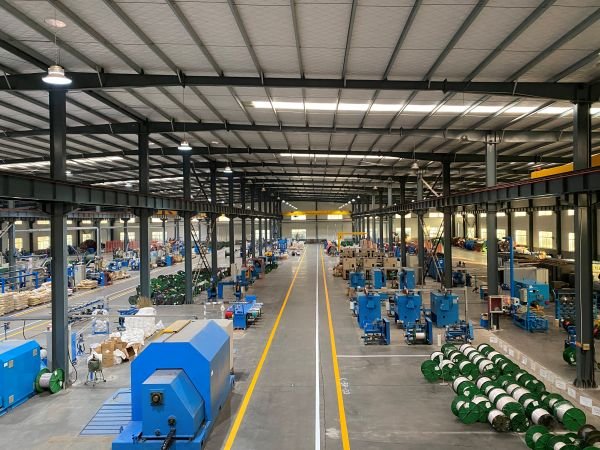
Every reel of Type W is built on a rope-stranding line and released against the applicable UL 1650 requirements.
Tell us the size, conductor count, voltage class (600 V or 2000 V), length and the duty — dragged, coiled, immersed or fixed.
We confirm stranding, jacket thickness, the print legend (Type W / RHH / RHW-2 / MSHA) and the quotation within one working day.
Sample for qualification, with the print legend and jacket thickness measured on the actual cable.
10–20 working days lead time, with batch test documentation.
Reel or coil packing, export documents and after-sales support.
Tell us the size, conductor count and voltage class — we reply within one working day.
The more detail you give, the faster and more accurate our quotation. Our engineers reply within one working day.
Thanks — our engineers will reply within one working day.