Professional cable manufacturer

Professional cable manufacturer
Home » Products » Building Wire » XHHW-2 Copper Building Wire
XLPE-insulated thermoset building wire rated 90°C in wet locations and exempt from the 33°C rooftop temperature adder — for feeders, service runs and rooftop circuits in commercial and industrial work.
The numbers an electrical contractor checks before the wire goes on the truck — and the one clause most datasheets leave out.
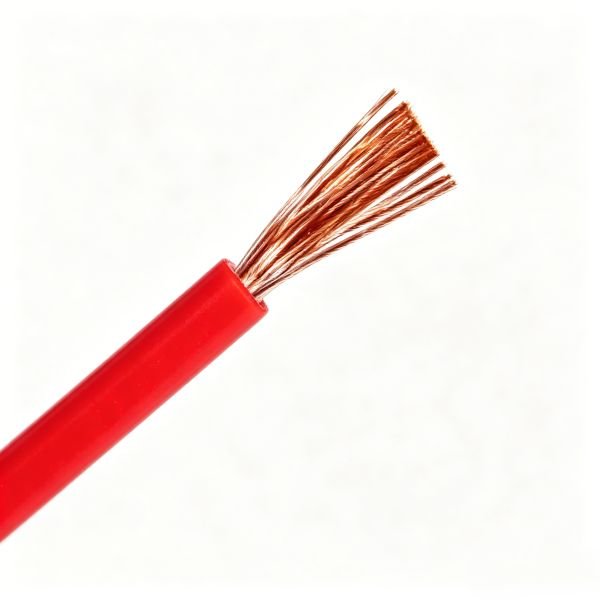
XHHW-2 is a single-conductor, thermoset-insulated building wire made to UL 44. The insulation is cross-linked polyethylene — not PVC — and the -2 suffix is the whole point: it means the wire carries +90°C in wet locations, not the +75°C that plain XHHW is limited to. One spool therefore covers a wet raceway, a wash-down area and a rooftop without changing the specification.
Because the insulation is a single extruded layer of XLPE, there is no nylon jacket to add and no PVC to keep dry. At 8 AWG the wall is 1.14 mm (45 mil) and the finished conductor measures 6.05 mm overall — still a little larger than the equivalent THHN at about 5.6 mm, because here the XLPE wall carries the whole dielectric duty instead of sharing it with a nylon cover.
The clause that sells this wire in North America is NEC 310.15(B)(2). Where a raceway or cable runs less than 23 mm above a roof and is exposed to direct sunlight, the code adds 33°C (60°F) to the outdoor design temperature before the ampacity correction is applied. The exception reads, in full: “Type XHHW-2 insulated conductors shall not be subject to this ampacity adjustment.” A rooftop feeder in a 40 mm conduit in Phoenix is a different cable at 33°C of adder — XHHW-2 removes the adder, not the sunlight.
Ampacity comes from NEC Table 310.16: 55 A for 8 AWG at the 90°C column, 50 A at 75°C. The 90°C column is still subject to NEC 110.14(C) — the conductor ampacity may not exceed the lowest temperature rating of any connected termination or device, so on 75°C lugs the practical circuit is 50 A. What the 90°C rating buys is headroom for ambient correction and conduit fill, which is exactly where a rooftop or a bundled pull runs out of ampacity first.
Voltage is 600 V across the range. The 1000 V rating exists from 8 AWG and larger, and it is not automatic: UL 44 permits it, but each manufacturer must be listed and marked for it. We state 1000 V only where the listing for that size carries it, and we say so on the quotation rather than on a picture of the wire.
More about the manufacturer: About SORIVO →
UL 44 covers thermoset-insulated wire — XLPE, EPR and the RHH / RHW family. UL 83 covers thermoplastic (THHN / THWN-2). The two standards are not interchangeable, and an inspector reads the print, not the colour of the insulation.
Plain XHHW is 90°C dry but only 75°C in a wet location. The -2 suffix lifts the wet rating to 90°C, which is what makes the wire usable in a wet raceway at full ampacity instead of derated.
NEC 310.15(B)(2) adds 33°C for a raceway less than 23 mm above a sun-exposed roof. The exception for Type XHHW-2 removes that adder — the single most useful line in this datasheet for anyone building on a roof.
One extruded wall of cross-linked polyethylene, 1.14 mm at 8 AWG. No nylon cover, no PVC, nothing to delaminate. XLPE also holds its shape under a lug at 90°C where PVC softens.
UL 44 ranges to 1000 V, 2000 V and 5000 V, but the 1000 V XHHW-2 listing starts at 8 AWG and is not held by every maker. We quote 1000 V only where the size we ship is marked for it.
The same construction is commonly dual-listed as SIS for switchboard and panel wiring and as RW90 for Canadian projects. Useful when one wire has to serve the panel shop and the field; confirm the print legend per order.
Cold bend tested to −40°C on the XLPE wall, and sunlight-resistant marking available. That covers an outdoor laydown yard in winter without a separate cold-weather product.
6.05 mm overall at 8 AWG against about 5.6 mm for THHN — the XLPE wall is thicker because it is the only wall, while THHN splits the same dielectric duty between PVC and a thin nylon cover. Check conduit fill against the real diameter, not the trade size, when swapping one for the other.
Anywhere the wire will be wet, hot, or above a roof — which is most of a modern commercial job.
Service-entrance and feeder conductors in conduit, sized on the 75°C column and corrected upward on the 90°C column where ambient demands it.
The classic case: a run under 23 mm above a sun-exposed roof, where THHN / THWN-2 takes a 33°C adder and XHHW-2 does not.
PV source and output circuits in conduit on a membrane roof, where the ambient correction usually decides the conductor size before ampacity does.
Food plants, car washes, pump rooms and cooling-tower decks — wet-location work at 90°C rather than a derated 75°C.
The SIS listing covers panel and switchboard internal wiring, so the same spool serves the shop and the field.
−40°C cold bend lets the wire be pulled and dressed outdoors in winter without cracking the insulation at a bend.
Machine rooms, compressor buildings and process areas where oil, heat and moisture occur together and PVC is the weak link.
Rewires in existing conduit where a slightly smaller overall diameter and a slick XLPE surface reduce pulling tension on long runs.
The complete parameter set — the same data our engineers quote from.
| AWG size | Strands count | Conductor dia. mm (in) | XLPE insulation mm (in) | Overall dia. mm (in) | Weight lb/1000 ft (kg/km) | DC resistance 20°C calc., Ω/km | Ampacity 75°C, A | Ampacity 90°C, A |
|---|---|---|---|---|---|---|---|---|
| 8 | 7 | 3.58 (0.141) | 1.14 (0.045) | 6.05 (0.238) | 64 (95) | 2.06 | 50 | 55 |
| 6 | 7 | 4.50 (0.177) | 1.14 (0.045) | 6.96 (0.274) | 97 (144) | 1.30 | 65 | 75 |
| 4 | 7 | 5.72 (0.225) | 1.14 (0.045) | 8.15 (0.321) | 148 (220) | 0.815 | 85 | 95 |
| 3 | 7 | 6.40 (0.252) | 1.14 (0.045) | 8.84 (0.348) | 184 (274) | 0.646 | 100 | 115 |
| 2 | 7 | 7.16 (0.282) | 1.14 (0.045) | 9.63 (0.379) | 228 (339) | 0.513 | 115 | 130 |
| 1 | 19 | 8.18 (0.322) | 1.40 (0.055) | 11.05 (0.435) | 291 (433) | 0.407 | 130 | 145 |
| 1/0 | 19 | 9.17 (0.361) | 1.40 (0.055) | 12.09 (0.476) | 361 (537) | 0.322 | 150 | 170 |
| 2/0 | 19 | 10.29 (0.405) | 1.40 (0.055) | 13.21 (0.520) | 450 (670) | 0.256 | 175 | 195 |
| 3/0 | 19 | 11.58 (0.456) | 1.40 (0.055) | 14.58 (0.574) | 564 (839) | 0.203 | 200 | 225 |
| 4/0 | 19 | 13.00 (0.512) | 1.40 (0.055) | 16.00 (0.630) | 707 (1052) | 0.161 | 230 | 260 |
The highlighted 8 AWG row is the size most often specified. Insulation walls follow the thicknesses printed in NEC Table 310.4(A) — 45 mil to 2 AWG and 55 mil to 4/0. Dimensions and weights are the manufacturer's published values for a Class B compressed stranded XLPE construction and are nominal; they are not a substitute for the drawing on a live order. The resistance column is a calculated value from ideal copper resistivity over the nominal cross-section — it is not the NEC Chapter 9 Table 8 figure, which is listed at 75 °C. Sizes 14, 12 and 10 AWG are made in the same construction and are quoted with their dimensions rather than tabulated here. Ampacity is NEC Table 310.16 for not more than three current-carrying conductors in a raceway or cable at 30°C ambient, and remains subject to NEC 110.14(C). Sizes above 4/0 are quoted from the same range up to 1000 kcmil — we quote them, and confirm the dimensions on the drawing rather than extrapolating them here.
| General Information | |
| Product Name | XHHW-2 Copper Building Wire, XLPE insulated |
| Product Type | Thermoset-insulated, single-conductor building wire |
| Size Range | 14 AWG – 4/0 AWG (copper); quoted to 1000 kcmil on request |
| Primary Standard | UL 44 — thermoset-insulated wires and cables |
| Further Standards | ASTM B3 and ASTM B8 (conductor); ASTM B787 for the compact unilay strand; CSA C22.2 No. 38 for the RW90 listing where dual-listed |
| Certification | UL 44 / XHHW-2 — scope confirmed against the certificate for the selected size. 1000 V marking applies from 8 AWG and is not held by every manufacturer. |
| Rated Voltage | 600 V (all sizes); 1000 V from 8 AWG where the listing carries it |
| Conductor | |
| Conductor Material | Soft annealed bare copper |
| Stranding | Class B compressed stranded to ASTM B8 — 7-strand to 2 AWG, 19-strand from 1 AWG. Flexible stranding to ASTM B787 available for SIS and panel work. |
| Conductor Diameter (8 AWG) | 3.58 mm (0.141 in), 7-strand Class B |
| Max. DC Resistance @20°C, calculated (8 AWG) | 2.06 Ω/km — ideal copper resistivity over the 8.37 mm² nominal cross-section |
| Insulation | |
| Insulation Material | XLPE — cross-linked polyethylene, thermoset |
| Insulation Thickness (8 AWG) | 1.14 mm (0.045 in) |
| Overall Diameter (8 AWG) | 6.05 mm (0.238 in) |
| Weight (8 AWG) | ≈ 64 lb/1000 ft (≈ 95 kg/km) |
| Available Colours | Black, white, red, blue, green, yellow, gray, brown, orange, violet — to order |
| Colour Rules | Green for equipment grounding, white or gray for the grounded conductor, per NEC 250.119 and 200.6 |
| Electrical Ratings | |
| Ampacity (NEC 310.16) | 8 AWG: 50 A at 75°C / 55 A at 90°C — not more than three current-carrying conductors in a raceway or cable, 30°C ambient |
| Termination Limit | NEC 110.14(C) — conductor ampacity may not exceed the lowest temperature rating of any connected termination, conductor or device. On 75°C lugs, 8 AWG is a 50 A conductor. |
| Rooftop | NEC 310.15(B)(2) Exception — Type XHHW-2 conductors are not subject to the 33°C rooftop temperature adder |
| Use of the 90°C Column | Permitted for ampacity adjustment and correction, and for the ambient correction that a rooftop or a hot raceway demands |
| Temperature & Environmental | |
| Temperature Rating | +90°C dry and +90°C wet (the “-2” rating); emergency overload 130°C and short circuit 250°C are typical thermoset values |
| Cold Bend | −40°C |
| Sunlight Resistance | Sunlight-resistant marking available; confirm per size on the print legend |
| Moisture Resistance | Wet-location rated through the XHHW-2 designation |
| Oil Resistance | Gasoline and oil resistant II where marked — confirm for the construction ordered |
| Direct Burial | Not listed for direct burial — use a raceway, or specify a USE / USE-2 or UF cable |
| Tray Ratings | CT and FT4 ratings are size-dependent (typically 1/0 AWG and above) and are not claimed across the range |
| Packaging & Logistics | |
| Packaging | Spool / coil / reel |
| Standard Lengths | 100 ft / 500 ft / 1000 ft per spool |
| MOQ | 1 spool (sample order available) |
| Lead Time | 5–15 working days (stock sizes 3–5 days) |
Final selection should be based on circuit loading, overcurrent protection, ambient temperature, conduit fill, voltage drop and the temperature rating of the terminations actually used. Send us the circuit and we will confirm the size against the code edition your inspector works to.
UL 44 is the thermoset standard; XHHW-2 is the listing that carries 90°C in wet locations. Certificate of conformity available on request.
Request certificate copy →The Canadian thermoset standard. Where the construction is dual-listed, the same wire ships as RW90 for CSA-specified projects.
Request test report →Sunlight-resistant marking and −40°C cold bend are listed per size, not across the family; RoHS compliance applies throughout.
Request test report →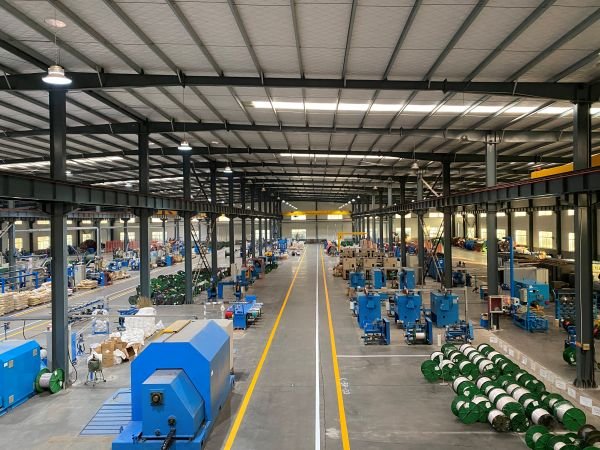
Every spool of XHHW-2 is extruded, cross-linked and released against the applicable UL 44 requirements.
Tell us the size, colour, quantity, the code edition the project is built to, and whether the run is on a roof.
We confirm the stranding, the wall thickness, whether 1000 V marking applies to that size, and the quotation — within one working day.
Sample for qualification; stock sizes usually leave from existing spools within a few working days.
5–15 working days lead time, with batch test documentation.
Spool, coil or reel packing, export documents, and after-sales support on installation questions.
Tell us the size, colour and quantity — we reply within one working day.
The more detail you give, the faster and more accurate our quotation. Our engineers reply within one working day.
Thanks — our engineers will reply within one working day.