Professional cable manufacturer

Professional cable manufacturer
Published: July 2026 | 9 min read | Reviewed by Luo Qiang, Senior Cable Application Engineer
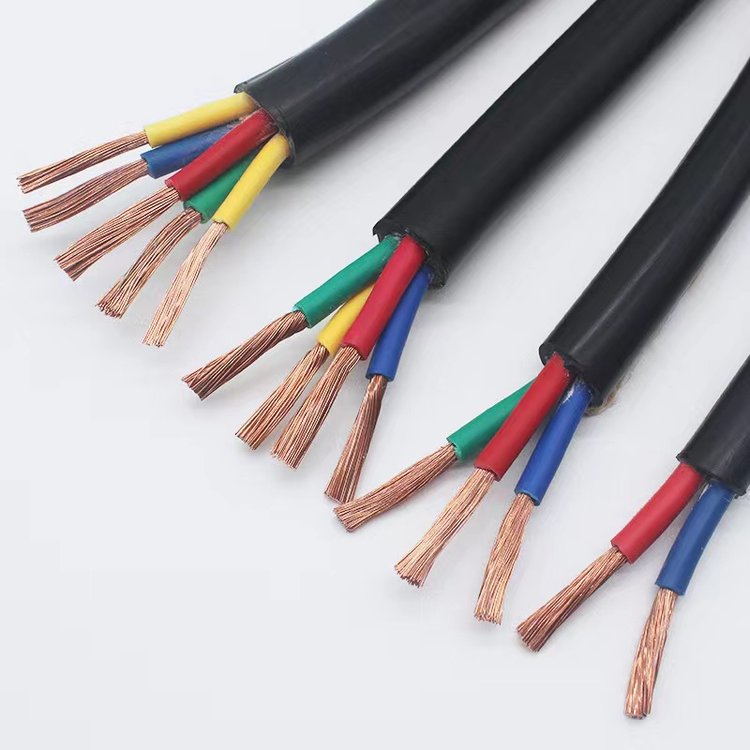
Let's be real—RVV cable looks simple. It's a flexible PVC-sheathed cable with stranded copper conductors. How hard can it be to pick the right one?
Here's the thing: I've seen control panels fail on the factory floor, signal interference bring an entire production line to a halt, and fire incidents trace back to nothing more than a mis-specified flexible cord. The downtime alone—never mind the replacement labor—runs into thousands. And in every case, someone grabbed "any old RVV" without checking the voltage rating, the core count, or whether they actually needed a shielded variant.
This guide is for engineers, panel builders, and procurement professionals who want to get RVV cable selection right the first time. I'll walk through the specs that actually matter, the gotchas that trip up most buyers, and a simple step-by-step framework you can apply today.
RVV is the Chinese designation for a copper-core PVC-insulated PVC-sheathed flexible cable. The name itself tells you what's inside:
| Letter | Chinese Meaning | English |
|---|---|---|
| R | Ruǎn (软) | Flexible / stranded conductor |
| V | Jùyǐxī (聚氯乙烯) | PVC insulation |
| V | Jùyǐxī (聚氯乙烯) | PVC sheath (outer jacket) |
Internationally, it maps to the IEC 60227-5:2024 and GB/T 5023.5-2008 standards, under two designations:
| IEC Designation | Common Name | Rated Voltage | Duty |
|---|---|---|---|
| 60227 IEC 52 | RVV (light duty) | 300/300 V | Light control, signal, small appliances |
| 60227 IEC 53 | RVV (ordinary duty) | 300/500 V | Industrial control, power supply, heavier loads |
Mind you—most people just say "RVV" and assume it covers both. It doesn't. The voltage rating is one of the first things you need to pin down, and I'll show you why in a moment.
Not all RVV cables are created equal. The raw materials vary significantly between budget-grade economy products and quality-assured cables from reputable manufacturers. Here's what to look for:
| Component | Budget / Economy Grade | Sorivo Quality Grade |
|---|---|---|
| Conductor | Bare copper, lower strand count — prone to oxidation, stiffer, harder to terminate | Bare copper or tin-coated copper, IEC 60228 Class 5 fine-stranded — high flexibility, corrosion-resistant |
| Insulation | Recycled PVC, inconsistent thickness — increased risk of short circuits | Virgin PVC/D type per IEC 60227-1, uniform wall thickness — stable dielectric performance |
| Sheath (Jacket) | Filler-loaded PVC, low mechanical strength — cracks in cold or under vibration | Virgin PVC/ST5 type, controlled carbon black content, good low-temperature flexibility |
| Flame Retardancy | May not meet any rated class | Compliant with IEC 60332-1-2 (single vertical flame); ZA-RVV available for A-class bundling |
| Certification | Self-declared CE or no marking | CCC, CE, IEC — third-party verified |
| Traceability | No markings or unreliable ink stamps | Metre-mark printing, batch traceable |
RVV cable markings can be confusing if you're not familiar with the Chinese system. Here's a quick decoder:
| Marking / Standard | What It Covers | Why It Matters |
|---|---|---|
| GB/T 5023.5-2008 | PVC insulated flexible cables, Part 5 — RVV construction and dimensions | China's national standard, equivalent to IEC 60227-5; mandatory for CCC certification |
| IEC 60227-5:2024 | International standard for PVC flexible cords (4th edition) | Most current edition; specify this for international procurement |
| CCC (China Compulsory Certification) | Safety certification for cables sold in China | Mandatory in China; indicates third-party factory inspection and ongoing testing |
| ZA / ZB / ZC | Flame retardant grades per GB/T 19666 | ZA = A-class (most stringent, for bundled installations) ZC = C-class (basic single-cable flame retardancy) |
| 60227 IEC 52 | Light-duty RVV: 300/300 V, thinner insulation | Suitable for small appliances, signal, indoor light-duty |
| 60227 IEC 53 | Ordinary-duty RVV: 300/500 V, thicker insulation | For industrial control, power, general-purpose heavier use |
A quick rule of thumb: If you see "CCC" + "GB/T 5023.5" + a clear manufacturer name printed on the sheath, you're off to a good start. If the marking is vague or missing—walk away.
Here's where the rubber meets the road. Different applications demand different configurations. Let's break it down by use case.
This is the most common RVV application I come across. For panel internal wiring:
| Application in Panel | Recommended Spec | Notes |
|---|---|---|
| PLC power supply | RVV 3 x 1.5 mm2 (300/500 V) | L + N + PE |
| Digital input signals | RVV multi-core 0.75 mm2 | Group signals, leave spare cores |
| Analog signals (4-20 mA) | RVVP 2 x 0.75 or 3 x 0.75 mm2 | Shielded — plain RVV won't cut it here |
| Solenoid valves / actuators | RVV 3 x 1.0 or 3 x 1.5 mm2 | Size per coil rating |
| Small motors (< 10 A) | RVV 4 x 2.5 mm2 (300/500 V) | 3-phase + PE |
| Relay / contactor control | RVV 2 x 1.0 or 2 x 1.5 mm2 | Simple on/off circuits |
| Sensor power + signal | RVV 4 x 0.75 or 4 x 1.0 mm2 | 2 cores power, 2 cores signal |
| Main panel incoming feed | RVV 4 x 4 mm2 or larger | Per load calculation |
Here's a common mistake: using plain RVV for signal cables in a noisy environment. If you're running analog signals, encoder cables, or any data line near power cables:
| Type | Full Name | Key Feature | Best For |
|---|---|---|---|
| RVV | PVC insulated PVC sheathed flexible cable | Standard flexible cord | General-purpose indoor, dry or damp |
| RVVP | RVV + Shield (Pingbi) | Copper braid + aluminium foil shield | EMI-sensitive analog and data signals |
| RVVS | RVV + Twisted (Shuang) pairs | Each pair twisted, tighter cable lay | Data/communication with crosstalk requirements |
| RVVY | RVV + Oil-resistant (You) | Oil-resistant PVC sheath compound | Machine tools, workshops, oil exposure |
| ZA-RVV | Flame-retardant A-class RVV | A-class flame retardancy (GB/T 19666) | Bundled installation in fire-sensitive zones |
This is the question I get most often. The honest answer? It depends. Current rating varies with ambient temperature, installation method (clipped direct, in conduit, bundled), and the number of loaded cores.
Below is a practical reference for RVV cables at 30 °C ambient, clipped direct. For full ampacity calculation methods, refer to IEC 60364-5-52 (Low-voltage wiring systems — current-carrying capacity tables).
| Cross-Section (mm2) | 2-Core (A) | 3-Core (A) | 4-Core (A) | Max DC Resistance at 20 °C (bare copper, IEC 60228 Class 5, Ω/km) |
|---|---|---|---|---|
| 0.5 * | 5-10 | 5-8 | 4-6 | 36.0 |
| 0.75 | 7-13 | 7-10 | 6-10 | 26.7 |
| 1.0 | 10-16 | 8-11 | 8-12 | 19.5 |
| 1.5 | 14-20 | 12-15 | 10-14 | 13.3 |
| 2.5 | 20-27 | 17-21 | 14-21 | 7.98 |
| 4.0 | 27-35 | 22-28 | 20-25 | 4.95 |
* 0.5 mm2 belongs to the 60227 IEC 52 (300/300 V) range only. The 60227 IEC 53 (300/500 V) range starts at 0.75 mm2. The table above covers both designations for practical reference. Also note that IEC 52 is limited to 2-3 cores × 0.5-0.75 mm2 — for 4+ cores or larger sections, always specify IEC 53 (300/500 V).
Temperature derating factors (per IEC 60364-5-52, PVC cable):
| Ambient Temperature | 30 °C | 40 °C | 50 °C | 60 °C |
|---|---|---|---|---|
| Derating Factor | 1.00 | 0.86 | 0.71 | 0.50 |
My advice: never push RVV to more than 70% of its rated ampacity in a real panel unless you've done the full derating calculation per IEC 60364-5-52. PVC insulation degrades faster at sustained elevated temperatures, and the last thing you want is a panel full of brittle, cracked insulation three years in.
A detail that often gets overlooked during installation—bending radius. Exceeding the minimum bend radius damages the conductor strands and stresses the insulation, creating hidden failure points.
| Cable Overall Diameter (D) | Minimum Bending Radius |
|---|---|
| D ≤ 25 mm | 4 x D |
| D > 25 mm | 6 x D |
Quick example: A 4-core 1.5 mm2 RVV cable has an outer diameter of roughly 10.5 mm. That means a minimum bend radius of about 42 mm. Tighten it further and you risk conductor fracture or insulation damage that won't show up until the cable's been in service for months.
Let's talk money. A cheap RVV cable might save you 15-30% upfront. Here's what that "saving" really costs over the full lifecycle:
| Cost Factor | Economy RVV | Quality RVV |
|---|---|---|
| Upfront cable cost (per 100 m, 4 x 1.5 mm2) | $45-65 | $75-95 |
| Installation labor | Same | Same |
| Likelihood of failure within 5 years | Medium-high (sheath cracks, conductor oxidises, insulation degrades) | Very low |
| Cost of one panel failure (diagnosis + rewire + downtime) | $800-2,500 per incident | Near zero |
| Replacement labor (if cable in conduit) | 2-4x the original installation cost | Not needed |
| Total cost over 10 years (per 100 m) | $900-2,600+ | $75-95 |
The math doesn't lie. The upfront "saving" disappears the moment you have a single failure. Quality cable isn't an expense—it's insurance.
I've been to enough cable factories and seen enough lookalike products to share a few practical checks you can do yourself:
Here's a simple framework I use whenever I need to spec an RVV cable. It takes about five minutes:
The 300/500 V (IEC 53) has thicker insulation and therefore a higher voltage rating and slightly larger outer diameter. It's the safer choice for industrial control panels. The 300/300 V (IEC 52) is sufficient for small appliances and signal wiring. When in doubt, go with 300/500 V—the cost difference is minimal.
Standard RVV uses PVC for both insulation and sheath, which degrades under prolonged UV exposure. For outdoor installation, either route the cable in conduit or specify a UV-stabilised variant. For permanent outdoor use without conduit, consider XLPE-insulated cables instead. Sorivo also supplies UV-resistant RVV variants for semi-outdoor applications—contact us for details.
Use RVVP whenever you're transmitting analog signals (4-20 mA, thermocouple, encoder), running cables near VFD drives, or working in an electrically noisy environment. The shield drains induced noise to ground. For simple power or digital on/off signals, plain RVV is fine.
ZA = A-class flame retardant under GB/T 19666. It passes a very stringent bunched flame test, per GB/T 18380.3 (Category A). If your RVV runs in a bundle with other cables—typical in control panels and cable trays—ZA-RVV is the right call.
Standard PVC RVV should not be installed below 0 °C. Below this temperature, the PVC sheath becomes brittle and may crack when bent. For cold-environment installations (unheated warehouses, winter site work), use a cold-resistant PVC variant or pre-warm the cable before installation. Sorivo offers low-temperature RVV variants rated for -15 °C installation.
Not recommended for long runs. VFD outputs produce high-frequency harmonic content that couples through unshielded PVC cable and causes EMI issues. For VFD applications, use a dedicated VFD cable with symmetrical earth conductors and a low-impedance shield. For very short VFD connections (under 5 m) inside a panel, RVVP may be acceptable—but check with the drive manufacturer first.
| Feature | Generic / Economy Grade | Sorivo Quality Grade |
|---|---|---|
| Conductor | Bare copper (oxidation-prone) | Bare or tin-coated copper, IEC 60228 Class 5/6 |
| Insulation | Recycled PVC, inconsistent thickness | Virgin PVC/D, uniform per GB/T 5023.5 |
| Sheath | Filler-heavy PVC, low flexibility | PVC/ST5, good cold flex and mechanical strength |
| Flame Retardancy | May not meet any standard | IEC 60332-1-2; ZA-RVV available for bundling |
| Certification | Self-declared CE or unmarked | CCC / CE / IEC — third-party verified |
| Traceability | None | Metre-mark printing, batch traceable with manufacturer name on sheath |
| Warranty | 1-3 years | Up to 25 years (depending on application conditions) |

We supply CCC-certified RVV, RVVP, and ZA-RVV cables with full traceability and third-party test reports. Tell us your application and we'll recommend the exact specification.
Email: sale@sorivocable.com
Phone / WhatsApp: +86 192 8290 5529