Professional cable manufacturer

Professional cable manufacturer
Home » Products » EV Charging Cable » Type 2 16A 11kW EV Charging Cable
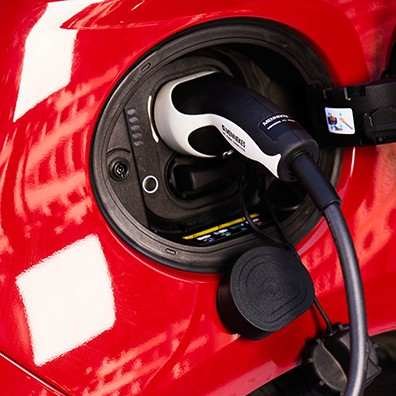
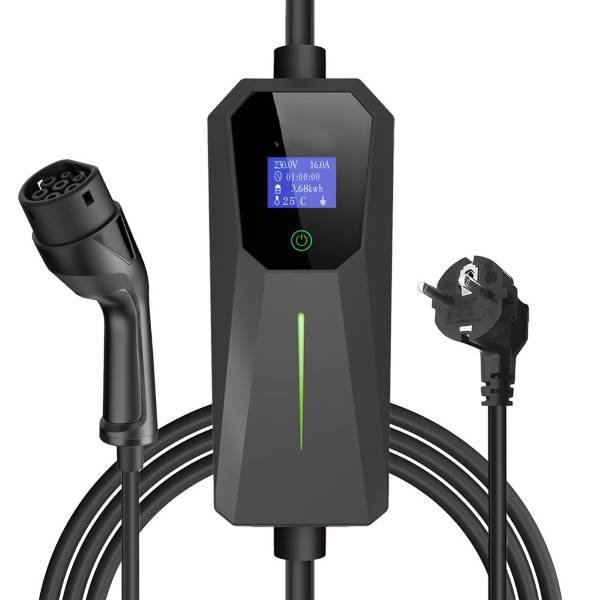
Type 2 (Mennekes) cable for 11 kW three-phase / 3.7 kW single-phase Mode 3 charging — 16 A, 5 × 2.5 mm² power cores and a lighter, thinner assembly.
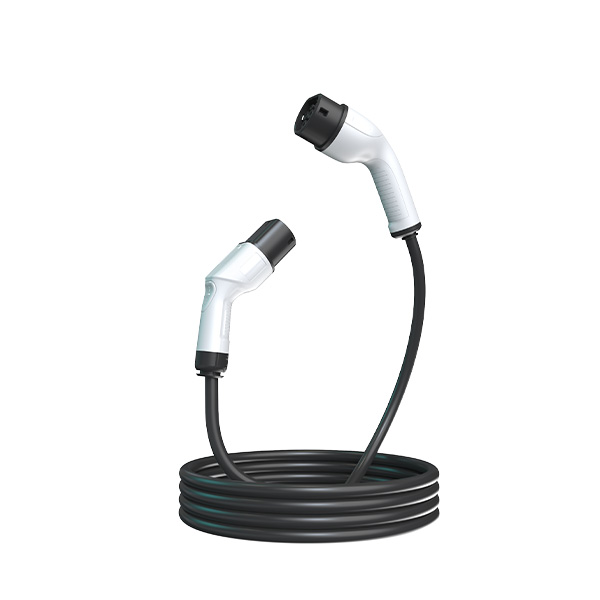
What an installer checks first on an 11 kW cable — before reading the full specification below.
This is a Type 2 AC charging cable rated 16 A, giving 11 kW on a three-phase 400 V supply and 3.7 kW on single-phase 230 V. It exists because most domestic and many commercial supplies cannot deliver 22 kW: a 16 A three-phase circuit is what a large share of European homes and small commercial sites can actually support, and a vehicle with an 11 kW on-board charger would never use the extra capacity of a 32 A cable anyway.
The construction follows from the current. The power cores are 5 × 2.5 mm² — the size the market uses for 16 A three-phase — with a 1 × 0.5 mm² signal core for CP and PP, and an outer diameter in the region of 14.5 mm (manufacturer value). That makes for a noticeably lighter and slimmer assembly than the 32 A version, which matters when the cable is coiled onto a wall hook every day or carried in the boot.
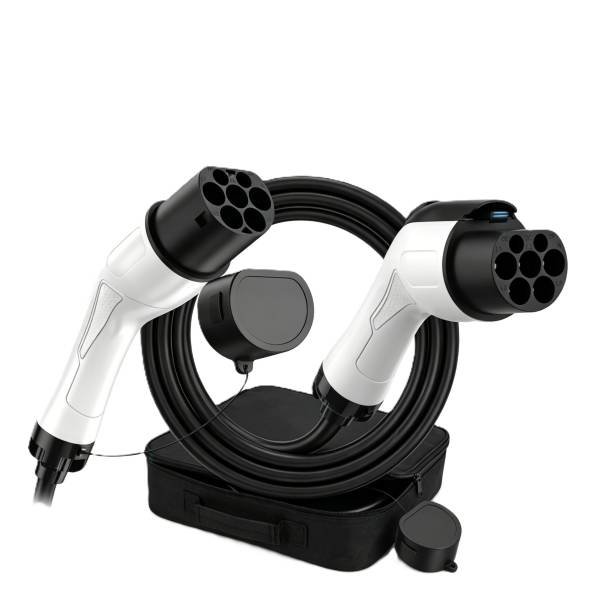
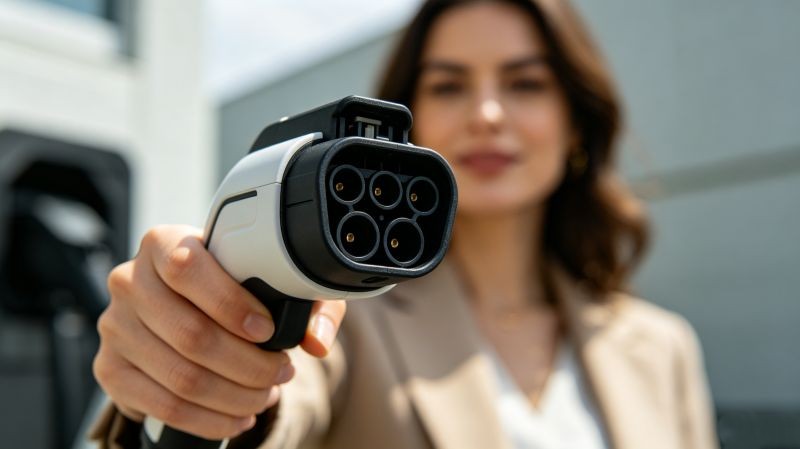
The connector is the standard Type 2 arrangement of seven contacts: L1, L2, L3, N and PE for power, plus CP for control pilot and electrical locking and PP for cable coding. One point is worth stating precisely: 16 A is a product rating, not an IEC 62196-2 coding step. The PP coding scale runs 1500 Ω for 13 A, 680 Ω for 20 A, 220 Ω for 32 A and 100 Ω for 63 A, so a 16 A cable uses the 680 Ω (20 A) step — the next code above the rated current, which is the correct and safe direction to round.
The IEC 62196-1 basic interface ratings behind these contacts are 480 V AC at 32 A three-phase and 250 V AC at 32 A single-phase; the practical European system voltages are 400 V line-to-line and 230 V line-to-neutral, which is what the power figures are calculated from. Ambient range is −30 °C to +50 °C, the range IEC 62196-1 specifies, and the cable is manufactured to EN 50620 with IEC 62893-3 covering AC charging cables. Charging is Mode 3.
Where 22 kW is genuinely available and the vehicle can use it, the Type 2 32A IEC 62196 EV Charging Cable is the correct choice. For a cable the driver carries to public sockets, see the Type 2 to Type 2 Cable.
More about the manufacturer: About SORIVO →
The European AC charging connector, designed and constructed to the connector standard and tested to the IEC 62196-1 basic interface requirements.
16 A on 400 V three-phase and 3.7 kW single-phase — the rating most European domestic supplies can actually deliver.
Flexible Class 5 copper in a construction around 14.5 mm outer diameter, noticeably easier to handle than a 32 A cable.
The 20 A coding step — the next step above the 16 A product rating, which is the correct direction to round on the IEC scale.
L1, L2, L3, N, PE, CP and PP each named with its rating, so the cable can be checked against a charge point wiring schedule.
Flexible, abrasion-resistant and halogen-free, with UV stabilisation for cables that live outdoors on a hook.
Manufactured to the European charging-cable standard, with IEC 62893-3 for AC charging cables and IEC 62893-1 for general requirements.
A compact cable for home wallboxes and a coiled version for drivers who want it stored out of the way in the boot.
Domestic supplies, small commercial sites and vehicles whose on-board charger stops at 11 kW.
Domestic three-phase supplies that stop at 16 A per phase, where an 11 kW unit is the practical maximum.
Communal charging where the building supply is shared and per-point current is deliberately limited.
Offices and workshops where the available supply supports 11 kW charging per bay rather than 22 kW.
Vans and cars whose on-board chargers accept 11 kW, where a 32 A cable would never be fully used.
Vehicles with smaller batteries and lower on-board charger ratings, which charge to full well within an 11 kW supply.
Overnight charging where 11 kW replenishes a typical battery in a few hours and keeps the site supply comfortable.
Adding charging to a building without re-running the supply cable, by working within the 16 A circuit already there.
An 11 kW cable as a second SKU alongside the 22 kW version, covering the customers who do not need full three-phase current.
The complete parameter set — the same data our engineers quote from.
| Contact | Function | Rating | |
|---|---|---|---|
| L1 | Phase conductor 1 | 480 V AC / 32 A | |
| L2 | Phase conductor 2 | 480 V AC / 32 A | |
| L3 | Phase conductor 3 | 480 V AC / 32 A | |
| N | Neutral | 480 V AC / 32 A | |
| PE | Protective earth | Rated for the prospective fault current | |
| CP | Control pilot — charging control and, on Type 2, electrical locking | 30 V / 2 A | |
| PP | Proximity pilot — cable current coding | 30 V / 2 A |
Ratings shown are the IEC 62196-1 basic interface values for these contacts. Note that 16 A is the product rating of this cable, not an IEC 62196-2 coding step: the coding scale runs 1500 Ω for 13 A, 680 Ω for 20 A, 220 Ω for 32 A and 100 Ω for 63 A, and this cable uses the 680 Ω step described in Table 2.
| General Information | |
| Product Name | Type 2 16A 11kW EV Charging Cable |
| Connector Standard | IEC 62196-2 — Type 2 (Mennekes type), designed and constructed to the connector standard |
| General Standard | IEC 62196-1:2014; connector tested to IEC 62196-1:2014 and IEC 62196-2:2016 |
| Cable Standard | Manufactured to EN 50620; IEC 62893-3 for AC charging cables, IEC 62893-1 for general requirements |
| Charging Mode | Mode 3 per IEC 61851-1 — charging from a dedicated charge point with control pilot signalling and PE monitoring |
| Electrical Ratings | |
| Rated Current | 16 A — a product rating; the IEC 62196-2 coding steps are 13 / 20 / 32 / 63 A |
| Rated Voltage | 480 V AC three-phase / 250 V AC single-phase (IEC 62196-1 basic interface); 400 V AC line-to-line and 230 V AC line-to-neutral system voltages |
| Rated Power | 11 kW at 400 V three-phase (16 A × 230 V × 3); 3.7 kW at 230 V single-phase |
| Contacts | 7 — L1, L2, L3, N, PE, CP, PP |
| PP Coding Resistor | 680 Ω — the 20 A step of the IEC coding scale, i.e. the next step above the 16 A rating (1500 Ω = 13 A, 680 Ω = 20 A, 220 Ω = 32 A, 100 Ω = 63 A) |
| Insulation Resistance | ≥ 500 MΩ at 500 V DC (manufacturer test value, confirmed against the test report for the selected construction) |
| Dielectric Withstand | 2000 V AC, 1 minute (manufacturer routine test value) |
| Temperature Rise | ≤ 50 K (manufacturer test value) |
| Insertion / Withdrawal Force | < 100 N (manufacturer test value) |
| Construction | |
| Cable Construction | 5 × 2.5 mm² power cores plus 1 × 0.5 mm² signal core |
| Conductor | Flexible stranded copper, Class 5 to IEC 60228 |
| Jacket | TPU, halogen-free, UV-stabilised |
| Jacket Colour | Black standard; other colours to order |
| Outer Diameter | ≈ 14.5 mm (manufacturer value; confirmed per construction) |
| Contact Material | Copper alloy with silver plating |
| Housing | Thermoplastic, flame retardant |
| Mechanical Life | ≥ 10,000 mating cycles (manufacturer test value; the industry convention for Mode 3 connectors) |
| Impact Protection | IK08 on the connector housing (manufacturer test value — the earlier “IK08 to IK10” phrasing has been narrowed to the tested figure) |
| Environment | |
| Ambient Temperature | −30 °C to +50 °C — the range specified in IEC 62196-1 |
| Ingress Protection (Mated) | IP54 mated, manufacturer-declared; confirmed against the test report for the selected construction. A higher mated rating such as IP65 or IP67 requires a type-test report on the specific connector version and is quoted on request. |
| Storage Temperature | −40 °C to +80 °C |
| Operating Humidity | 5 % to 95 % RH, non-condensing |
| UV Resistance | UV-stabilised jacket compound |
| Configuration & Logistics | |
| Standard Length | 5 m; other lengths to order |
| Cable Form | Straight or coiled |
| Customization | Length, jacket colour, connector colour, logo and packaging |
| Packaging | Box, polybag or custom packaging per order |
| MOQ | 100 pieces; sample orders negotiable |
| Lead Time | 15–30 working days; stocked configurations may be available within 5–7 days |
16 A is the product rating of this cable; the IEC 62196-2 cable coding steps are 13 / 20 / 32 / 63 A, and this assembly uses the 680 Ω (20 A) step. Values marked as manufacturer tests are confirmed against the test report for the selected construction, and ingress protection and impact rating are confirmed the same way. Final selection should be based on the charge point rating, the on-board charger of the vehicle and the applicable local requirements.
Type 2 (Mennekes) is the European AC charging interface defined in IEC 62196-2 as an implementation of the IEC 62196-1 basic interface. Designed and constructed to IEC 62196-2, with the connector tested to IEC 62196-1:2014 and IEC 62196-2:2016 — the connector standard is a dimensional and interchangeability standard, so it is a design and test reference rather than a certification mark.
Request test report →The cable standard for EV charging cables: manufactured to EN 50620, the European charging-cable standard, with IEC 62893-3 covering AC charging cables. Cable and conductor test records are provided with the quotation.
Request test report →CE marking for the complete cable assembly is a manufacturer’s declaration of conformity, not third-party certification. The declaration covers the applicable directives for the assembly supplied and is provided with the shipment.
Request declaration copy →
Because the current rating is lower, the connector and coding checks matter even more than the conductor size on this cable.
Tell us the length, colour and quantity, and whether the cable is tethered or portable.
We confirm connector variants, cable construction and quotation within one working day.
Sample for qualification — stocked configurations within a few working days.
15–30 working days with test documentation; stocked configurations within 5–7 days.
Carton packing, shipping documents and support through installation and distributor qualification.
Tell us the length, form and quantity — we reply within one working day.
The more detail you give, the faster and more accurate our quotation. Our engineers reply within one working day.
Thanks — our engineers will reply within one working day.