Professional cable manufacturer
Professional cable manufacturer
Home » Products » Power Cable » BS 6387 CWZ Fire Resistant Cable SWA Armoured LSZH
Mica-tape fire barrier cable to BS 6387:2013 with category C, W and Z circuit integrity — 950 °C for 3 hours fire alone, fire with water spray and fire with mechanical shock, each tested separately — in a CU / MGT / XLPE / LSZH / SWA / LSZH construction.
The five things a specifier checks on a fire resistant cable — and the one category definition that datasheets most often get wrong.
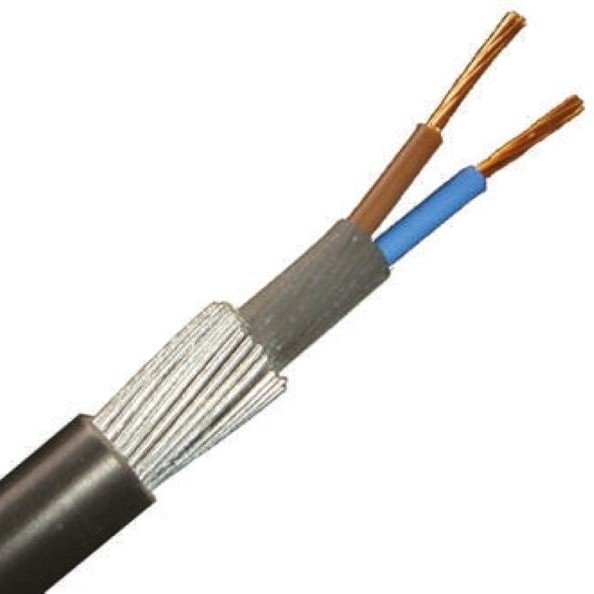
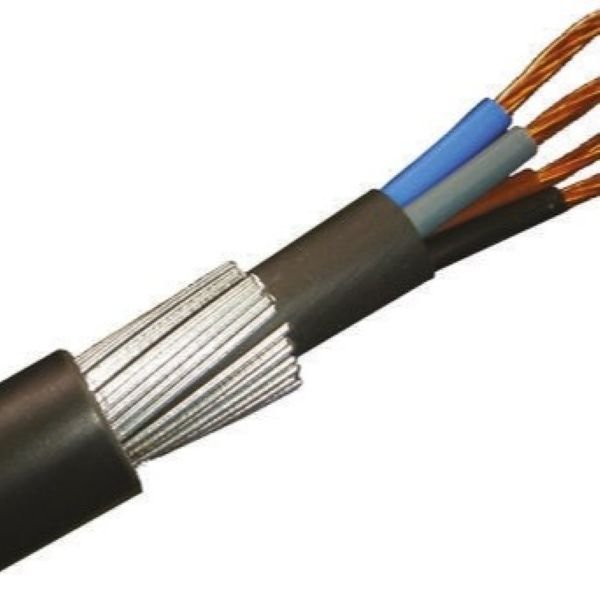
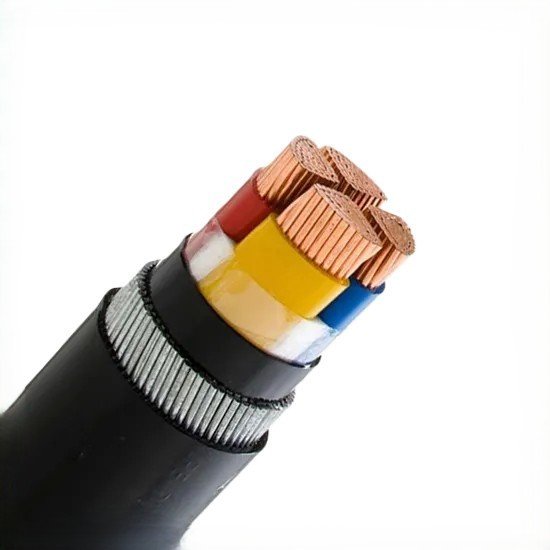
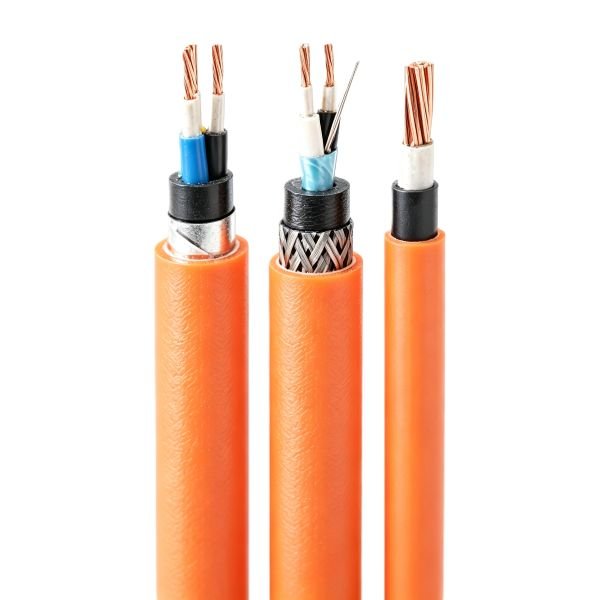
This is a mica-tape fire resistant cable: a Class 2 stranded annealed copper conductor wrapped in a mica/glass fire barrier tape, XLPE insulated, bedded in a halogen-free compound, galvanised steel wire armoured (SWA) and finished with an LSZH sheath — the construction code CU / MGT / XLPE / LSZH / SWA / LSZH. It is rated 0.6/1 kV and used where a circuit has to keep working while the building around it is on fire.
The CWZ marking is the part that gets misdescribed. BS 6387:2013 is a test method, not a product standard, and it defines three tests: C — resistance to fire alone, 950 °C for 3 hours; W — resistance to fire with water, 15 minutes at 650 °C followed by 15 minutes at 650 °C with a water spray, simulating a sprinkler; and Z — resistance to fire with mechanical shock, 15 minutes at 950 °C with the backing panel struck every 30 seconds. A cable that passes all three is marked CWZ.
The three tests are carried out separately, on separate occasions — not simultaneously. That is the mistake in almost every CWZ datasheet: writing "950 °C for 180 minutes plus water spray plus mechanical shock" as though one cable endured all of it at once. It did not, and a specification written on that basis will not match what the test house actually certifies. The other half of the same mistake is the obsolete category list: A, B, C, S, W, X, Y and Z belong to BS 6387:1994. The 2013 edition retains only C, W and Z, so a page that offers you an "A / B / C temperature grade table" is quoting a superseded edition.
Four related standards get folded into CWZ and should not be. BS 8491 covers circuit integrity for cables of more than 20 mm overall diameter — BS 6387 itself applies to cables of 20 mm or less and rated not more than 600/1000 V. BS EN 50200 is a different small-cable test whose result is a duration class — PH15, PH30, PH60 or PH120 — not a temperature letter. BS 8434-2 tests fire, water and shock at system level for BS 8519 life-safety circuits, and BS 7846 is a cable product standard in which F2 is one flame grade. A cable can carry several of these markings at once; they are not one ladder of "fire ratings".
The mechanism is worth understanding, because it explains the construction. Mica tape wound directly on the conductor sinters into a ceramic shell when the flame reaches it. Even after the XLPE insulation behind it has been destroyed, the ceramic layer keeps the conductors insulated from each other and the circuit alive. That is why the tape sits under the insulation and directly on the conductor rather than around the finished core, and why the tape overlap is the parameter that decides the outcome of the test. The SWA armour then holds the cable together through the mechanical shock element and the collapse of the supporting structure.
More about the manufacturer: About SORIVO →
Resistance to fire alone — 950 °C for 3 hours with the circuit energised. This is the longest and hottest of the three tests.
15 minutes at 650 °C followed by 15 minutes at 650 °C with a water spray, simulating a sprinkler operating over the cable.
15 minutes at 950 °C with mechanical shock applied to the backing panel every 30 seconds — the test that models structural collapse.
A mica tape with a glass cloth wound directly on the conductor. In the flame it sinters to a ceramic shell that holds the insulation path after the XLPE has gone.
Galvanised round steel wire armour over a halogen-free bedding, holding the core together through the shock test and protecting the cable mechanically in service.
Halogen-free compounds in both the bedding and the outer sheath: HCl emission below 0.5% to BS EN 60754-1, and low smoke density to BS EN 61034-2.
0.6/1 kV, matching the 600/1000 V ceiling of the BS 6387 test method, in the multicore and single-core ranges below.
We quote BS 6387:2013 and its C, W and Z categories. The A, B, S, X and Y letters belong to the 1994 edition and we do not present them as current options.
Circuits that have to keep working during a fire and continue to be safe in the smoke — life-safety and essential services.
The supply to the fire pump has to survive the fire it is fighting. This is the classic CWZ application, and the cable is usually run in its own protected route.
Final circuit and sub-main supplies to emergency luminaires and exit signage, where the circuit must hold long enough for the building to be evacuated.
Supplies to smoke clearance and stairwell pressurisation equipment, which run during the fire and are needed for the longest part of the evacuation.
Tunnel services, ventilation and lighting supplies, where a fire in a confined space and a water main break can occur in the same event.
Supplies to life-support, theatre and critical care circuits, where continuity is a patient-safety requirement and evacuation is gradual.
Fire suppression, control and essential cooling circuits, where downtime has a direct commercial cost and cable is in dense, congested routes.
Life-safety and essential services risers, where the cable has to satisfy fire resistance, flame retardance and low smoke in the same specification.
Emergency shutdown, alarm and deluge circuits in plants where hydrocarbon fires and firefighting water are both credible events.
The complete parameter set — the same data our engineers quote from.
| Category | What is tested | Flame temperature | Duration | Water spray | Mechanical shock |
|---|---|---|---|---|---|
| C | Resistance to fire alone | 950 °C ± 40 °C | 3 hours | No | No |
| W | Resistance to fire with water | 650 °C ± 40 °C | 15 min fire + 15 min fire and water | Yes | No |
| Z | Resistance to fire with mechanical shock | 950 °C ± 40 °C | 15 minutes | No | Yes — every 30 seconds |
| CWZ | All three of the above, each tested on a separate occasion | 950 °C (C and Z) and 650 °C (W) | C 3 h · W 15 + 15 min · Z 15 min | Yes, in the W test only | Yes, in the Z test only |
This is a test method, not a product standard: BS 6387:2013 applies to cables of rated voltage not exceeding 600/1000 V and of overall diameter 20 mm or less — for larger cables the corresponding standard is BS 8491. The three tests are conducted separately, not simultaneously: a CWZ cable has passed C, W and Z as three independent tests, and describes it that way. The categories A, B, S, X and Y belong to BS 6387:1994 and are not part of the current edition. Note also that BS EN 50200 is a different test whose result is a duration class (PH15 / PH30 / PH60 / PH120), that BS 8434-2 tests fire, water and shock at system level, and that BS 7846 is a cable product standard with F2 as a flame grade — these are separate markings, not rungs of one scale. Confirmed sizes and the applicable categories are stated on the construction drawing and in the fire test report for the ordered cable; where the required duration or category is larger than the diameter limitation above allows, we will say so before quoting.
| General Information | |
| Product Name | BS 6387 CWZ Fire Resistant Cable SWA Armoured LSZH |
| Construction Code | CU / MGT / XLPE / LSZH / SWA / LSZH — copper conductor, mica/glass fire barrier tape, XLPE insulation, LSZH bedding, steel wire armour, LSZH outer sheath |
| Fire Resistance Standard | BS 6387:2013, Test method for resistance to fire of cables required to maintain circuit integrity under fire conditions — categories C, W and Z |
| Applicable Range of the Test Method | Rated voltage not exceeding 600/1000 V and overall diameter 20 mm or less. For cables above 20 mm overall diameter the corresponding standard is BS 8491 |
| Related Standards (distinct) | BS EN 50200 — a different circuit integrity test, classified PH15 / PH30 / PH60 / PH120. BS 8434-2 — fire, water and shock tested at system level. BS 7846 — a cable product standard, F2 being one flame grade. BS 8491 — circuit integrity for cables over 20 mm |
| Conductor Standard | BS EN 60228 / IEC 60228, Class 2 circular or compacted stranded annealed copper |
| Fire Performance | |
| Category C | Resistance to fire alone: 950 °C ± 40 °C for 3 hours |
| Category W | Resistance to fire with water: 15 minutes at 650 °C ± 40 °C, then 15 minutes at 650 °C with water spray |
| Category Z | Resistance to fire with mechanical shock: 15 minutes at 950 °C ± 40 °C with impact every 30 seconds |
| CWZ | All three tests passed, each carried out separately |
| Flame Propagation | BS EN 60332-1-2 single cable, and BS EN 60332-3-24 bunched cable (Category C) |
| Halogen-Free / Acid Gas | BS EN 60754-1 — HCl content below 0.5%. BS EN 60754-2 — pH not less than 4.3 and conductivity not more than 10 µS/mm |
| Smoke Density | BS EN 61034-2 |
| Circuit Integrity Under Test | The circuit remains energised and must not fail for the duration of each test |
| Electrical | |
| Rated Voltage | 0.6/1 kV |
| Max. Conductor Temperature | +90 °C continuous |
| Short-Circuit Temperature | +250 °C for a duration not exceeding 5 seconds |
| Operating Temperature Range | −5 °C to +90 °C |
| Conductor Resistance (Class 2, 20 °C) | 1.5 mm² = 12.1 Ω/km; 2.5 = 7.41; 4 = 4.61; 6 = 3.08; 10 = 1.83; 16 = 1.15; 25 = 0.727; 35 = 0.524; 50 = 0.387; 70 = 0.268; 95 = 0.193; 120 = 0.153 Ω/km |
| Withstand Test | Routine test on every production length, at the voltage and duration applicable to the selected construction — stated on the test certificate |
| Construction | |
| Conductor | Class 2 circular or compacted circular stranded annealed copper |
| Fire Barrier | Mica tape with a glass cloth, wound directly on the conductor. Sinters to a ceramic shell in the flame |
| Insulation | XLPE (cross-linked polyethylene) over the fire barrier tape |
| Bedding | Extruded halogen-free low-smoke (LSZH) compound |
| Armour | Galvanised round steel wire armour (SWA) |
| Outer Sheath | Halogen-free low-smoke (LSZH) compound, black |
| Core Identification | Colour-coded for small core counts (red, yellow, blue, black and green); numbered white cores for larger counts |
| Installation & Logistics | |
| Bending Radius | ≥ 6 × overall diameter for fixed installation. Confirm against the selected construction where the armour or the core count is larger |
| Current Rating | Depends on the installation method, the ambient temperature and the number of circuits in the group, and is given for the actual route rather than as a single figure |
| Single-Core Range | Available as single-core for power circuits — note that BS 6387 applies to a single insulated conductor only where the cable includes at least one other metallic element, which the armour provides |
| Multi-Core Range | Multi-core constructions for power, alarm and control circuits |
| Packaging | Wooden drum, steel drum or coil per order |
| Standard Lengths | 100 m / 500 m / 1000 m per drum; cut lengths on request |
| MOQ | 500 m — sample orders negotiable |
| Lead Time | 10–20 working days |
The BS 6387 test parameters in Table 1 — the 950 °C and 650 °C temperatures and the 3 h / 15 + 15 min / 15 min durations — are quoted from the published test descriptions of the categories, and the requirement that the three tests are carried out separately is what the standard provides. BS 6387:2013 applies to cables of rated voltage not exceeding 600/1000 V and overall diameter 20 mm or less; for larger cables the corresponding standard is BS 8491, not BS 6387. Conductor resistance values are the Class 2 maxima to IEC / BS EN 60228 at 20 °C. Bending radius and current rating are installation-dependent and are confirmed against the construction drawing for the ordered cable; the current rating is issued for the actual installation method, ambient temperature and grouping rather than as a single number. This page states that the cable is made and type-tested to BS 6387:2013 — it does not claim third-party certification, and no CE certification claim is made; the test report and any third-party certificate applicable to the selected construction are supplied with the quotation.
The test method this cable is type-tested to, quoted in its current edition and with the three categories described as the three separate tests they are. The 1994 category letters A, B, S, X and Y are not presented as current options.
Request fire test report →Halogen-free to BS EN 60754-1 with HCl content below 0.5%, acid gas to BS EN 60754-2 with pH not less than 4.3 and conductivity not more than 10 µS/mm, and smoke density to BS EN 61034-2. Flame propagation to BS EN 60332-1-2 and BS EN 60332-3-24.
Request test records →Third-party approval depends on the exact construction, core count and cross-section, so it is confirmed against the certificate for the cable actually ordered rather than stated as a general claim. The construction drawing and the applicable test report are issued with the quotation.
Request documentation →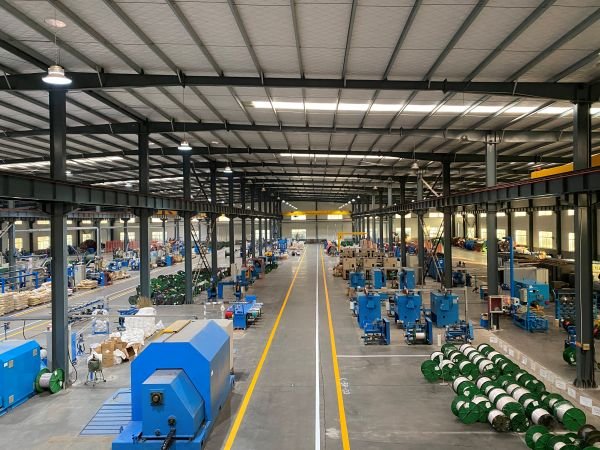
A fire resistant cable is bought for the worst day in the building, so the release checks are recorded per production length rather than per batch.
Tell us the core count and cross-section, the fire category the specification calls for (CWZ or a subset), the voltage and the quantity.
We confirm the construction, the fire category, the conductor size and the armour, and send the quotation within one working day.
Sample for qualification — stocked configurations within a few working days.
10–20 working days, depending on the core count and cross-section.
Drum packing, shipping documents and cut lengths on request, with the construction drawing issued for approval before the first production run.
Tell us the cores, cross-section, fire category and quantity — we reply within one working day.
The more detail you give, the faster and more accurate our quotation. Our engineers reply within one working day.
Thanks — our engineers will reply within one working day.