Professional cable manufacturer

Professional cable manufacturer
Home » Products » Power Cable » YJLV/YJV 0.6/1kV XLPE Insulated Power Cable
Chinese-standard XLPE insulated power cable to GB/T 12706.1-2020 — YJV with a copper conductor and YJLV with an aluminium conductor, rated U0/U (Um) = 0.6/1 (1.2) kV, conductor temperature 90 °C continuous and 250 °C on short circuit.
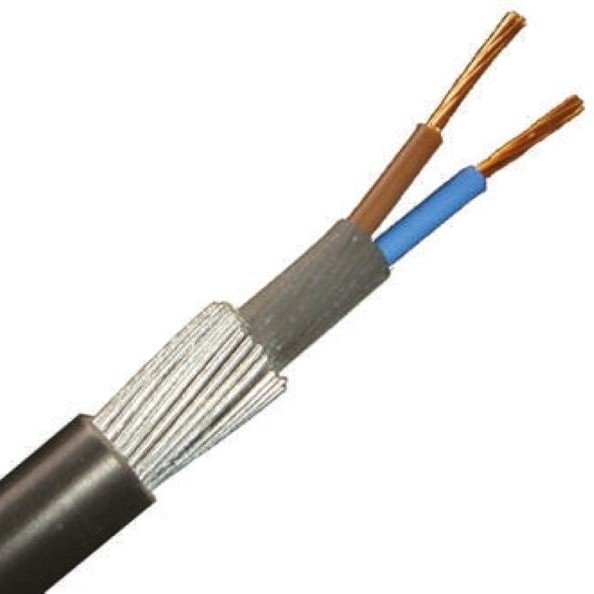
What a project engineer checks first on a GB/T 12706.1 power cable — the correct standard relationship, the conductor class, and the installation limits that actually decide the route.
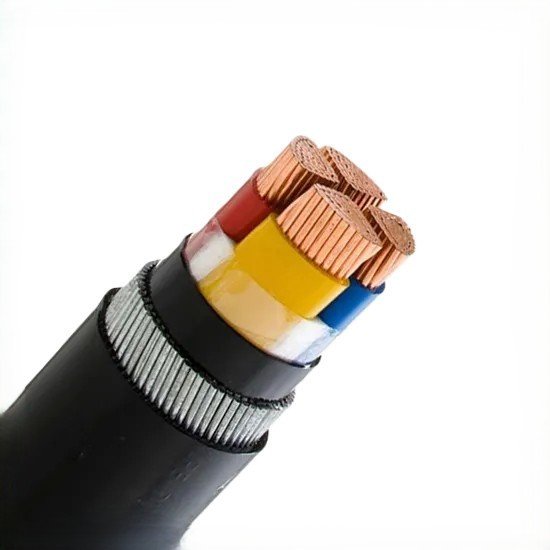
This is a GB/T 12706.1 cable: an annealed copper or aluminium conductor, XLPE (cross-linked polyethylene) insulation and a PVC sheath, rated U0/U (Um) = 0.6/1 (1.2) kV for fixed installation in distribution networks and industrial plants. YJV carries the copper conductor and YJLV the aluminium one; the rest of the construction is the same. Conductors are to GB/T 3956-2008, which is identical to IEC 60228:2004 — Class 1 solid or Class 2 stranded as standard, with Class 5 flexible copper available on request.
The first thing datasheets get wrong is the standard relationship. GB/T 12706.1-2020 is modified from IEC 60502-1:2004 — the cover states MOD, not IDT — so writing the two numbers side by side as if they were the same document is wrong, and it matters when a specification asks you to declare which edition you are testing to. IEC 60502-1 is the international counterpart; GB/T 12706.1-2020 is what the cable is made and tested to, and it replaced the 2008 edition on 1 October 2020.
The second thing is the conductor temperature and bending radius. XLPE insulation is rated +90 °C continuous and +250 °C on short circuit for up to 5 seconds — both figures are from the standard itself. The minimum bending radius is where most datasheets quietly simplify: the standard gives four values, not two. For an unarmoured cable, a single-core construction needs 20 × D and a multi-core needs 15 × D; only the armoured versions drop to 15 D and 12 D. A datasheet that quotes 15 D and 12 D for a plain YJV is quoting the armoured figures, and a cable pulled round too tight a bend keeps the damage inside the sheath.
On the sheath: YJV and YJLV have a PVC sheath, which contains halogen. They are not low-smoke halogen-free products. That is a different family — WDZ-YJY for a halogen-free low-smoke sheath, or YJY / YJLY for a plain polyethylene sheath. If your specification calls for LSZH, say so at inquiry stage and we quote the right model rather than relabelling this one.
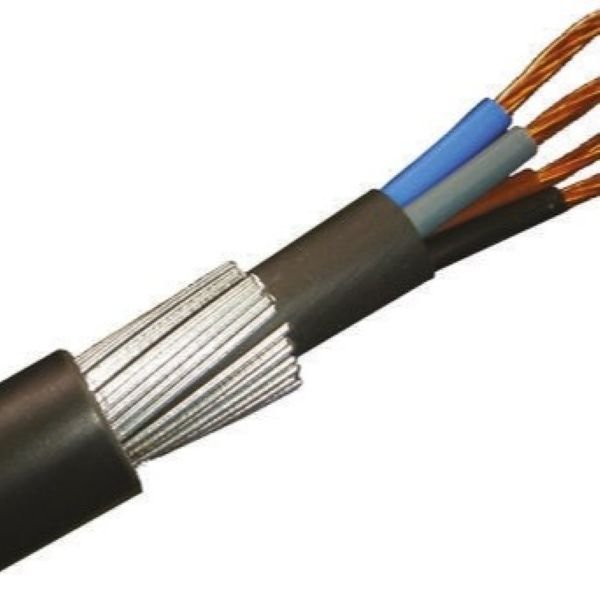
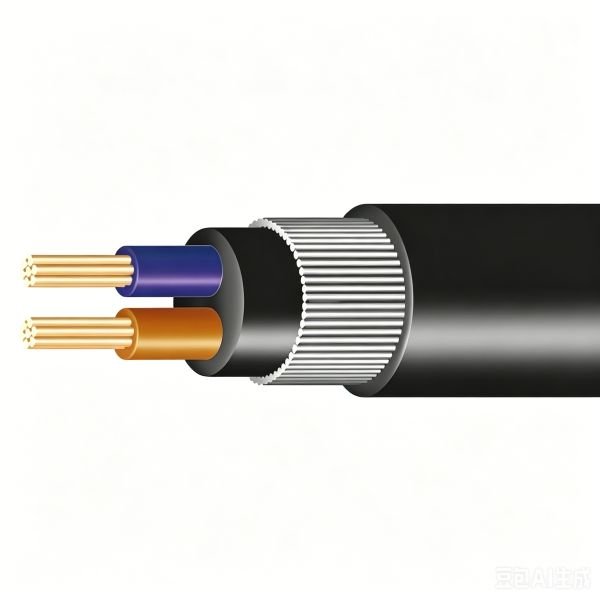
The letter code is worth reading once. YJ is the cross-linked polyethylene insulation, V is the PVC sheath and Y is a polyethylene sheath; L marks an aluminium conductor, and a bare T for copper is normally omitted. The two digits give the armour: 22 is double steel tape, 32 is fine round steel wire and 42 is coarse round steel wire. So YJV22 is the steel-tape armoured version for direct burial and YJV32 / YJV42 are the wire armoured versions for shafts and for routes where the cable has to carry its own weight. For the European equivalent in a halogen-free construction, see our CU/XLPE/LSZH/SWA/LSZH Armoured Power Cable.
More about the manufacturer: About SORIVO →
Power cables with extruded insulation for rated voltages from 1 kV up to 35 kV, Part 1 — the standard this cable is made and tested to. It replaced the 2008 edition on 1 October 2020.
The standard is modified from (MOD) IEC 60502-1:2004, not identical to it. We state which one the cable answers to rather than quoting both as one.
The rated voltage in the standard's own notation: U0/U (Um) = 0.6/1 (1.2) kV, taken from clause 4.1 of GB/T 12706.1-2020.
XLPE insulation rated +90 °C continuous conductor temperature and +250 °C on short circuit for up to 5 seconds, straight from the standard's conductor temperature table.
Every production length gets a 3.5 kV AC routine withstand test for 5 minutes, the value the standard sets for a 0.6 kV cable, with the result recorded against the drum.
Annealed copper or aluminium to GB/T 3956-2008 (identical to IEC 60228:2004) — solid or stranded as standard, Class 5 flexible copper on request.
20 D single-core unarmoured, 15 D multi-core unarmoured, 15 D single-core armoured and 12 D multi-core armoured — the full set, not the two armoured figures on their own.
Steel-tape armour (22) for direct burial, fine or coarse round steel wire (32 / 42) for shafts and tensile routes, a PE sheath (YJY / YJLY) or a halogen-free low-smoke version (WDZ-YJY).
Distribution boards, plant feeders and building services on projects specified to Chinese standards.
Transformer-to-board and board-to-board feeders in commercial and industrial installations, in copper YJV or aluminium YJLV depending on the load and the budget.
Motor feeders and distribution circuits in factories, where the cable runs on tray and ladder and has to hold its rating in a hot plant room.
Panel-to-panel and panel-to-load connections inside substations, with the bending radius set by the switchgear cubicle rather than the route.
Directly buried and ducted feeders using YJV22 steel-tape armour, where the armour takes the mechanical load the ground imposes.
YJV32 and YJV42 use round steel wire armour and are chosen where the cable has to support its own weight in a riser or a wet shaft.
Buried and ducted power feeders to pumps and process equipment, usually in the armoured construction.
Chillers, air handling units and lift supplies, in tray or conduit, where the fire performance requirement is set by the local code.
Machines and skids built to Chinese standards for domestic or export markets, where the cable schedule names YJV or YJLV directly.
The complete parameter set — the same data our engineers quote from.
| Model | Conductor | Insulation | Sheath | Armour | Where it is used |
|---|---|---|---|---|---|
| YJV | Copper (T omitted) | XLPE | PVC | None | The default copper type for fixed installation indoors, in trays, ducts and conduits |
| YJLV | Aluminium (L) | XLPE | PVC | None | The same construction with an aluminium conductor — lighter and lower cost on long, lightly loaded runs |
| YJV22 / YJLV22 | Copper / aluminium | XLPE | PVC | Double steel tape (22) | Direct burial and ducted routes where mechanical protection is needed |
| YJV32 / YJLV32 | Copper / aluminium | XLPE | PVC | Fine round steel wire (32) | Shafts, risers and routes with a tensile load |
| YJV42 / YJLV42 | Copper / aluminium | XLPE | PVC | Coarse round steel wire (42) | The same duty as 32 with a heavier armour where the pull or the ground load is greater |
| YJY / YJLY | Copper / aluminium | XLPE | PE (Y) | None | Where the specification asks for a polyethylene sheath instead of PVC |
| WDZ-YJY / WDZ-YJLY | Copper / aluminium | XLPE | Halogen-free low-smoke | None | Where low smoke and zero halogen are specified — this, not YJV, is the LSZH product of the family |
The two digits of the armour code read as one figure: 22 is double steel tape, 32 is fine round steel wire and 42 is coarse round steel wire. YJV and YJLV have a PVC sheath, which contains halogen — they are not low-smoke halogen-free cables, and a specification that asks for LSZH has to be quoted as WDZ-YJY or YJY, not as YJV. The YJV22 and YJV32 drawings add an inner sheath under the armour, so the outer diameter and the bending radius differ from the unarmoured version of the same conductor size.
| General Information | |
| Product Name | YJLV/YJV 0.6/1kV XLPE Insulated Power Cable |
| Model Designation | YJV / YJLV / YJV22 / YJLV22 / YJV32 / YJV42 / YJY / YJLY / WDZ-YJY — see Table 1 |
| Standard | GB/T 12706.1-2020, Power cables with extruded insulation and their accessories for rated voltages from 1 kV (Um=1.2 kV) up to 35 kV (Um=40.5 kV) — Part 1: cables for rated voltage of 1 kV (Um=1.2 kV) and 3 kV (Um=3.6 kV). Published 2020-03-31, effective 2020-10-01, superseding GB/T 12706.1-2008 |
| Relationship to IEC | GB/T 12706.1-2020 is modified from IEC 60502-1:2004 (MOD) — it is not identical to it. IEC 60502-1 is the international counterpart of this standard, not a second standard this cable is separately tested to |
| Conductor Standard | GB/T 3956-2008, Conductors of insulated cables — identical to IEC 60228:2004 (IDT) |
| Scope of the Standard | Fixed installation in distribution networks and industrial installations. The standard does not cover cables for overhead lines, mining, nuclear plant containment or submarine and shipboard use |
| Electrical Ratings | |
| Rated Voltage U0/U (Um) | 0.6/1 (1.2) kV — the notation used in clause 4.1 of GB/T 12706.1-2020 |
| Conductor Material | Annealed copper (YJV) or aluminium / aluminium alloy (YJLV). GB/T 3956 specifies the conductor resistance and construction — it does not set a purity figure, so no purity percentage is claimed here |
| Conductor Class | Class 1 solid or Class 2 stranded as standard; Class 5 flexible copper available on request. The standard permits the 1st, 2nd and 5th conductor classes in copper and the 1st and 2nd in aluminium |
| Routine Withstand Test (finished cable) | 3.5 kV AC, 50 Hz, 5 minutes — the value the standard sets for a 0.6 kV cable in its routine test voltage table, applied to every production length |
| Insulation Resistance / Volume Resistivity | XLPE ≥ 1 × 10¹² Ω·cm at the maximum conductor temperature, per the electrical type test table of GB/T 12706.1-2020 |
| Max. Conductor Temperature | +90 °C continuous |
| Short-Circuit Temperature | +250 °C for a duration not exceeding 5 seconds |
| Screen (optional) | Copper tape or copper wire screen on request for the screened constructions |
| Construction | |
| Insulation | XLPE (cross-linked polyethylene) compound |
| Sheath | PVC compound, black as standard, for YJV / YJLV and their armoured versions; polyethylene for YJY / YJLY; halogen-free low-smoke for WDZ-YJY |
| Armour | None for YJV / YJLV; double steel tape for 22; fine round steel wire for 32; coarse round steel wire for 42 |
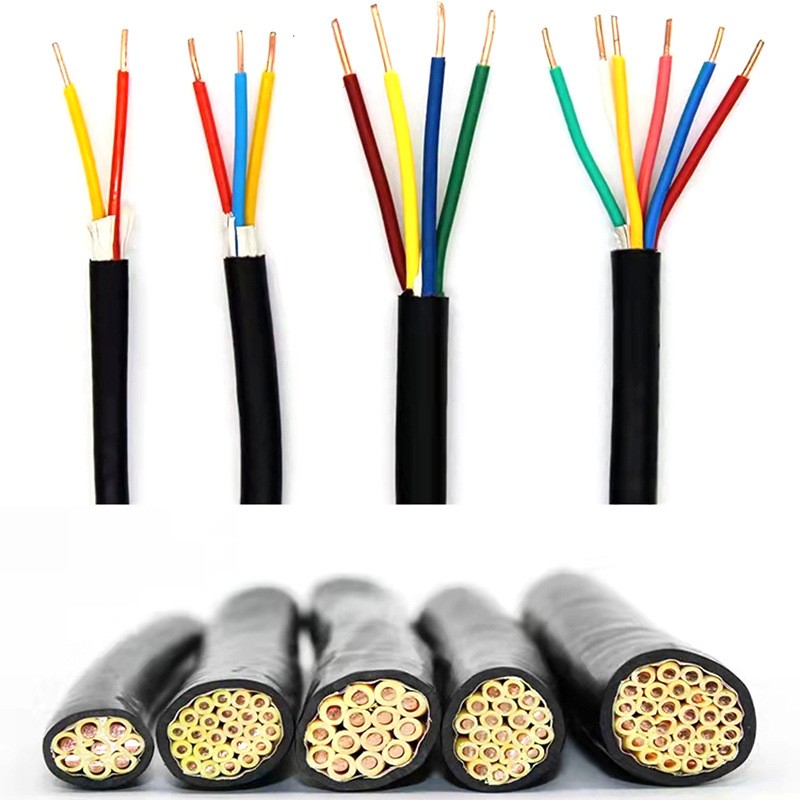
| Core Identification | Colour-coded cores for small core counts; numbered cores for larger counts, with a green/yellow protective conductor where the schedule requires one, to the identification requirements cited by the standard |
| Outer Diameter | Depends on core count, cross-section and armour; stated on the construction drawing |
| Standard Lengths | 100 m / 500 m / 1000 m per drum or coil; cut lengths on request |
| Installation | |
| Bending Radius, Installation — 1 core, unarmoured | 20 × D |
| Bending Radius, Installation — 1 core, armoured | 15 × D |
| Bending Radius, Installation — multi-core, unarmoured | 15 × D |
| Bending Radius, Installation — multi-core, armoured | 12 × D |
| Bending Radius, at Joints and Terminations | 15 D / 12 D / 12 D / 10 D for the same four cases — a tighter limit applies close to a joint box or a termination |
| Direct Burial | Not recommended for the unarmoured YJV / YJLV. Use the steel-tape armoured YJV22 / YJLV22 for direct burial |
| Current Rating | Depends on the installation method, the ambient temperature and the number of circuits in the group. We issue the rating for the actual route with the quotation rather than a single number |
| Configuration & Logistics | |
| Cross-Sections | 1.5 / 2.5 / 4 / 6 / 10 / 16 / 25 / 35 / 50 / 70 / 95 / 120 / 150 / 185 / 240 / 300 / 400 / 500 / 630 / 800 mm² depending on core count and conductor material — see Table 3 |
| Core Configurations | 1, 2, 3, 4 or 5 cores, plus 3+1, 3+2 and 4+1 arrangements |
| Customization | Conductor material, core count, cross-section, sheath compound, armour type, sheath colour, cut length and customer marking |
| Packaging | Wooden drum, steel-wood drum or coil per order |
| MOQ | 500 m — sample orders negotiable |
| Lead Time | 7–20 working days; stocked configurations 3–5 days |
| Cores | Copper YJV / armoured (mm²) | Aluminium YJLV / armoured (mm²) | Typical use |
|---|---|---|---|
| 1 | 1.5 – 800 | 2.5 – 800 | Single-phase feeders, and the individual phases of a parallel run |
| 2 | 1.5 – 185 | 2.5 – 185 | Single-phase sub-mains and DC links |
| 3 | 1.5 – 300 | 2.5 – 300 | Three-phase feeders without a neutral |
| 4 | 2.5 – 300 | 2.5 – 300 | Three-phase with a protective conductor |
| 5 | 2.5 – 300 | 2.5 – 300 | Three-phase with neutral and protective conductor |
| 3+1 / 3+2 / 4+1 | 2.5 – 300 (main cores) | 2.5 – 300 (main cores) | Reduced neutral or protective conductor, sized to the standard's recommended neutral and protective conductor cross-sections |
The ranges above are the typical production range for this family, not a table copied from the standard: the achievable upper limit depends on the conductor stranding equipment and on the sheath thickness calculated from the standard's assumed-dimensions method. A construction drawing stating core count, cross-section, conductor class, armour and outer diameter is issued for approval before the first production run, and final selection is confirmed against the selected construction. Where a project specifies a cross-section above these ranges, ask and we will confirm against the drawing.
Values marked as coming from the standard are taken from GB/T 12706.1-2020: the rated voltage from clause 4.1, the +90 °C and +250 °C conductor temperatures from the conductor temperature table, the 3.5 kV / 5 minute routine test from the routine test voltage table, the 1 × 10¹² Ω·cm volume resistivity from the electrical type test table, and the four bending radius figures from the minimum bending radius table for installation. The 3.5 kV withstand test is the finished-cable routine test applied to every production length; it is not a statement of the dielectric strength of the XLPE compound, which is a material property and is not quoted as a product parameter. Conductor resistance values are the Class 2 maxima to GB/T 3956-2008 (IEC 60228:2004). No CCC, CE or other certification claim is made on this page — certification and its scope are confirmed against the certificate for the selected construction, and the documents are issued with the quotation.
The standard this cable is made and tested to, stated with its correct relationship to IEC 60502-1:2004 — modified from (MOD), not identical. We name the edition and the effective date rather than quoting two standard numbers side by side.
Request standard reference →Class 1 solid or Class 2 stranded annealed copper or aluminium to GB/T 3956-2008, identical to IEC 60228:2004. Conductor resistance, insulation resistance and the 3.5 kV AC withstand test are measured on every production length and recorded against the drum.
Request test records →Certification scope depends on the exact construction, conductor material and cross-section, so we confirm it against the certificate for the cable actually ordered instead of printing a blanket claim. Third-party inspection, RoHS documentation and the construction drawing are available on request.
Request documentation →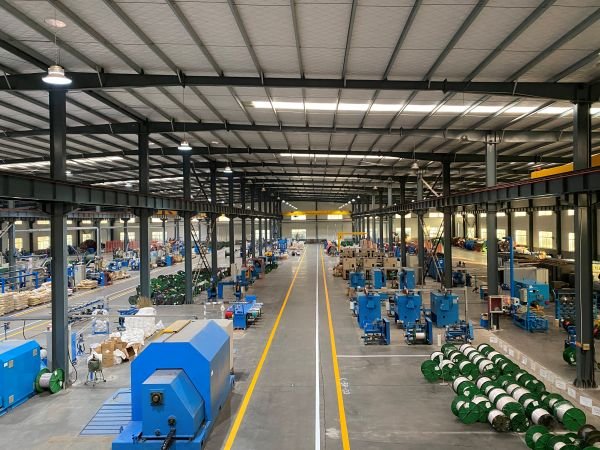
Power cable is bought by the drum and installed by the kilometre, so the release checks are recorded per production length rather than per batch.
Tell us the model designation (YJV or YJLV and any armour code), the core count and cross-section, the conductor material and the quantity.
We confirm the construction, conductor class, armour, sheath compound and cross-section against the drawing, and send the quotation within one working day.
Sample for qualification — stocked configurations within a few working days.
7–20 working days; stocked configurations within 3–5 days.
Drum packing, shipping documents and cut lengths on request, with the construction drawing issued for approval before the first production run.
Tell us the model, core count, cross-section and conductor material — we reply within one working day.
The more detail you give, the faster and more accurate our quotation. Our engineers reply within one working day.
Thanks — our engineers will reply within one working day.