Professional cable manufacturer

Professional cable manufacturer
Home » Products » Control & Instrumentation » RVV 4 Core 1.5mm² PVC Flexible Control Cable
The most-ordered size in the RVV family — 4 cores × 1.5 mm², 300/500 V to 60227 IEC 53, Class 5 flexible copper, ≤ 13.3 Ω/km, mean outer diameter up to 11.0 mm.
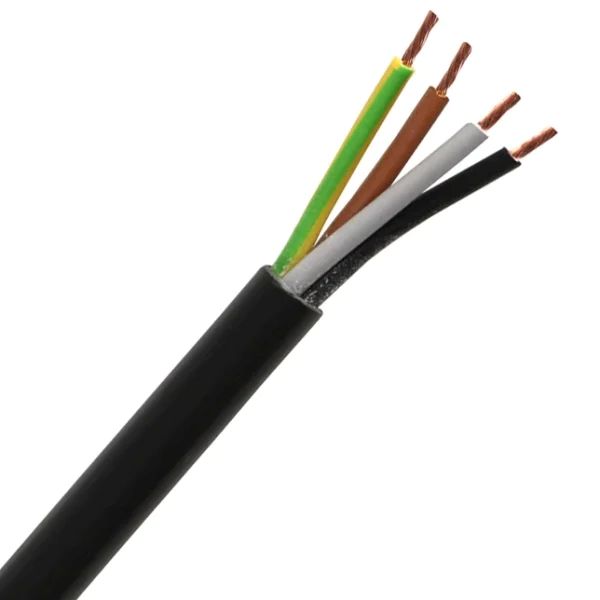
What a panel builder specifies on an RVV 4 × 1.5 mm² — before reading the full specification below.
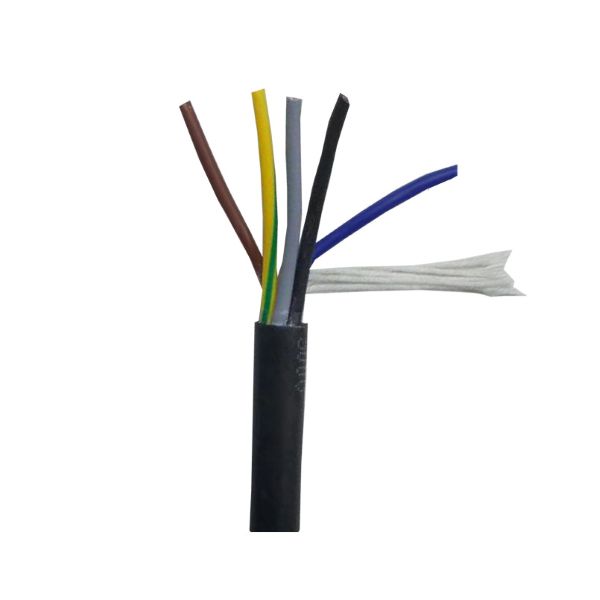
This is the single most-ordered construction in the RVV family: four cores of 1.5 mm² in a flexible PVC insulated and PVC sheathed cable, rated 300/500 V to 60227 IEC 53 and defined by GB/T 5023.5-2008 — the flexible cable and cord part of the GB/T 5023 series, equivalent to IEC 60227-5. Four cores of 1.5 mm² is the standard arrangement for a small three-phase load or a control circuit that needs three live conductors plus a protective earth, which is why it moves in volume.
The electrical numbers are the reason this size is specified rather than estimated. The conductor is Class 5 flexible stranded copper to GB/T 3956 with a maximum DC resistance of 13.3 Ω/km at 20 °C for plain copper — the figure the standard sets for a 1.5 mm² Class 5 conductor, and the number to use for voltage-drop calculation. The finished cable is given a 2000 V AC withstand test for 5 minutes, which is the value GB/T 5023.1 ties to the 300/500 V class, and the maximum conductor temperature is +70 °C with an operating range of −15 °C to +70 °C.
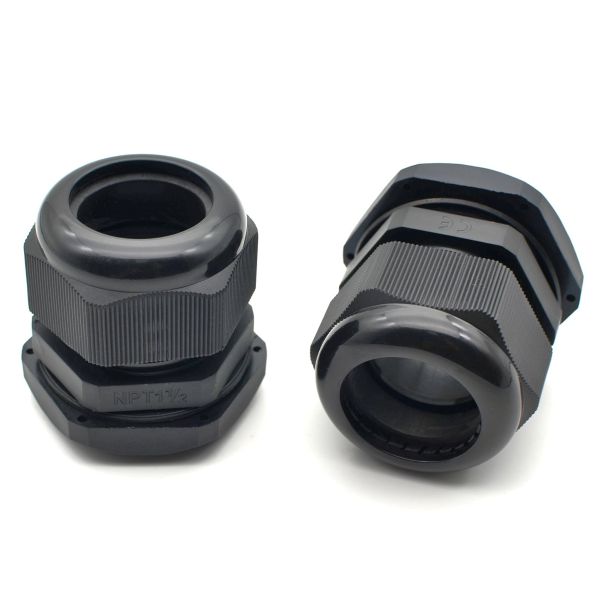
The construction figures are worth stating exactly, because they are what determines whether the cable fits the gland, the trunking and the connector. Insulation thickness is a nominal 0.7 mm and sheath thickness a nominal 1.0 mm, giving a mean outer diameter of up to 11.0 mm. Insulation is a PVC/D compound and the sheath a PVC/ST5 compound, the two grades GB/T 5023.1 assigns to flexible cables.
One number that should not be fixed is the stranding. A 1.5 mm² Class 5 conductor is commonly made as 48 × 0.20 mm or as 30 × 0.25 mm, and GB/T 3956 controls the maximum single-wire diameter and the conductor resistance rather than the exact strand count. So we publish the resistance limit, which is the value that matters electrically, and confirm the stranding on the construction drawing instead of printing one arrangement as if it were compulsory.
Where the circuit needs more than four conductors, or a different cross-section, the rest of the family is on the RVV 2–5 Core Cable page. Where the installation is fixed and specified to Chinese control cable standards, the KVV / KVVR / KVVP Control Cable is the GB/T 9330 alternative at 450/750 V.
More about the manufacturer: About SORIVO →
The ordinary-duty RVV type, which is the correct classification for a 1.5 mm² core. The 300/300 V light-duty type stops at 0.75 mm².
Three live conductors plus a protective earth — the standard arrangement for a small three-phase load or a control circuit with an earth.
The GB/T 3956 limit for a 1.5 mm² Class 5 copper conductor, published so voltage drop can be calculated rather than assumed.
Stranded annealed copper that routes and terminates by hand — the reason a flexible cable is chosen over a fixed-wiring one.
Nominal insulation and sheath thickness, giving a mean outer diameter of up to 11.0 mm — the figures that decide gland and connector fit.
The insulation and sheath compound grades GB/T 5023.1 assigns to flexible cables, rather than the fixed-installation grades.
Applied to every production length for 5 minutes and recorded, at the value GB/T 5023.1 ties to the 300/500 V class.
CCC applies to this cable type under the PVC insulated cable scope of the China Compulsory Certification catalogue.
Small three-phase loads, control circuits with an earth core and equipment wiring in flexible PVC.
Fans, small pumps, door drives and similar loads where three live cores plus an earth is the whole circuit.
Control and interlock wiring to actuators, solenoids and small motors inside equipment and panels.
Panel wiring where 1.5 mm² is the house size and a flexible Class 5 conductor is easier to route than a solid one.
Fan coil units, dampers and small plant items where the cable is terminated by hand in a confined space.
Indoor final circuits in conduit and trunking, where the earth core is required at every point.
Replacing damaged internal wiring on imported equipment where a 4 × 1.5 mm² flexible PVC cable is the original specification.
Discrete signal and status wiring with an earth reference, where no screen is needed; use RVVP or CY where it is.
Volume supply to equipment builders who need a repeatable part with a fixed construction drawing and consistent outer diameter.
The complete parameter set — the same data our engineers quote from.
| Item | Value | Note |
|---|---|---|
| Conductor | Class 5 flexible stranded copper to GB/T 3956 | Stranding confirmed on the drawing — the standard sets the resistance and the maximum wire diameter, not the strand count. 48 × 0.20 mm is a common construction at this size. |
| Max. DC Resistance at 20 °C | ≤ 13.3 Ω/km | The GB/T 3956 limit for a 1.5 mm² Class 5 plain copper conductor. Use this figure for voltage-drop calculation. |
| Insulation Thickness | 0.7 mm nominal | PVC/D compound per GB/T 5023.1 |
| Sheath Thickness | 1.0 mm nominal | PVC/ST5 compound per GB/T 5023.1 |
| Mean Outer Diameter | max. 11.0 mm | The limit for this construction. The actual diameter of each production run is stated on the test record. |
| Rated Voltage Test | 2000 V AC, 5 minutes | The finished-cable test GB/T 5023.1 ties to the 300/500 V class |
| Core Identification | Standard colour code, with a green/yellow protective conductor | The exact arrangement is confirmed on the construction drawing |
The insulation and sheath thicknesses and the outer diameter limit are the values for this construction, and they are the figures to check a gland, a connector or a trunking fill calculation against. Stranding is deliberately not fixed: GB/T 3956 controls the conductor resistance and the maximum single-wire diameter for a Class 5 conductor, and both 48 × 0.20 mm and 30 × 0.25 mm are legitimate ways to build 1.5 mm². We confirm which one the order is built to on the drawing.
| Construction | Type | Rated voltage | Typical use |
|---|---|---|---|
| 4 × 0.5 mm² | 60227 IEC 52 | 300/300 V | Light-duty control and signal wiring inside equipment |
| 4 × 0.75 mm² | 60227 IEC 53 | 300/500 V | The next size down — control circuits where 1.5 mm² is more copper than the circuit needs |
| 4 × 1.5 mm² | 60227 IEC 53 | 300/500 V | This product — small three-phase loads and control circuits with an earth core |
| 4 × 2.5 mm² | 60227 IEC 53 | 300/500 V | Higher-current three-phase loads and longer runs where voltage drop matters |
| 4 × 4 mm² / 4 × 6 mm² | Available on request | 300/500 V | Larger loads — quoted individually against the JB/T 8734 reference series where the project requires it |
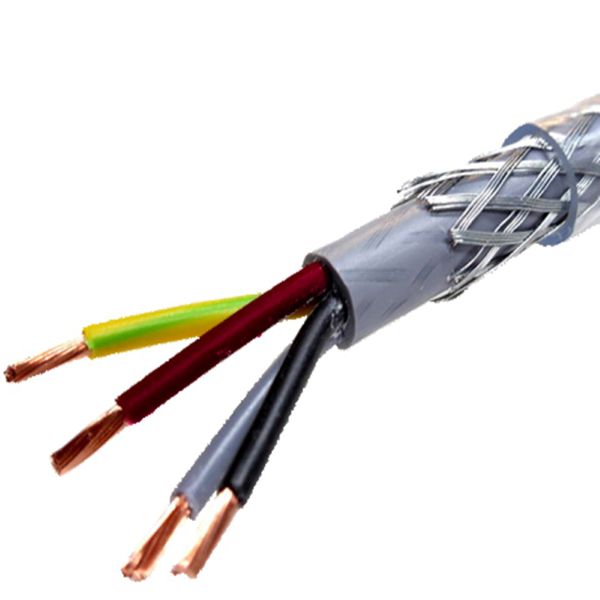
| Screened: RVVP 4 × 1.5 mm² | Copper braid screened | 300/500 V | The same construction with a copper wire braid screen for circuits near drives and inverters |
The four-core range runs from 0.5 mm² light duty to 6 mm² on request, and the voltage class follows the cross-section — 0.5 mm² is the 300/300 V light-duty type and everything from 0.75 mm² upward is 300/500 V. Where the circuit needs screening, RVVP is the same construction with a copper braid screen.
| General Information | |
| Product Name | RVV 4 Core 1.5mm² PVC Flexible Control Cable |
| Model Designation | 60227 IEC 53 (RVV) — ordinary duty, 300/500 V |
| Standard | GB/T 5023.5-2008, PVC insulated cables of rated voltages up to and including 450/750 V — Part 5: Flexible cables (cords), equivalent to IEC 60227-5 |
| General Requirements | GB/T 5023.1-2008 |
| Supplementary Standard | JB/T 8734.3 covers flexible cords for connection and a wider size range than GB/T 5023; it is the basis for non-standard combinations where a project requires them |
| Conductor Standard | GB/T 3956, Conductors of insulated cables |
| Electrical Ratings | |
| Rated Voltage (U0/U) | 300/500 V |
| Cross-section | 1.5 mm² per core |
| Core Configuration | 4 cores — three live conductors plus a protective earth |
| Conductor Type | Class 5 flexible stranded copper to GB/T 3956 / IEC 60228 |
| Conductor Stranding | Confirmed on the construction drawing. GB/T 3956 sets the conductor resistance and the maximum single-wire diameter for a Class 5 conductor rather than the strand count; 48 × 0.20 mm is a common construction at 1.5 mm². |
| Max. DC Resistance at 20 °C | ≤ 13.3 Ω/km for plain copper, the GB/T 3956 limit for a 1.5 mm² Class 5 conductor |
| Rated Voltage Test (finished cable) | 2000 V AC, 50 Hz, 5 minutes |
| Insulation Resistance | Manufacturer test value, confirmed against the test report for the selected construction |
| Current-Carrying Capacity | Depends on the installation method, the number of circuits bunched together and the ambient temperature. Quoted for the specific installation on request rather than published as a single figure. |
| Construction | |
| Insulation Compound | PVC/D compound per GB/T 5023.1 — the grade for flexible cables |
| Insulation Thickness | 0.7 mm nominal |
| Sheath Compound | PVC/ST5 compound per GB/T 5023.1 — the grade for flexible cables |
| Sheath Thickness | 1.0 mm nominal |
| Mean Outer Diameter | max. 11.0 mm |
| Sheath Colour | Black, white or grey as standard; other colours to order |
| Core Identification | Standard colour code for a four-core construction, with a green/yellow protective conductor; the exact arrangement is confirmed on the drawing |
| Environment | |
| Max. Conductor Temperature | +70 °C continuous |
| Operating Temperature Range | −15 °C to +70 °C |
| Min. Installation Temperature | 0 °C recommended by the manufacturer — PVC becomes brittle below this and a cold bend can damage the insulation without visible signs |
| Bending Radius | 4 × outer diameter for fixed installation (manufacturer recommendation). GB/T 5023 does not set a bending radius for this cable type. |
| Flame Performance | Single-core vertical flame test to IEC 60332-1 as standard. This is not a flame-retardant product: a ZR-RVV version with a ZA / ZB / ZC class to GB/T 19666-2019 uses a flame-retardant compound and is ordered as such. |
| Certification & Logistics | |
| Certification | CCC for this cable type under the PVC insulated cable scope of the China Compulsory Certification catalogue; certificate provided with the shipment. CE does not apply to a cable built to a Chinese standard. |
| RoHS | Compliance report available on request |
| Standard Lengths | 100 m / 200 m / 500 m per coil; cut lengths on request |
| Packaging | Coil, reel or cut length |
| Customization | Sheath colour, cut length, customer marking and screened (RVVP) construction |
| MOQ | 100 m — sample orders available |
| Lead Time | 5–15 working days; stocked configurations 3–5 days |
The construction values in Table 1 — 0.7 mm insulation, 1.0 mm sheath and a mean outer diameter of up to 11.0 mm — are the figures to check a gland, connector or trunking fill against. The 13.3 Ω/km resistance limit is the GB/T 3956 value for a 1.5 mm² Class 5 plain copper conductor and is the figure to use for voltage-drop calculation. Current-carrying capacity is deliberately not published as a single number, because it depends on how the cable is installed and on how many circuits share the containment; tell us the installation and we will give you the figure for it. Bending radius and minimum installation temperature are manufacturer recommendations, since GB/T 5023 sets neither for this cable type.
The flexible cable and cord part of the GB/T 5023 series, equivalent to IEC 60227-5, with the general requirements in GB/T 5023.1-2008. The construction figures quoted here are the ones published for the 4 × 1.5 mm² type at 300/500 V.
Request standard reference →Class 5 flexible stranded annealed copper with a maximum DC resistance of 13.3 Ω/km at 20 °C for 1.5 mm² plain copper. Conductor resistance is measured on every production length and recorded against the coil.
Request test records →PVC insulated cables rated 450/750 V and below to the GB/T 5023 series are within the China Compulsory Certification scope, so CCC applies to this cable type. The certificate covering the ordered construction is provided with the shipment, and RoHS test reports are available on request.
Request certificate →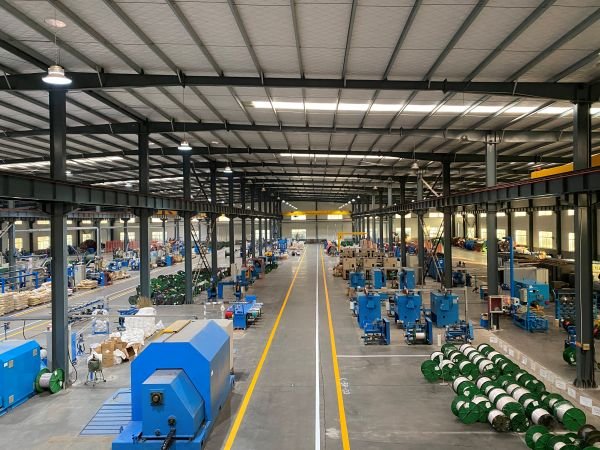
Fixed-size orders are checked against the construction drawing as well as against the electrical limits.
Tell us the quantity, the sheath colour and whether the construction needs to be screened (RVVP).
We confirm core count, cross-section, screening option and quotation within one working day.
Sample for qualification — stocked configurations within a few working days.
5–15 working days; stocked configurations within 3–5 days.
Drum packing, shipping documents and cut lengths on request, with the construction drawing issued for approval before the first production run.
Tell us the quantity, colour and whether a screened version is needed — we reply within one working day.
The more detail you give, the faster and more accurate our quotation. Our engineers reply within one working day.
Thanks — our engineers will reply within one working day.