Professional cable manufacturer

Professional cable manufacturer
Home » Products » Control & Instrumentation » Multi-core Anti-interference Control Cable (KVV / KVVR / KVVP)
Chinese-standard PVC insulated and sheathed control cable to GB/T 9330.2-2008 — rigid KVV, flexible KVVR and copper-braid screened KVVP, rated 450/750 V, 2 to 61 cores from 0.5 to 10 mm².
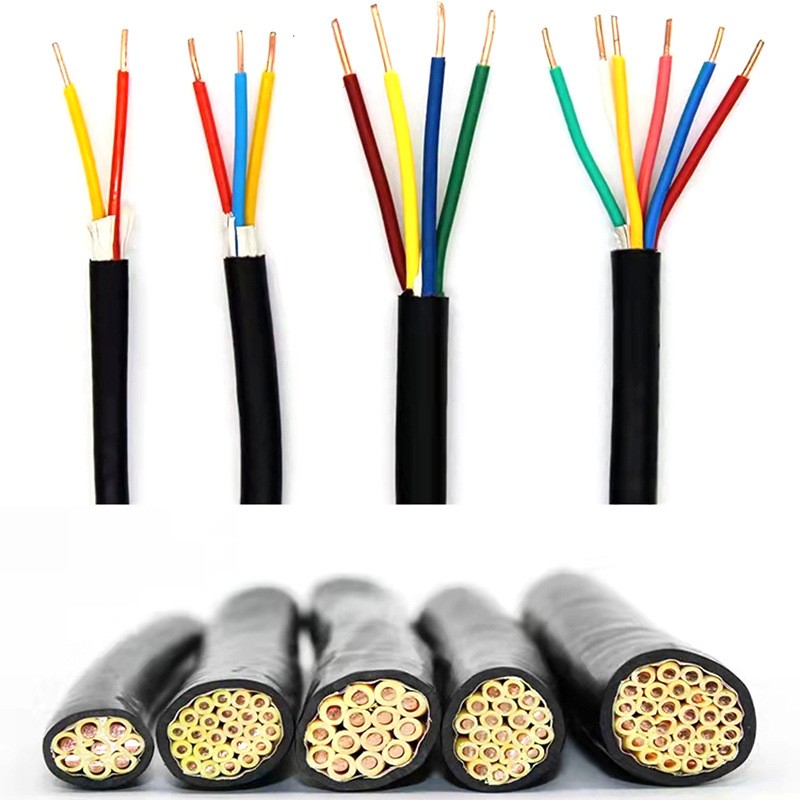
What a panel builder or switchgear manufacturer checks first on a GB control cable — before reading the full specification below.
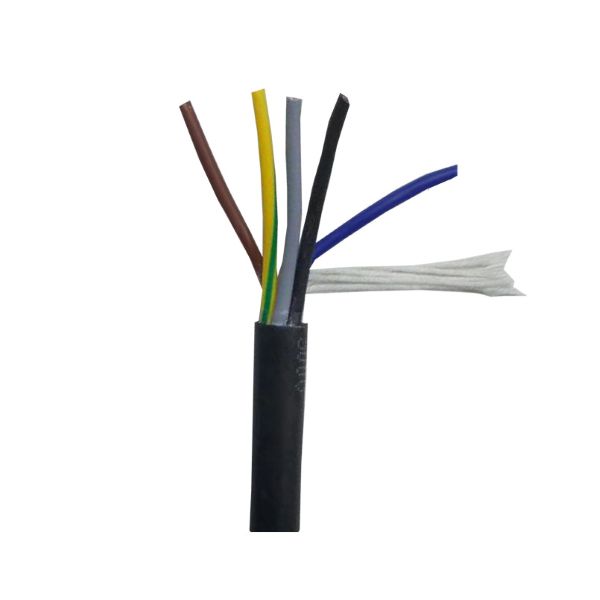
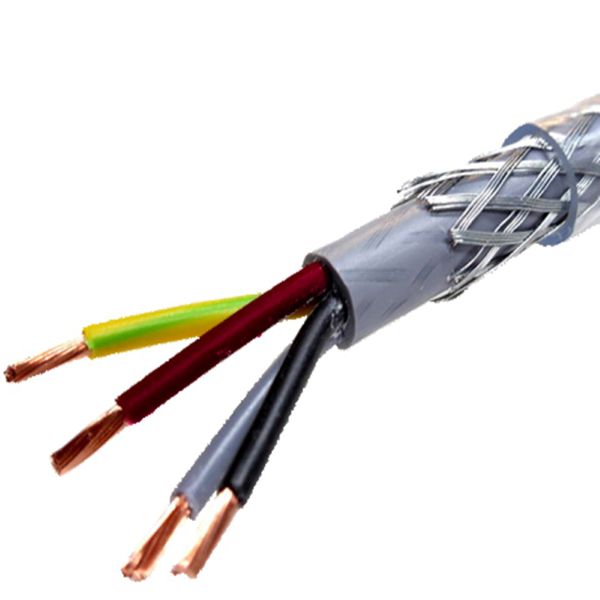
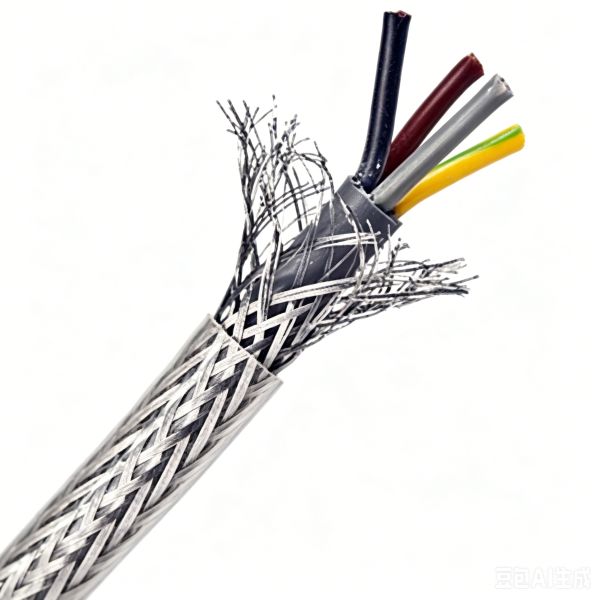
This is a GB/T 9330 control cable: copper conductors, PVC insulation and a PVC sheath, rated 450/750 V, in the four core arrangements Chinese switchgear and panel builders specify every day. KVV is the basic rigid type for fixed installation. KVVR uses a Class 5 flexible conductor for wiring that has to be bent in by hand or that moves during maintenance. KVVP adds a copper wire braid screen over the laid-up cores for circuits that need EMC protection, and KVVP2 uses a copper tape screen instead.
The standard matters here, because control-cable datasheets in this market routinely cite the wrong one. IEC 60227 covers PVC insulated cables of rated voltage up to and including 450/750 V — fixed wiring cables and flexible cords — and its construction list does not contain a control cable of the KVV type. BS 6004 is the British standard for PVC insulated non-armoured cables for electric power, lighting and internal wiring, which is a different product family again. The applicable standard for KVV, KVVR and KVVP is GB/T 9330.2-2008, Plastic insulated control cables — Part 2: PVC insulated and PVC sheathed control cables, with the general requirements in GB/T 9330.1-2008 and the cross-linked polyethylene (XLPE) insulated types in GB/T 9330.3-2008.
The rated voltage is 450/750 V and there is only one class — 300/500 V is not a rating of this product family at all, and a datasheet that lists both is describing two different products. Conductors follow GB/T 3956: Class 1 solid or Class 2 stranded for KVV and Class 5 flexible for KVVR. Insulation and sheath are PVC compounds with a +70 °C continuous conductor temperature and a +160 °C short-circuit allowance for up to 5 seconds.
Installation rules are the part that gets ignored until a cable is damaged. The minimum bending radius is ≥ 6 × the cable diameter for unarmoured and unscreened types, and ≥ 12 × the diameter where the cable is steel-tape armoured (KVV22) or copper-tape screened (KVVP2) — pulling a taped construction round a 6 × D bend is how the screen or armour gets crushed. The minimum working ambient temperature is −15 °C and the cable should not be installed below 0 °C, because PVC becomes brittle when cold and a bend made at −10 °C leaves damage that only shows up later.
For screening questions, note that KVVP is a control-cable screen, not a data-cable screen. Where the circuit has a defined impedance — PROFIBUS, PROFINET, EtherCAT, encoder feedback — a control cable with braid is not a substitute for the specified bus cable. For those installations see our Industrial Ethernet Cable. For a European-style flexible PVC control cable with a copper braid screen, see the CY Shielded Control Cable.
More about the manufacturer: About SORIVO →
The Chinese standard for PVC insulated and sheathed control cable, with the general requirements in GB/T 9330.1-2008 — the standard this product type actually answers to.
A single voltage rating for the whole family. The 300/500 V that appears alongside it on some datasheets is a different product family, not a second option here.
Solid or stranded copper to GB/T 3956 for KVV, and Class 5 flexible copper for KVVR where the cable has to be formed by hand.
KVVP uses a copper wire braid; KVVP2 uses a copper tape. Both screen the laid-up core bundle, and both change the minimum bending radius.
PVC insulation rated +70 °C continuous with a +160 °C short-circuit allowance for up to 5 seconds — the figures Chinese cable data sheets quote for this family.
Every production length is given a 3000 V AC withstand test for 5 minutes, and the result is recorded against the drum.
Colour-coded cores up to five, and white cores with black numerals from six cores upward, with a green/yellow protective conductor where the schedule calls for one.
From 0.5 mm² to 10 mm² with core counts to 61 — the full plant-wiring range in one family, with the drawing issued for approval.
Switchgear, plant wiring and building services on projects specified to Chinese standards.
Fixed internal wiring in low-voltage switchgear and controlgear assemblies, where KVV with a Class 1 or 2 conductor is the normal choice.
Control, interlock and status wiring in MCCs, with KVVP where the section also contains variable-speed drives.
PLC I/O and interposing relay wiring, where 0.75 and 1.0 mm² multi-core cable does most of the work.
Plant wiring in steel, cement and chemical works where the cable is installed in trays and trenches and must survive a hot, dirty environment.
Control and signalling circuits in the auxiliary systems of generating and substation installations.
Pump, fan and valve control wiring in plant rooms and risers, in trays, conduits and ducts.
Instrument and control circuits in treatment works, where the cable runs in ducts and trenches between process areas.
Machines built to Chinese standards for domestic or export projects, where the cable schedule names KVV or KVVP directly.
The complete parameter set — the same data our engineers quote from.
| Model | Description | Conductor | Screen or armour |
|---|---|---|---|
| KVV | Copper conductor, PVC insulated and PVC sheathed control cable — the basic type for fixed installation | Class 1 solid or Class 2 stranded | None |
| KVV22 | As KVV with steel tape armour between the inner and outer sheath | Class 1 or Class 2 | Steel tape armour (22) |
| KVVP | As KVV with a copper wire braid screen over the laid-up cores | Class 1 or Class 2 | Copper wire braid (P) |
| KVVP2 | As KVV with a copper tape screen | Class 1 or Class 2 | Copper tape (P2) |
| KVVR | Flexible control cable — Class 5 conductor for hand forming and repeated bending during maintenance | Class 5 flexible | None |
| KVVRP | Flexible control cable with a copper wire braid screen | Class 5 flexible | Copper wire braid (P) |
| KVVRP2 | Flexible control cable with a copper tape screen | Class 5 flexible | Copper tape (P2) |
| KVVR22 | Flexible control cable with steel tape armour | Class 5 flexible | Steel tape armour (22) |
| KVVP2-22 / KVVRP2-22 | Copper tape screened and steel tape armoured, rigid and flexible versions | Class 1, 2 or 5 | Copper tape plus steel tape |
Flame-retardant versions are ordered by adding the class to the model designation — ZA-, ZB- or ZC-class per GB/T 19666-2019, with the flame-retardant PVC compound that goes with it. A standard KVV is not a flame-retardant product and should not be described as one: it passes the single-core vertical flame test to IEC 60332-1, which is a different thing from a ZA/ZB/ZC class. Fire-resistant types are prefixed N-, low-smoke halogen-free types WDZ-.
| Typical core counts by cross-section | |
| 0.5 mm² | 2 to 61 cores — the widest core range in the family |
| 0.75 mm² | 2 to 61 cores |
| 1.0 mm² | 2 to 61 cores |
| 1.5 mm² | 2 to 37 cores |
| 2.5 mm² | 2 to 24 cores |
| 4 mm² | 2 to 14 cores |
| 6 mm² | 2 to 10 cores |
| 10 mm² | 2 to 10 cores |
| How to read the table | |
| Where the limits come from | The core range narrows as the cross-section grows because the finished diameter and the buildability of the core bundle set the limit, not the conductor standard. |
| Confirming the construction | A construction drawing stating core count, cross-section, conductor class, screen or armour, outer diameter and sheath colour is issued for approval before the first production run. |
| Screened and armoured types | KVVP, KVVP2, KVV22 and their combinations are available across the same cross-sections, with the screen or armour adding to the outer diameter and raising the minimum bending radius to 12 × D. |
| General Information | |
| Product Name | Multi-core Highly Flexible Anti-interference Control Cable |
| Model Designation | KVV / KVVR / KVVP / KVVP2 / KVVRP / KVV22 — see Table 1 |
| Standard | GB/T 9330.2-2008, Plastic insulated control cables — Part 2: PVC insulated and PVC sheathed control cables (general requirements per GB/T 9330.1-2008) |
| Conductor Standard | GB/T 3956, Conductors of insulated cables |
| Note on other standards | IEC 60227 covers PVC insulated cables of rated voltage up to and including 450/750 V — fixed wiring cables and flexible cords — and does not contain a control cable of this type. BS 6004 is the British standard for PVC insulated non-armoured cables for electric power, lighting and internal wiring. Neither defines KVV. |
| Electrical Ratings | |
| Rated Voltage (U0/U) | 450/750 V AC, 50 Hz. This is the only voltage class of the GB/T 9330 control cable family; 300/500 V belongs to a different product family. |
| Conductor Type | Class 1 solid or Class 2 stranded copper for KVV and its screened and armoured versions; Class 5 flexible copper for KVVR and KVVRP |
| Conductor Material | Annealed copper to GB/T 3956. GB/T 3956 specifies the conductor resistance and construction — it does not set a purity figure, so no purity percentage is claimed here. |
| Cross-sections | 0.5 / 0.75 / 1.0 / 1.5 / 2.5 / 4 / 6 / 10 mm² |
| Core Counts | 2 to 61 cores depending on cross-section — see Table 2 |
| Rated Voltage Test (finished cable) | 3000 V AC, 50 Hz, 5 minutes, applied to every production length |
| Insulation Resistance | Manufacturer test value, confirmed against the test report for the selected construction |
| Screen (KVVP / KVVRP) | Copper wire braid over the laid-up core bundle |
| Screen (KVVP2 / KVVRP2) | Copper tape over the laid-up core bundle |
| Armour (KVV22 / KVVR22) | Steel tape armour between the inner and outer sheath |
| Construction | |
| Insulation | PVC compound |
| Sheath | PVC compound — black as standard, other colours on request |
| Core Identification | Colour-coded cores for small core counts (brown, blue, black and others); white cores with black numerals from six cores upward, with a green/yellow protective conductor where the schedule requires one |
| Outer Diameter | Depends on core count, cross-section and screen or armour; stated on the construction drawing |
| Standard Lengths | 100 m / 500 m / 1000 m per drum or coil; cut lengths on request |
| Environment | |
| Max. Conductor Temperature | +70 °C continuous |
| Short-Circuit Temperature | +160 °C for up to 5 seconds |
| Min. Working Ambient Temperature | −15 °C |
| Min. Installation Temperature | 0 °C — PVC becomes brittle below this and a cold bend leaves damage that is not visible at the time |
| Bending Radius, Unarmoured and Unscreened | ≥ 6 × outer diameter |
| Bending Radius, Armoured or Copper-Tape Screened | ≥ 12 × outer diameter — applies to KVV22, KVVP2 and their combinations |
| Flame Performance | Single-core vertical flame test to IEC 60332-1 as standard. Flame-retardant versions to ZA / ZB / ZC class per GB/T 19666-2019 are available on request. |
| Configuration & Logistics | |
| Packaging | Wooden drum, coil or cut length per order |
| Customization | Core count, cross-section, conductor class, screen or armour, sheath colour, cut length and customer marking |
| MOQ | 1,000 m — sample orders negotiable |
| Lead Time | 7–15 working days; stocked configurations 3–5 days |
The values in this table are the ones published for GB/T 9330 PVC insulated control cable of the KVV family and are confirmed against the construction drawing for the ordered cable, which states core count, conductor class, screen or armour and outer diameter. The 3000 V AC withstand test is the finished-cable routine test applied to every production length; it is not a statement of the dielectric strength of the PVC compound, which is a material property and is not quoted as a product parameter. Bending radius and temperature limits are the practical installation constraints, and the 12 × D figure for taped or armoured constructions is the one that is most often ignored. Final selection should be based on the installation method and the project specification.
The standard this product type answers to, with the general requirements in GB/T 9330.1-2008 and the XLPE insulated types in GB/T 9330.3-2008. We state the exact part rather than a family number, and we do not cite IEC 60227 or BS 6004 for a construction they do not contain.
Request standard reference →Class 1, Class 2 or Class 5 annealed copper to GB/T 3956, with conductor resistance, insulation resistance and the 3000 V AC withstand test measured on every production length and recorded against the drum.
Request test records →Flame-retardant versions are ordered as ZA-, ZB- or ZC-class per GB/T 19666-2019 with the matching flame-retardant PVC compound. A standard KVV is not a flame-retardant product, and we do not label it as one. RoHS documentation is available on request.
Request documentation →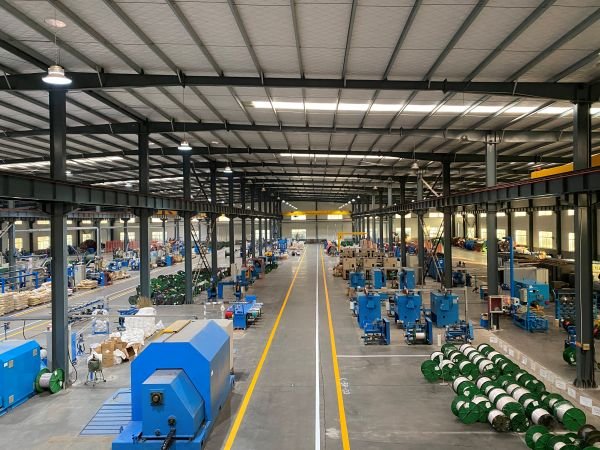
Control cable is bought by the drum and installed by the kilometre, so the release checks are documented per production length rather than per batch.
Tell us the model designation, the core count and cross-section, the conductor class and the quantity.
We confirm core count, cross-section, screening option and quotation within one working day.
Sample for qualification — stocked configurations within a few working days.
7–15 working days; stocked configurations within 3–5 days.
Drum packing, shipping documents and cut lengths on request, with the construction drawing issued for approval before the first production run.
Tell us the model, core count, cross-section and quantity — we reply within one working day.
The more detail you give, the faster and more accurate our quotation. Our engineers reply within one working day.
Thanks — our engineers will reply within one working day.