Professional cable manufacturer

Professional cable manufacturer
Home » Products » Control & Instrumentation » YY/CY/SY LSZH Flexible Control Cable 300/500V
Halogen-free, low-smoke flexible control cable for tunnels, public buildings and confined spaces — unscreened, copper-braid screened or steel-braid armoured, 0.5 to 2.5 mm², up to 50 cores.
On the designation: the Y, CY and SY codes are inherited from the PVC control-cable family this construction is sold alongside. On this cable the insulation and the sheath are halogen-free (TI6 / TM7), so the code is a market convention rather than a description of the compound — the halogen-free equivalents are normally designated in the H nomenclature, such as LiHCH or the H05ZZ-F family.
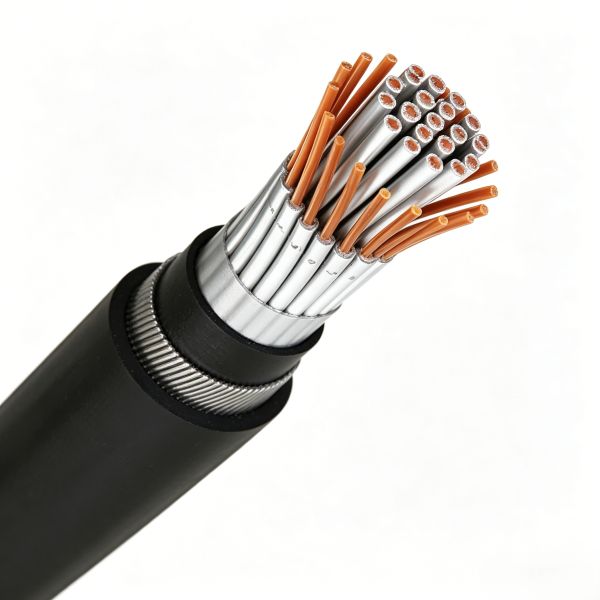
What a specifier checks first on a halogen-free control cable — before reading the full specification below.
A halogen-free, low-smoke control cable exists for one reason: in a fire, ordinary PVC releases hydrogen chloride, which is corrosive to electronics and acutely hazardous in a confined space, and it produces dense smoke that hides the exit. Where the cable runs through a tunnel, a metro station, a hospital, an airport concourse, a data hall or any space people have to evacuate, that is a specification decision rather than a preference. This is the halogen-free version of our flexible control cable family, in the same three construction levels: unscreened, copper-braid screened and steel-braid armoured.
One naming point has to be dealt with, because it is a genuine contradiction rather than a matter of taste. In this product family the letter Y means PVC — YY is PVC insulated and PVC sheathed, CY and SY are the screened and steel-braided versions of the same thing. So “YY/CY/SY LSZH” reads literally as “halogen-free PVC cable”, which cannot exist. The YY/CY/SY part is the market designation this product is sold under and the structure it shares with the PVC versions; the compound system is entirely different, and it is the compound that makes the cable halogen-free. Halogen-free control cable is normally designated in the H nomenclature (LiHCH, H05ZZ-F family) precisely to avoid this confusion, and we describe the construction in full in Table 2 so the actual materials are unambiguous.
On the fire performance, three standards are involved and they are not interchangeable. IEC 60754-1 / EN 60754-1 measures the quantity of halogen acid gas released when the compound burns — that is what “halogen-free” means, and it says nothing about smoke. IEC 61034-1/-2 / EN 61034-1/-2 is the smoke density test, which is what “low smoke” means. IEC 60754-2 / EN 60754-2 covers the acidity and conductivity of the combustion gases, which is the corrosion question. Datasheets that cite only 60754-1 and then claim “low smoke” have not tested the second property at all.
The temperature rating follows from the compound. The TI6 halogen-free thermoplastic insulation (EN 50363-5 family) and the TM7 halogen-free thermoplastic sheath (EN 50363-7 family) are rated at +70 °C long-term conductor temperature. The +85 °C figure that appears on some datasheets for this product class has no compound behind it; if the application genuinely needs more than 70 °C, the answer is a cross-linked halogen-free compound and it has to be quoted against its own data sheet rather than assumed.
The construction otherwise follows the family: Class 5 flexible stranded copper to IEC 60228, cross-sections from 0.5 to 2.5 mm², up to 50 cores at 0.5 mm², a 2000 V AC conductor-to-conductor and 1200 V AC conductor-to-screen test, and flame retardance to IEC 60332-1-2. For the PVC versions of the same family see the YY/SY/CY Control Cable and the CY Shielded Control Cable.
More about the manufacturer: About SORIVO →
No halogen acid gas on combustion, tested to IEC 60754-1 / EN 60754-1 — the property that protects both people and the electronics in the same room.
Tested separately to IEC 61034-1/-2 / EN 61034-1/-2, because a halogen-free cable is not automatically a low-smoke one and the two claims are not interchangeable.
IEC 60754-2 / EN 60754-2 covers the acidity and conductivity of the combustion gases — the corrosion question that matters most in a control room.
Halogen-free thermoplastic insulation to the EN 50363-5 family and sheath to the EN 50363-7 family, rated +70 °C long-term conductor temperature.
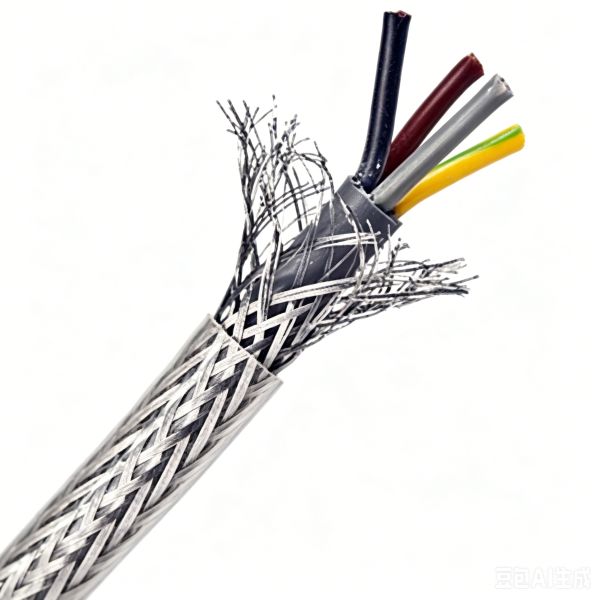
Unscreened, tinned copper braid screen for EMC, or galvanised steel braid for mechanical protection — the same choice as the PVC family.
Stranded copper to IEC 60228 / DIN VDE 0295 class 5, which keeps a 25- or 50-core halogen-free cable workable in a cabinet.
50 cores at 0.5 mm², 24 at 0.75 mm² and typically up to 6 at 1.0–2.5 mm², with the availability matrix published.
Single-core vertical flame propagation to IEC 60332-1-2 / EN 60332-1-2 on the finished cable, in addition to the halogen and smoke tests.
Confined spaces, evacuation routes and anywhere the corrosion of electronics after a fire is part of the risk assessment.
Road and rail tunnels, where the cable run is long, escape is difficult and smoke density is the controlling hazard.
Wards, theatres and plant rooms where patients may be non-ambulatory and corrosive combustion products would take equipment out of service.
Concourse and baggage-handling areas with high occupancy and large volumes of exposed cable in ceiling voids.
Where the post-fire corrosion of electronics is the dominant loss, and acid gas emission matters as much as flame spread.
Schools, stadia, shopping centres and theatres, where reaction-to-fire performance forms part of the building approval.
Rolling-stock wiring and depot installations where halogen-free cable is the standing requirement.
Basements, pits, cable ducts and ships’ spaces where smoke has nowhere to go.
Enclosures housing lithium cells, where both fire load and gas corrosivity are part of the design case.
The complete parameter set — the same data our engineers quote from.
| Variant | Construction | Braid or screen | What it is for |
|---|---|---|---|
| Unscreened | Halogen-free insulation, laid-up cores, halogen-free sheath, no braid | — | General halogen-free control wiring in ducts, voids and trays where no screen or armour is needed |
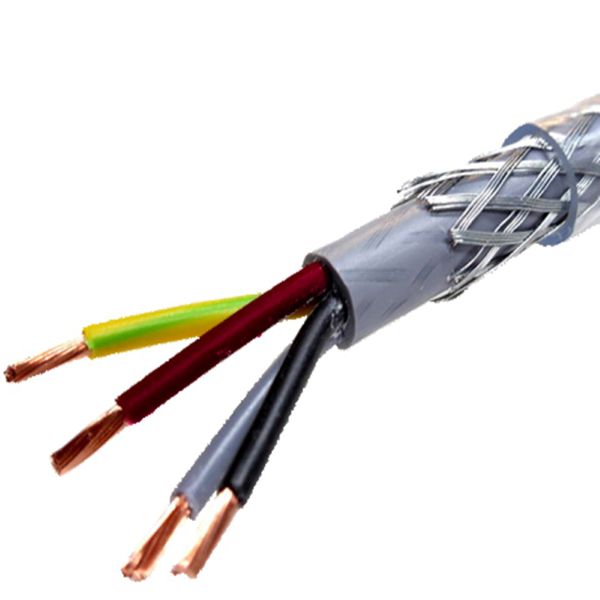
| Copper braid screen | Halogen-free insulation, tinned copper wire braid over the laid-up cores, halogen-free sheath | Tinned copper wire braid, optical coverage approx. 85% | Halogen-free installations that also need EMC screening for drives, encoders and signal circuits |
| Steel braid armour | Halogen-free insulation, galvanised steel wire braid, halogen-free sheath | Galvanised steel wire braid | Halogen-free installations where the cable is pulled, dragged or exposed to mechanical damage |
The variant names in the product title are the market designation this cable is sold under. Note that Y means PVC in this family, so the YY/CY/SY label describes the construction level rather than the compound — the halogen-free compounds are named separately in Table 3. The steel-braided variant has no CENELEC harmonised part standard, and in common with the PVC family its braid is armour rather than an EMC screen.
| Cross-section | Core counts normally offered | Typical maximum |
|---|---|---|
| 0.14 mm² | 2, 3, 4, 5, 10, 12, 18, 25, 32, 50 | 50 cores |
| 0.25 mm² | 2, 3, 4, 5, 7, 10, 12, 18, 25, 32, 50 | 50 cores |
| 0.38 mm² | 2, 3, 4, 5, 7, 12, 18, 25, 32 | 32 cores |
| 0.5 mm² | 2, 3, 4, 5, 7, 12, 18, 25, 32, 50 | 50 cores |
| 0.75 mm² | 2, 3, 4, 5, 7, 12, 18, 24 | 24 cores |
| 1.0 mm² | 2, 3, 4, 5, 6 | 6 cores |
| 1.5 mm² | 2, 3, 4, 5, 6 | 6 cores |
| 2.5 mm² | 2, 3, 4, 5, 6 | 6 cores |
The core counts listed are the typical range offered at each cross-section, not a limit set by the conductor standard. Most panel and machine wiring uses 2–12 cores; 18–50 core constructions are common in plant wiring and are quoted individually. The 0.75 mm² row is highlighted because it is the size most often held in stock.
| General Information | |
| Product Name | YY/CY/SY LSZH Flexible Control Cable 300/500V |
| Product Family | Halogen-free, low-smoke flexible control cable — the halogen-free counterpart of the LiYY / LiYCY construction family; normally designated in the H nomenclature (LiHCH, H05ZZ-F family) |
| Reference Standards | Conductor to IEC 60228 (DIN VDE 0295 cl. 5); flame retardance to IEC 60332-1-2 / EN 60332-1-2 (DIN VDE 0482-332-1-2); general requirements of the EN 50525-1 family. Non-harmonised industrial control cable type — no CENELEC harmonised (HAR) part standard applies. |
| Fire Performance | |
| Halogen-Free | IEC 60754-1 / EN 60754-1 (DIN VDE 0482-754-1) — quantity of halogen acid gas released on combustion |
| Low Smoke | IEC 61034-1/-2 / EN 61034-1/-2 (DIN VDE 0482-1034-1+2) — smoke density. Tested separately from the halogen content; the two are not interchangeable claims. |
| Acid Gas Emission | IEC 60754-2 / EN 60754-2 — acidity and conductivity of the combustion gases |
| Flame Retardance | IEC 60332-1-2 / EN 60332-1-2 (DIN VDE 0482-332-1-2) |
| Electrical Ratings | |
| Rated Voltage (designation) | 300/500 V — the market designation for this family; see Max. operating voltage below |
| Max. Operating Voltage | 350 V — design against this figure rather than against the 300/500 V designation |
| Test Voltage | 2000 V AC conductor to conductor; 1200 V AC conductor to screen on screened and armoured constructions |
| Conductor | Class 5 flexible stranded copper to IEC 60228 (DIN VDE 0295 cl. 5) |
| Cross-sections | 0.5 / 0.75 / 1.0 / 1.5 / 2.5 mm² — the halogen-free compound is available across the same size range as the PVC family |
| Core Counts | Up to 50 cores at 0.5 mm², up to 24 at 0.75 mm², typically up to 6 at 1.0–2.5 mm² — see Table 2 |
| Core Identification | Colour-coded for small core counts, numbered cores for larger counts; confirmed on the drawing |
| Insulation Resistance | Manufacturer test value, confirmed against the test report for the selected construction |
| Construction | |
| Insulation Compound | Halogen-free thermoplastic compound, type TI6 — EN 50363-5 compound family |
| Sheath Compound | Halogen-free thermoplastic compound, type TM7 — EN 50363-7 compound family |
| Screen (screened variant) | Tinned copper wire braid over the laid-up core bundle, optical coverage approx. 85% |
| Armour (armoured variant) | Galvanised steel wire braid — mechanical protection, not an EMC screen |
| Sheath Colour | Grey as standard; other colours on request |
| Outer Diameter | Depends on core count and cross-section; confirmed on the drawing before production |
| Environment | |
| Max. Conductor Temperature | +70 °C — the long-term rating of the TI6 insulation and TM7 sheath compound family |
| Temperature Range | −10 °C to +70 °C, both fixed and flexible installation (manufacturer value, confirmed against the compound data sheet for the selected construction) |
| Bending Radius, Fixed Installation | 10 × outer diameter |
| Bending Radius, Flexible Installation | Not specified for this family — describe the movement and we will quote a construction suited to it |
| Certification & Logistics | |
| Compliance | RoHS 2011/65/EU declaration; Declaration of Performance under CPR (EU) 305/2011 for the construction supplied, with the Euroclass stated in it — a halogen-free thermoplastic control cable of this type reaches Eca, and a higher class such as Dca or Cca is a different compound and a different test programme. CE marking as applicable, which for cable is a manufacturer's declaration of conformity (DoC) and not a certificate. |
| Certification | No third-party certification is claimed for this non-harmonised industrial control cable type; the compliance documents that apply to the ordered construction are supplied with the shipment. |
| Standard Lengths | 100 m / 500 m / 1000 m per drum; cut lengths on request |
| MOQ | 100 m |
| Lead Time | 7–20 working days; stocked configurations 3–5 days |
Halogen content, smoke density and acid gas emission are three separate properties tested to three separate standards, and this table names each against its own standard rather than collapsing them into one “LSZH” claim. The +70 °C conductor temperature is the long-term rating of the TI6 insulation and TM7 sheath compound family; a higher temperature would require a cross-linked halogen-free compound quoted against its own data sheet, and we do not publish 85 °C. The family has no CENELEC harmonised part standard, so the remaining standard-based values are the conductor class (IEC 60228) and the flame test (IEC 60332-1-2), with the compound families named in the EN 50363 series. Confirm the requirement against the fire strategy for the specific project.
The compound releases no halogen acid gas on combustion, tested to IEC 60754-1 / EN 60754-1 (DIN VDE 0482-754-1) — the property that protects people and electronics in a confined space.
Request test report →Smoke density is tested to IEC 61034-1/-2 / EN 61034-1/-2, separately from the halogen test. A halogen-free cable is not automatically a low-smoke one, and we quote the second test rather than implying it.
Request test report →RoHS 2011/65/EU compliance declaration, and a Declaration of Performance under CPR (EU) 305/2011 for the construction supplied — for a halogen-free thermoplastic control cable of this type the realistic Euroclass is Eca, and a higher class such as Dca or Cca is a different compound and a different test programme. We do not use the phrase “CE certified”: there is no CE certification for cable, only a manufacturer’s declaration, and a DoC is provided on request where it applies.
Request documentation →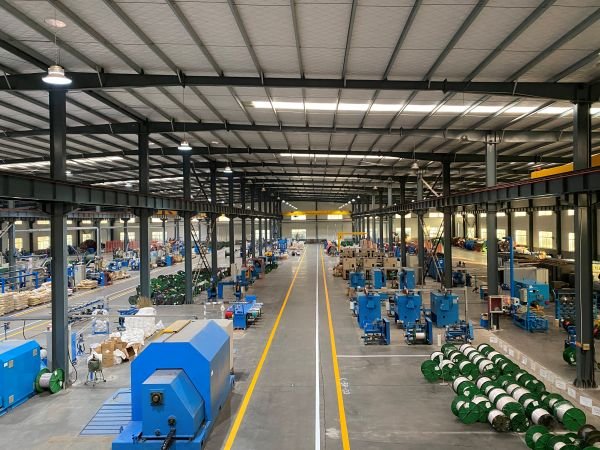
On a halogen-free cable the compound is the product, so the records that matter include the material data sheet as well as the routine electrical tests.
Tell us the variant (unscreened, copper braid screened or steel braid armoured), the core count and cross-section, and the project’s fire requirement.
We confirm core count, cross-section, screening option and quotation within one working day.
Sample for qualification — stocked configurations within a few working days.
7–20 working days; stocked configurations within 3–5 days.
Drum packing, shipping documents and the compound data sheet for the project fire file.
Tell us the fire requirement, core count and quantity — we reply within one working day.
The more detail you give, the faster and more accurate our quotation. Our engineers reply within one working day.
Thanks — our engineers will reply within one working day.