Professional cable manufacturer

Professional cable manufacturer
📅 Published: 2026-06-12 | 📁 Category: Armoured Cable Guide | ⏱ 12 min read
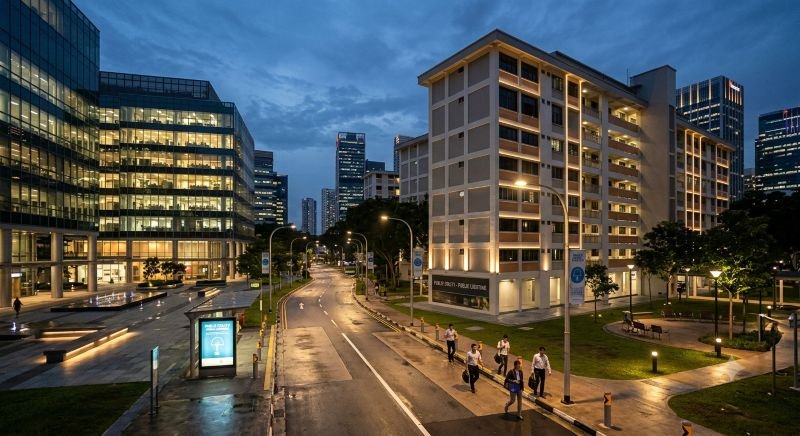
Specifying the wrong cable for an outdoor lighting installation is not just a paperwork error — it can mean early sheath degradation, fire safety non-compliance, unnecessary cost overruns, or failing a building control inspection. In the UK, the two dominant British Standards for low-voltage armoured power cables — BS 5467 and BS 6724 — are often treated as interchangeable. They are not.
Both standards describe cables with XLPE insulation, steel wire armour (SWA), and a 600/1000V rating. Both are suitable for direct burial. For equivalent conductor size and installation method they generally have comparable electrical performance, although actual dimensions and weight can differ between manufacturers. The critical difference is the outer sheath material: PVC under BS 5467, and LSZH (Low Smoke Zero Halogen) under BS 6724.
For an external lighting contractor or consultant, the choice depends less on whether the installation is outdoors and more on the cable route, the fire environment and the project specification. If the cable stays entirely outdoors in open, ventilated locations, BS 5467 is cost-effective and field-proven. If the route passes through a fire compartment, an enclosed public space, a tunnel, or another area with specific low-smoke / halogen-free requirements, BS 6724 may be specified instead — always confirm the project fire strategy and applicable specifications.
This guide provides a side-by-side comparison of BS 5467 and BS 6724 for external lighting applications, including construction differences, fire performance, cost impact, installation requirements under BS 7671, and practical decision criteria for UK electrical contractors and specifiers.
BS 5467 and BS 6724 cables share the same conductor, insulation, and armour construction. Every difference is in the bedding and outer sheath materials.
Both standards specify plain annealed stranded copper conductors to BS EN 60228 (Class 2), with XLPE (cross-linked polyethylene) insulation to BS 7655 Type GP8. XLPE provides a 90°C maximum conductor operating temperature and 250°C short-circuit capability — significantly higher than PVC-insulated cables (70°C).
Both use a single layer of galvanised steel wire armour for mechanical protection. For single-core cables, aluminium wire armour (AWA) is required instead to avoid inductive heating. The armour also serves as a Circuit Protective Conductor (CPC) under BS 7671 when correctly terminated at both ends.
| Layer | BS 5467 — XLPE/SWA/PVC | BS 6724 — XLPE/SWA/LSZH |
|---|---|---|
| Conductor | Copper, Class 2 stranded (BS EN 60228) | Copper, Class 2 stranded (BS EN 60228) |
| Insulation | XLPE, Type GP8 (BS 7655) — 90°C | XLPE, Type GP8 (BS 7655) — 90°C |
| Bedding (inner sheath) | PVC (Type 9) | LSZH, Type LTS1 (BS 7655) |
| Armour | Galvanised steel wire (SWA) or aluminium wire (AWA for single-core) | Galvanised steel wire (SWA) or aluminium wire (AWA for single-core) |
| Outer Sheath | PVC, carbon-black loaded | LSZH, Type LTS1, black |
| Flame retardancy | IEC 60332-1-2 (single vertical) | IEC 60332-1-2 + IEC 60332-3-24 Cat C (bunched) |
| Halogen content | PVC compounds can release hydrogen chloride and dense smoke when exposed to fire | Zero halogen (IEC 60754-1/2 — HCl < 0.5%) |
| Smoke emission | Dense black smoke (IEC 61034 ≤ 20% transmittance) | Low smoke (IEC 61034 ≥ 60% transmittance) |
| UV resistance | Yes (carbon black in PVC) | Yes (carbon-loaded LSZH formulation) |
Because the conductor, insulation thickness, and armour are identical, both cable types share the same:
| Factor | Standard Market Cable (PVC Sheath) | SORIVO BS 6724 (LSZH Sheath) |
|---|---|---|
| Sheath material | PVC (can release hydrogen chloride and dense smoke in a fire) | LSZH Type LTS1 (zero halogen, low smoke) |
| Fire toxicity | Produces HCl gas and dense smoke in fire | IEC 60754-1/2 — HCl < 0.5%, IEC 61034 — ≥60% transmittance |
| Bunched flame test | Not required (single vertical only) | IEC 60332-3-24 Cat C — test report available on request |
| Typical price premium | Baseline | +10–15% over equivalent BS 5467 |
| Traceability | May lack metre marking | Metre-marked, batch-traceable, certificate on request |
| Design life | Varies by manufacturer | 25 years (matching building lifecycle); warranty terms on request |
Both standards are published by the British Standards Institution (BSI) and are harmonised with European and international standards. Here is what each standard actually specifies and tests.
Full title: Specification for cables with thermosetting insulation for rated voltages up to and including 600/1000V.
Full title: Specification for cables with thermosetting insulation for rated voltages up to and including 600/1000V, having low emission of smoke and corrosive gases when affected by fire.
The 18th Edition of BS 7671 sets the following requirements relevant to external lighting cable selection:
| Requirement | Value | BS 7671 Reference |
|---|---|---|
| Burial depth (general ground) | ~600 mm commonly used | Regulation 522.8.10 — verify against site conditions |
| Burial depth (under hard standing) | ~300 mm commonly used | Good practice / 522.8.10 |
| Warning tape above buried cable | 150 mm | Regulation 522.8.10 |
| Socket-outlet RCD protection | 30 mA (mandatory) | Regulation 411.3.3 |
| Fixed lighting RCD protection | 30 mA (recommended) | Section 714 guidance |
| Voltage drop (lighting circuits) | 3% max (5% for other uses) | Appendix 4, Section 6.4 |
The decision between BS 5467 and BS 6724 depends on the cable route and the building types it serves. The following table gives scenario-based recommendations.
| Application | Cable Route | Recommended Standard | Reason |
|---|---|---|---|
| Street lighting (public highway) | Buried in ground, terminates in lighting column base | BS 5467 (PVC) ✓ | No building entry. Lighting column base is ventilated. PVC is sufficient and cost-effective. |
| Car park lighting | Buried + clipped to columns, terminates in column | BS 5467 (PVC) ✓ | Same as street lighting. Open air, low fire risk. |
| School / hospital external lighting | Buried → enters building plant room or distribution board | BS 6724 (LSZH) ✓ | Where cable enters a public building, LSZH may be specified by the fire strategy or project specification. |
| Tunnel lighting | Clipped to tunnel wall or ceiling | BS 6724 (LSZH) ✓ | Confined space — dense smoke would be lethal. LSZH is commonly specified for tunnel installations. |
| Retail / shopping centre perimeter lighting | Buried → enters centre electrical room | BS 6724 (LSZH) ✓ | Public building + fire compartment penetration. LSZH may be specified. |
| Residential garden lighting | Buried or surface clipped to fence/wall | BS 5467 (PVC) ✓ | Low risk, small scale. PVC is standard for domestic work. |
| Sports floodlighting (stadium) | Buried → floodlight column base | BS 5467 (PVC) ✓ | Open air, ventilated column base. PVC is sufficient unless project spec requires otherwise. |
| Emergency escape route lighting | Surface or buried along escape route | BS 6724 (LSZH) ✓ | Low smoke supports evacuation, but confirm whether the project specifies a fire-resisting cable (e.g. BS 7846) for circuit integrity. |
| If the cable... | Use |
|---|---|
| ...never enters a building or enclosed space | BS 5467 (PVC) — most cost-effective |
| ...enters a public building (school, hospital, shopping centre, transport hub) | BS 6724 (LSZH) — may be specified by fire strategy |
| ...runs through a tunnel or underground walkway | BS 6724 (LSZH) — confined space safety |
| ...serves emergency escape lighting | BS 6724 (LSZH) is often used for low smoke — but confirm whether a fire-resisting cable is required for circuit integrity |
| ...is in a plant room, riser, or basement car park | BS 6724 (LSZH) — fire compartment rules apply |
| ...is in a domestic garden, open car park, or sports field | BS 5467 (PVC) — sufficient and economical |
Note: Always verify with the project's fire risk assessment and BS 7671 wiring regulations.
Illustrative values for 3-core XLPE armoured cable under the stated reference conditions (clipped direct, 90°C conductor, 30°C ambient). Actual current capacity must be selected using the applicable BS 7671 installation method and correction factors.
| Conductor Size | BS 5467 (PVC) — Clipped Direct (A) | BS 6724 (LSZH) — Clipped Direct (A) | Voltage Drop (mV/A/m) |
|---|---|---|---|
| 1.5 mm² | 23 | 23 | 27 |
| 2.5 mm² | 31 | 31 | 16 |
| 4 mm² | 42 | 42 | 10 |
| 6 mm² | 53 | 53 | 6.8 |
| 10 mm² | 72 | 72 | 4.1 |
| 16 mm² | 96 | 96 | 2.6 |
| 25 mm² | 130 | 130 | 1.7 |
Ampacity per BS 7671 Table 4E4A; voltage drop per Table 4E4B. 3-core cable at 90°C conductor temperature, 30°C ambient. Current ratings are identical between BS 5467 and BS 6724 for the same conductor size.
The upfront cost difference between BS 5467 and BS 6724 is typically 10–15%. But the total cost of ownership tells a different story — especially when fire risk, replacement cycles, and compliance penalties are factored in.
If PVC-sheathed cable is installed where LSZH is now required by Code or local regulation — for example, in a school extension where the cable enters a fire compartment — the eventual remediation cost far exceeds the upfront saving.
| Scenario | Initial Saving (BS 5467 over BS 6724) | Remediation Cost | Net Impact |
|---|---|---|---|
| Correct specification | — | £0 | Optimal |
| BS 5467 installed where BS 6724 was specified | ~15% cable cost saved | Full re-pull + re-termination + inspection | Net loss: ~3–5× the initial "saving" |
| PVC aged in wet ground (30+ years) | — | Potential plasticiser leaching in wet ground → sheath cracking → earlier replacement possible | BS 6724 likely still in service |
| Cable Type | Approx. Cost per Metre | 25-Year Lifecycle |
|---|---|---|
| BS 5467 XLPE/SWA/PVC | Baseline | 1 installation (replace PVC if plasticiser migration occurs in wet soil) |
| BS 6724 XLPE/SWA/LSZH | +10–15% | 1 installation expected; service life depends on environment — LSZH compounds are generally more stable in wet ground |
A Building Control inspection that finds PVC-sheathed cable in a fire compartment where LSZH is specified can result in:
When sourcing armoured cable for an external lighting project, use these practical checks to confirm you are getting the standard you specified.
For a complete walkthrough, see our dedicated guide: How to Verify Cable Certification (methodology applies equally to BS standards).
When specifying armoured cable for external lighting, follow this three-step process:
For the majority of external lighting applications — street lighting, car parks, sports floodlighting — BS 5467 XLPE/SWA/PVC remains the industry standard: reliable, cost-effective, and fully compliant with BS 7671 for outdoor use.
For any installation where the project specification or fire strategy requires low-smoke, halogen-free performance, BS 6724 XLPE/SWA/LSZH is the appropriate choice — confirm the exact requirement from the fire strategy rather than assuming it from the building type. At SORIVO, both standards are available with batch traceability and certification documents available on request.
Further reading:
Send us your cable size, core configuration, voltage, installation method and required length. Our engineering team can confirm the appropriate construction and provide a quotation for your external lighting project.
Request a Specification Review & Quote📧 sale@sorivocable.com | 📞 +86 192 8290 5529
BS 5467 PVC-sheathed cable is suitable for direct burial in most well-draining soils. However, in waterlogged ground, clay soils with high moisture content, or chemically contaminated ground (e.g., former industrial sites), PVC plasticisers can leach over time, causing the sheath to become brittle. In these conditions, specify BS 6724 (LSZH) or request an MDPE (medium-density polyethylene) outer sheath variant. For standard street lighting in typical UK ground conditions, BS 5467 is proven over 25+ year design life.
BS 7671 (18th Edition) requires 30 mA RCD protection for socket-outlets that may supply outdoor equipment (Regulation 411.3.3). For fixed external lighting (hard-wired, no socket), RCD protection is not mandatory in all cases — particularly if the circuit uses SWA cable with the armour earthed as a CPC. However, industry good practice recommends 30 mA RCD for all outdoor circuits. If in doubt, install the RCD — the cost is negligible compared to the risk. For TT earthing systems, RCD protection is mandatory.
Not automatically — it depends on the project specification and fire strategy. A cable that passes through a fire compartment or serves a life-safety circuit (emergency lighting, fire alarms) may require LSZH, and may also need circuit-integrity (fire-resisting) performance that LSZH alone does not provide. For a simple meter cabinet or external distribution board mounted on the outside wall, a short PVC-sheathed tail entering the building through a sealed gland may be acceptable. Many local authorities and project specifications specify BS 6724 for building penetration as a conservative measure. Always check the project fire strategy document.
BS 5467 PVC-sheathed cable is more widely stocked by UK wholesalers due to its higher volume. BS 6724 LSZH cable typically requires manufacturer stock or factory lead time. At SORIVO, we maintain stock of both standards for common sizes (4 mm² to 16 mm², 3-core and 4-core). For non-standard sizes or lengths, allow 2–3 weeks for BS 6724 production. Our CU/XLPE/LSZH/SWA/LSZH cable is available with batch traceability and certification documents on request.
Yes — for three-phase external lighting, single-core AWA (aluminium wire armour) cables are sometimes used for large floodlighting installations or long runs where installing multiple single cores in trefoil formation reduces eddy current losses. However, the standard for most external lighting is multi-core SWA (3-core or 4-core), which is simpler to install, requires fewer terminations, and is more cost-effective for runs under 100 metres. For more detail, see our SWA vs AWA comparison guide.